Personalised care for firmer, healthier looking skin.
Skin naturally loses some of its firmness over time. Collagen and elastin production slow down, sun exposure adds up, and gravity plays its part. For some patients, this shows up in full through laxity in the jaw or a subtle loss of definition in the lower face. For others, it's a general sense that the skin doesn't 'bounce back' the way it once did. Non-surgical skin tightening treatments are considered energy to stimulate collagen production in the skin, which may improve firmness and texture in selected areas of mild to moderate laxity. Commonly referred areas include the face, jawline, neck, and cheeks, although suitability depends entirely on your individual skin condition. This is why a professional assessment always comes before any treatment recommendation. It's important to be realistic: please upfront that the short-term surgical treatment is not a replacement for a surgical facelift, and recovery from primarily from primary from laser-skin options such as laser, RF microneedling, and ultrasound-based treatments, rather than to-one-size-fits-all protocols.
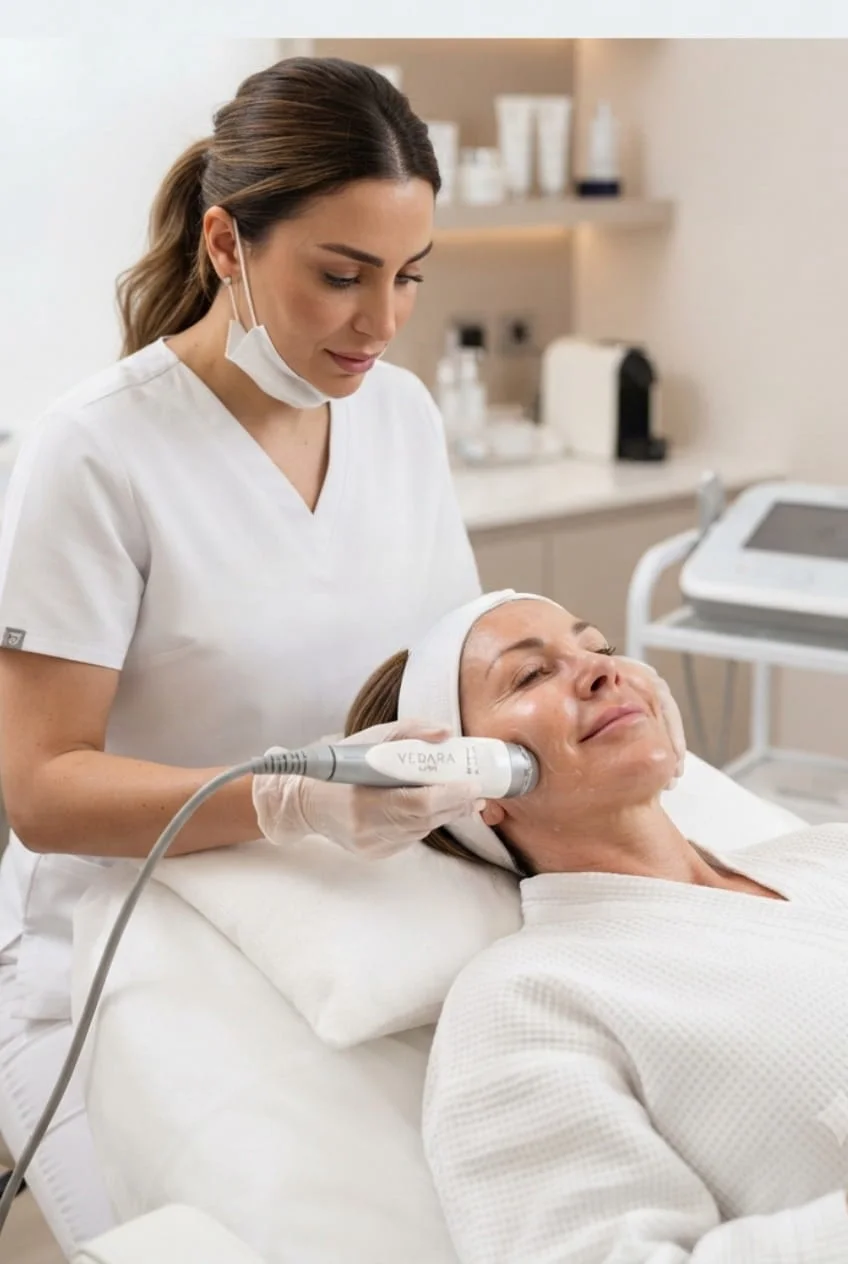
Start With a Skin Assessment
Skin laxity varies from person to person. A proper assessment helps evaluate your skin firmness, texture, treatment area, and overall concerns before recommending the most appropriate skin tightening approach.
QUICK ANSWER — SKIN TIGHTENING AT VEDARA CARE
Skin Tightening Treatment at Vedara Care in JVC, in one paragraph
Skin tightening treatment has been found energy — delivered through technologies such as radiofrequency, laser, or ultrasound — to stimulate the skin's natural collagen production. Over time, this collagen remodelling process may improve the appearance of mild-to-moderate skin laxity, particularly around the face, jawline, and neck. The more consistent skin type respond, results build gradually rather than appearing all at once, and expectations should stay realistic rather than dramatic. Results tend to build gradually over several weeks as new collagen forms, rather than appearing instantly. It's also worth understanding upfront that a proper assessment is always needed before any recommendation — which means that approaching treatment correctly, and a different pathway may be more appropriate.
UNDERSTANDING SKIN LAXITY
Why skin becomes loose or less firm
Skin laxity develops gradually and is influenced by several overlapping factors:
- Natural ageing: collagen and elastin production slow naturally — this becomes very noticeable over time
- Collagen decline: collagen gives skin its firmness, and production reduces with age
- Elastin changes: elastin allows skin to stretch and recoil; this becomes less efficient over time
- Sun exposure: cumulative UV exposure breaks down collagen and accelerates visible signs of ageing
- Genetics: some people are naturally predisposed to earlier or more noticeable laxity
- Weight changes: significant weight loss can leave skin without the volume it once supported
- Pregnancy: hormonal and structural changes can affect skin elasticity when relevant
- Changes in facial structure: bone and fat loss in the face can make skin appear looser
- Reduced skin elasticity: the skin's ability to 'spring back' decreases with age
It helps to understand that laxity is not the same concern as wrinkles, fine lines, volume loss, pigmentation, pores, fat, or texture issues — although these often appear together. Volume loss is related but different; signs that sometimes look like laxity are actually low volume. Texture, skin particularly after conditions like acne, is a different concern entirely. Understanding which is the first step toward choosing a treatment that's actually going to help.

AREAS WE ASSESS
Areas that may benefit from skin tightening treatment.
01 — Face
Patients commonly notice an overall loss of definition or a slightly 'tired' appearance. Skin tightening may help improve firmness and texture across the face, though first, the degree of improvement depends on the extent of laxity present. It will not lift three degrees structural volume loss on its own.
02 — Cheeks
Reduced cheek firmness is often one of the earliest visible signs of laxity. Treatment may help improve skin quality in this area, though patients with significant volume loss alongside laxity often benefit from a broader conversation about options.
03 — Jawline
A softened or less defined jawline is among the most common concerns raised. Skin tightening may be considered to help support mild jawline definition, although more significant jawline jowling typically needs to be assessed against systemic other approaches.
04 — Lower Face
The lower face carries the combined effects of gravity, volume loss, and reduced elasticity. Skin tightening may support a firmer appearance here, particularly when addressed early.
05 — Neck
Neck skin is thinner and often shows laxity earlier than the face. Many patients see this as a priority area, and it is frequently included in treatment planning, though results vary meaningfully on how much laxity is in the skin.
06 — Under Chin Area
Mild laxity under the chin may respond to treatment, but patients with significant fullness or fat in this area may need a different approach entirely, which your dermatologist will discuss during the assessment.
07 — Around the Eyes
This is a delicate area where skin is thin and sensitive. [VERIFY CLINIC-SPECIFIC TREATMENT AREA] — not every technology or protocol is applicable here; suitability is assessed individually on a case-by-case basis.
[VERIFY CLINIC-SPECIFIC TREATMENT AREA]
Some patients ask about laxity beyond the face and neck; suitability for body areas depends on the technology available and clinic-specific protocols confirmed by Vedara Care.
THE APPROACH
How personalised skin tightening differs from a standard approach
Skin quality assessment: Your dermatologist looks at texture, elasticity, fine lines, hydration levels, and sun damage. Different configurations of these factors call for different technology choices and settings are appropriate.
Treatment technology: Different technologies heat the skin at different depths and in different ways. A technology chosen for one pattern of laxity may not be right for another — this is not a one-size-fits-all decision.
Realistic expectations: Avoid over-promising. Non-surgical skin tightening is designed to improve the appearance of skin laxity, it is important to understand clearly: non-surgical skin tightening is designed to improve the appearance of skin laxity; it doesn't flatten it to produce flat, and honest expectations setting at the consultation is part of responsible treatment planning.
Improvement with skin tightening: to be modest, rather than dramatic, and honest expectation-setting at the consultation is part of responsible treatment planning. It's part of responsible treatment.
HOW DOES SKIN TIGHTENING TREATMENT WORK?
How Does Skin Tightening Treatment Work?
Most skin tightening technologies work via a similar underlying principle, though the specific ways the device controlled energy is delivered to the skin varies. The skin naturally contains fibroblasts — cells that produce collagen. Controlled heat (or in some energy to specifically the collagen fibres, prompting those fibres to contract and stimulating the production of new collagen). Over the following weeks and months, this collagen remodelling process can gradually improve skin firmness and texture, leading to a more firm and defined skin appearance. It's also how energy-driven technology is chosen for your treatment plan.
To be transparent about what this technology involves, and because different laser technologies work in different ways, as not all technologies for skin tightening are available in the same form. This is why technology choice is determined individually rather than assigned by default.
Which Skin Tightening May Be Right for You?
Laser skin tightening: Uses laser-based energy to heat the skin and stimulate collagen. Generally suited to patients with mild laxity and moderate skin changes. Outcomes depend by use type and settings.
RF Microneedling: Combines microneedling with radiofrequency energy delivered through fine needles, reaching deeper skin layers with more precision. Very helpful for patients with concerns around depth. Very helpful for face and neck laxity. Results tend to build over a series of sessions.
Ultrasound-based treatment (HIFU): Uses controlled energy to target deeper layers of tissue, including areas closer to the SMAS layer where muscles sit. Questions about specific products [INSERT VERIFIED DEVICE TECHNOLOGY USED BY VEDARA CARE] for details on what's specifically offered at the JVC clinic.
Other non-surgical options: Depending on your goals and skin condition, skin tightening may be discussed alongside other options such as microneedling or skin boosters as a similar skin-quality plan. [INSERT VERIFIED DEVICE / TECHNOLOGY USED BY VEDARA CARE].
What Happens During a Skin Tightening Treatment Session?
1. Consultation and Skin Assessment
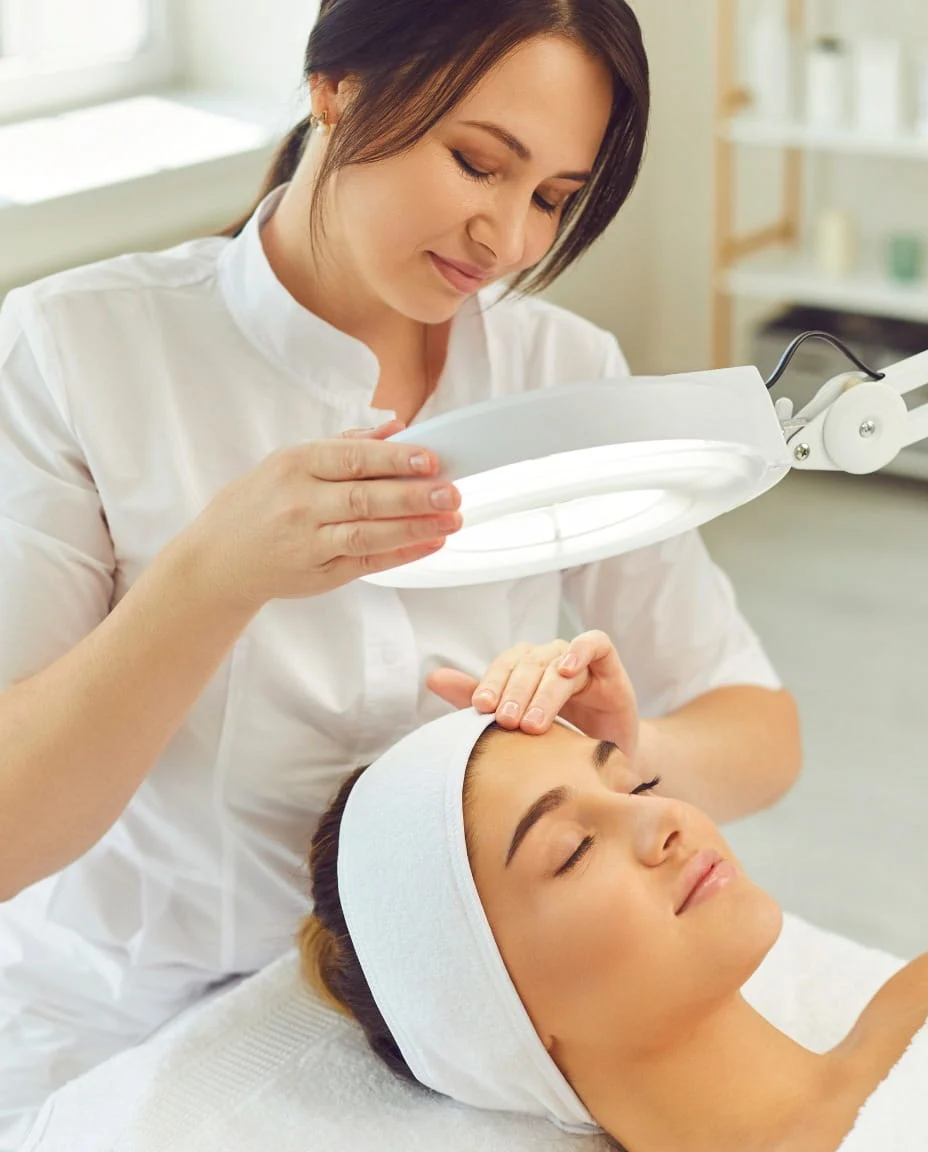
Your first appointment always begins with an assessment. The dermatologist reviews your medical history, your skin concerns, any previous cosmetic procedures, your current skincare routine, and any medications or conditions that might affect treatment. A direct examination of your skin helps determine what, if any, treatment approach is appropriate.
2. Skin Preparation
On the treatment day, your skin is cleansed and prepared according to the chosen technology's requirements [INSERT CLINIC-SPECIFIC TREATMENT AREA] as well as topical numbing or other comfort measures where applicable.
3. Treatment Delivery
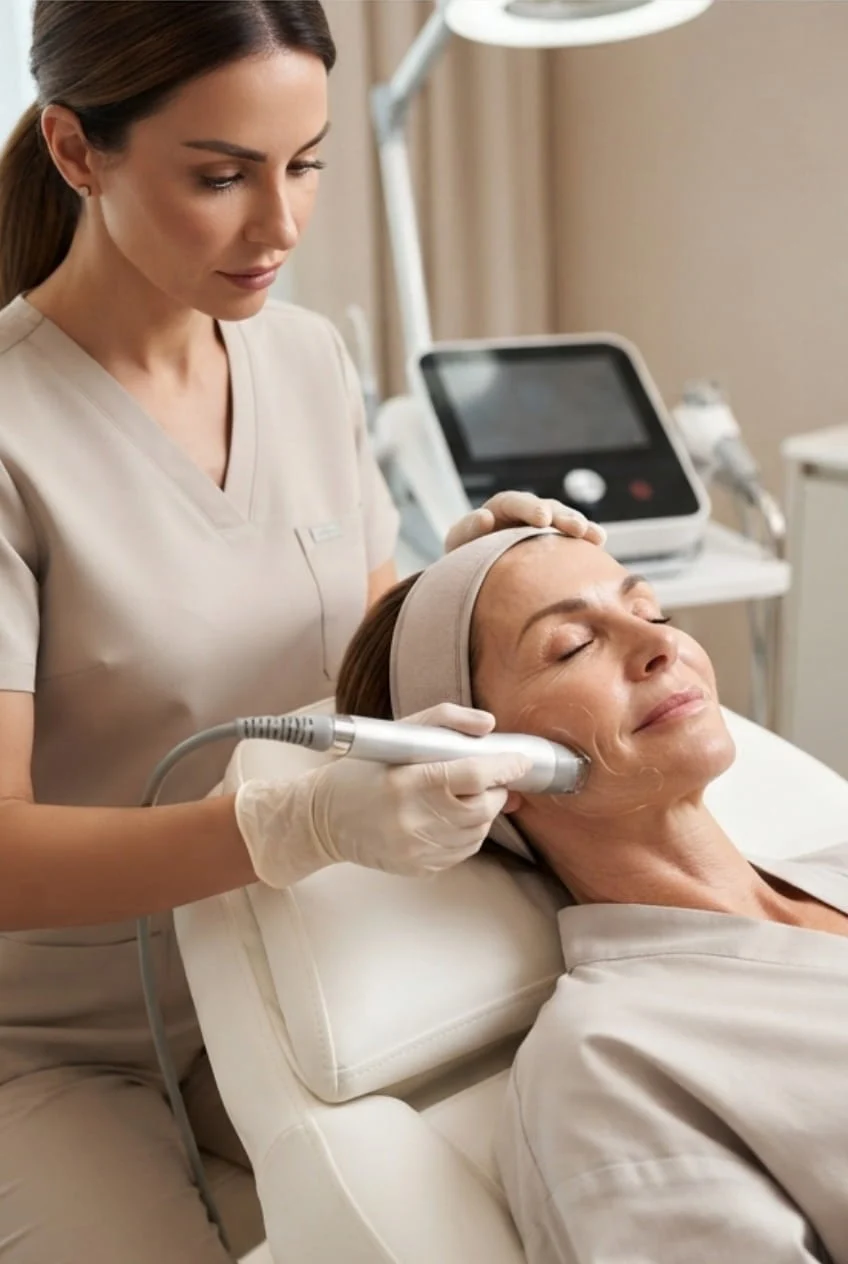
Energy is delivered to the treatment area using the appropriate device. You may feel warmth, pressure, or brief sensations of heat during delivery, depending on the technology. Your practitioner adjusts delivery throughout the session to maintain both safety and comfort.
4. Immediate Aftercare
Some redness, warmth, and mild sensitivity in the treated area are commonly noted after treatment. You'll receive clear guidance on what to do and what to avoid in the days following, and specific signs that would mean contacting the clinic if seen.
SKIN TIGHTENING TREATMENT RECOVERY
Skin Tightening Treatment Recovery: What Should You Expect?
First 24 hours: Some patients notice a subtle, temporary difference effect from swelling, which is not the final outcome.
Early recovery: As initial redness settles, skin often feels and looks slightly softened.
Following weeks: Collagen remodelling begins beneath the surface. Noticeable changes in this stage often arrive in this stage rather than immediately.
Longer-term: Collagen production typically continues to develop over months, depending on the technology and the way your individual skin responds.
Recovery depends on the technology used, treatment intensity, depth of energy delivery, treatment area, and how your individual skin type and present. We don't promise two downtime, as it's neither guaranteed for any skin-based energy type.
SKIN TIGHTENING RESULTS
Skin Tightening Results: What Can Patients Realistically Expect?
Patients who respond well to treatment may notice improved firmness, more refined skin texture, and a gradual softening of fine lines as collagen remodels over time. Improvement builds gradually rather than instantly, and it is a stepwise feature of non-cosmetic skin remodelling, not a shortcoming. It's important to understand clearly: non-surgical skin tightening is designed to improve the appearance of skin laxity; it doesn't perform the results of a surgical facelift. Results can vary between patients based on age, degree of laxity, skin quality, technology used, and how consistently follow-up sessions were recommended.
SKIN TIGHTENING BEFORE AND AFTER
Skin Tightening Before and After: How to Interpret Results
Before-and-after images can be a really useful, but they also need to present as honestly as not. When reviewing any before-and-after imagery for skin tightening, keep in mind:
- Lighting conditions in each photo
- Camera angle consistency
- Facial expressions
- Presence of changes of makeup
- Skin hydration at the time of the photo
- How the skin has progressed beforehand
- Timing of the 'after' photo relative to treatment
- Number of sessions completed
Authentic, trustworthy 'before-and-after images use consistent lighting, neutral camera angles, similar expressions, and are shown at a consistent point in the treatment timeline. We do not publish or use fabricated AI-generated imagery. Only genuine, consented clinical photography, where available.
WHO MAY BE SUITABLE FOR SKIN TIGHTENING?
Who May Be Suitable for Skin Tightening?
Skin tightening tends to suit patients with:
- Mild skin laxity
- Early visible changes in firmness
- Reduced skin firmness without significant sagging
NOT SUITABLE
Is Skin Tightening Treatment Suitable for Everyone?
Non-surgical skin tightening is not the right fit for every situation. Alternative approaches may be more appropriate for patients with:
- Significant excess skin
- Severe skin laxity
- Volume loss alongside laxity
- Active skin infections
- Active inflammatory skin disease
- Recent tattoos or sun exposure
- Pregnancy or when relevant
- Certain underlying skin healing or pigmentation concerns
- Certain underlying medical conditions
If significant excess skin is present, a surgical assessment may be a more clinically appropriate next step. Your dermatologist will discuss this openly and likely recommend treatment that isn't likely to meet your goals.
CAN SKIN TIGHTENING BE COMBINED WITH OTHER TREATMENTS?
Can Skin Tightening Be Combined With Other Treatments?
Depending on you goals and skin condition, skin tightening may be discussed alongside:
- RF microneedling
- Microneedling
- Laser treatments
- Skin boosters
- Other dermatological treatments
Whether combination treatment makes sense depends on your specific goals, condition, treatment design, and recovery considerations. We don't recommend combining treatments automatically — each addition should have a clear purpose within your overall plan.
HOW MANY SKIN TIGHTENING SESSIONS MIGHT YOU NEED?
How Many Skin Tightening Sessions Might You Need?
There's no fixed number of sessions that applies to everyone. The right number depends on your degree of laxity, the technology used, treatment intensity, how your skin responds, your age, the area being treated, and your overall goals. [INSERT VERIFIED CLINIC PROTOCOL IF AVAILABLE]. Your dermatologist will outline an expected session plan during your consultation, along with how progress will be evaluated along the way.
PRICING
What Does Skin Tightening Treatment Cost in JVC?
| Service | Price |
|---|---|
| Initial dermatology consultation | AED [X] |
| Laser skin tightening — face | AED [X] |
| Laser skin tightening per treatment | AED [X] |
| RF Microneedling | AED [X] |
| Ultrasound-based skin tightening | AED [X] |
| Treatment package | AED [X] |
Pricing can vary depending on the treatment area, technology used, treatment intensity, number of sessions recommended, whether combination treatments are involved, and your individual treatment plan. Your consultation will include a clear discussion of cost before you commit to anything.
Everything patients ask before their first visit.
Short, honest answers from our clinical team. Cannot find what you are looking for? WhatsApp us, usually answered in under 15 minutes.
Ask a QuestionAT OUR JVC DERMATOLOGY CLINIC
At Our JVC Dermatology Clinic
NEARBY LANDMARKS
- ✓Walking distance from Circle Mall
- ✓3 min from FIVE Jumeirah Village Hotel
- ✓5 min from JSS Private School
- ✓Free patient parking
DISTANCE FROM DUBAI COMMUNITIES
Important Information
Medical Disclaimer
This page is for informational purposes only and does not constitute medical advice. All treatments carry risks and benefits that should be discussed with a qualified healthcare professional. Results vary between individuals. Vedara Care Polyclinic is a DHA-licensed facility.
READY TO START?
Start With a Professional Skin Assessment
The right starting point for skin tightening isn't a treatment booking — it's a proper consultation. Your assessment covers your degree of skin laxity, skin type, treatment suitability, which technology may be appropriate, what results you can realistically expect, recovery, potential risks, and any alternative options worth considering. This isn't a formality — it's how we make sure the plan actually fits your skin and your goals.
RELATED SERVICES AND RESOURCES
Related services and resources
Dermatology in JVC
DHA-licensed dermatology clinic in Jumeirah Village Circle.
Learn moreLaser Skin Tightening
Laser-specific skin tightening at Vedara Care JVC.
Learn moreRF Microneedling
Radiofrequency microneedling for texture, firmness and collagen.
Learn moreSkin Boosters
Injectable hydration for skin quality and radiance.
Learn moreMicroneedling
Collagen induction therapy for skin texture and tone.
Learn moreChemical Peel
Exfoliating treatments for texture, tone and pigmentation.
Learn moreSkin Rejuvenation
Broad treatments to refresh and improve overall skin quality.
Learn more