Manual therapy in Dubai. Hands-on physiotherapy. Specific techniques. Not chiropractic. Not massage.
Specialist manual therapy at our Jumeirah Village Circle (JVC) clinic, walking distance from Circle Mall. Delivered by DPT-qualified physiotherapists with specific training in Maitland mobilisation, Mulligan mobilisation with movement, Kaltenborn technique, McKenzie method, myofascial release, soft tissue mobilisation, and integrated comprehensive physiotherapy programmes for sustainable outcomes.
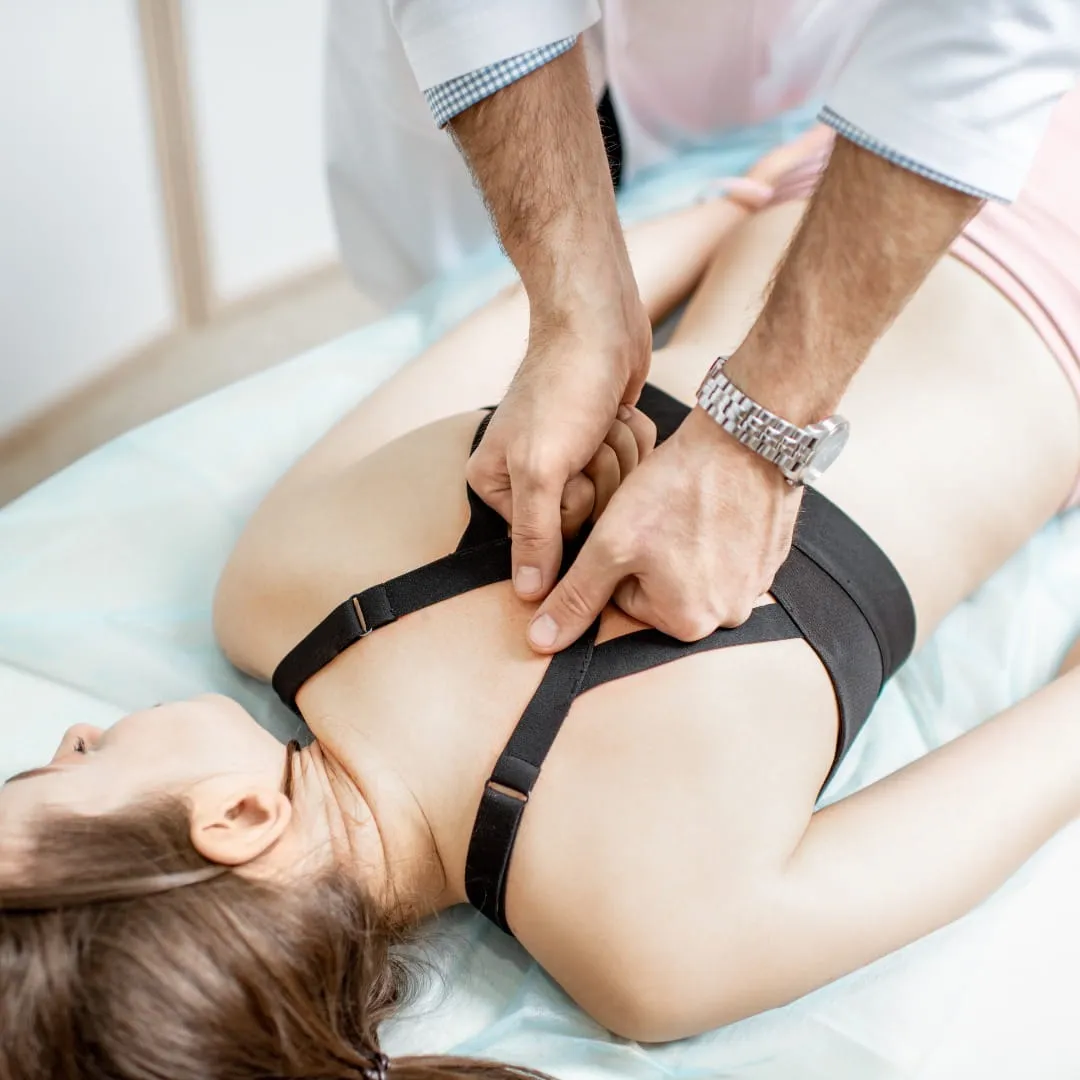
MANUAL THERAPY IS NOT CHIROPRACTIC OR MASSAGE.
Manual therapy is the hands-on component of evidence-based physiotherapy. Joint mobilisation, soft tissue work, manipulation where appropriate, and specific exercise — delivered by DPT-qualified physiotherapists.
THE QUICK ANSWER
Manual therapy at Vedara Care, in one paragraph.
Manual therapy at Vedara Care Polyclinic in Jumeirah Village Circle (JVC), Dubai — walking distance from Circle Mall — is the hands-on component of evidence-based physiotherapy, delivered by DPT-qualified physiotherapists with specific manual therapy training. It encompasses several specific techniques: joint mobilisation (Maitland grades I-IV, Kaltenborn technique) for restricted joints and joint pain; mobilisation with movement (Mulligan technique) combining therapist mobilisation with patient active movement; McKenzie method (MDT — Mechanical Diagnosis and Therapy) for spinal pain particularly sciatica and disc-related conditions; myofascial release for fascial restrictions and chronic tension patterns; soft tissue mobilisation for muscle and connective tissue dysfunction; neural mobilisation for nerve-related pain conditions; and spinal manipulation (high-velocity low-amplitude techniques) for appropriate patients with informed consent. We use manual therapy for chronic back and neck pain, frozen shoulder, sciatica, sports injuries, post-surgical rehabilitation, headaches with cervical contribution, TMJ dysfunction, and many other musculoskeletal conditions. It is fundamentally different from chiropractic and massage therapy. Single sessions from AED 380; structured programmes from AED 1,800. Manual therapy is rarely standalone — integrated with exercise prescription, patient education, and other modalities for sustainable outcomes. Insurance direct-billing with seven major insurers.
Medically reviewed by Dr. Layla Hassan, DPT, Manual Therapy Certified, DHA-Licensed 2509266 · Last updated June 2026
What manual therapy actually is — and what it is not.
Manual therapy is one of the most misunderstood treatments because patients often conflate it with chiropractic or massage. Understanding what it actually is — and how it differs — guides effective decision-making.
Manual therapy is the hands-on component of physiotherapy — a broad category of treatment techniques delivered by physiotherapists with specific training in manual approaches. It encompasses joint mobilisation, soft tissue techniques, neural mobilisation, and selectively-applied spinal manipulation, all guided by evidence-based clinical reasoning and integrated with the broader physiotherapy plan.
The specific techniques within manual therapy
Manual therapy is not one technique but a family of approaches: Joint mobilisation (Maitland method) — graded, oscillatory movements applied to joints to restore range of motion and reduce pain, performed at varying intensities depending on patient response. Kaltenborn technique — specific joint mobilisation using glides parallel or perpendicular to the joint surface to restore accessory motion. Mulligan mobilisation with movement (MWM) — combining therapist-applied mobilisation with patient active movement, often producing immediate pain reduction and range improvement. McKenzie method (MDT) — specific approach particularly for spinal pain, using repeated movements to assess and treat disc-related and other mechanical spinal conditions. Myofascial release — sustained pressure techniques addressing fascial restrictions and chronic tension patterns. Soft tissue mobilisation — specific work for muscle, tendon, and connective tissue dysfunction. Neural mobilisation — techniques addressing nerve mobility restrictions contributing to pain. Spinal manipulation — high-velocity low-amplitude techniques (HVLA) applied selectively to appropriate patients with informed consent.
How manual therapy differs from chiropractic
Manual therapy and chiropractic share some superficial similarities but are fundamentally different. Training framework — Manual therapy is delivered by DPT-qualified physiotherapists with specific manual therapy postgraduate training; chiropractic is delivered by chiropractors with different training pathways. Theoretical basis — Manual therapy is based on Western evidence-based clinical reasoning addressing joint, muscle, and nervous system dysfunctions; chiropractic traditionally emphasises vertebral subluxation theory. Treatment approach — Manual therapy uses primarily graded mobilisation with manipulation applied selectively; chiropractic uses primarily high-velocity manipulation as primary technique. Integration — Manual therapy is integrated with exercise prescription, patient education, and broader physiotherapy; both can be valuable for the right patients, they are different approaches with different evidence bases.
How manual therapy differs from massage therapy
Manual therapy and massage therapy share some superficial similarities but are fundamentally different. Training — Manual therapy is delivered by DPT-qualified physiotherapists with specific clinical training; massage therapy is delivered by massage therapists with different training. Diagnostic precision — Manual therapy involves specific clinical assessment identifying particular joint, muscle, or neural dysfunctions; massage typically addresses general muscle tension or relaxation. Treatment specificity — Manual therapy uses specific techniques for specific conditions; massage uses general techniques across body areas. Clinical purpose — Manual therapy targets specific musculoskeletal dysfunctions; massage may target relaxation, general muscle tension, or wellness. Both can be valuable; they have different applications.
The evidence base
Manual therapy has strong research evidence for several conditions: neck pain (particularly cervicogenic headaches), low back pain (particularly with mobilisation and selective manipulation), frozen shoulder (mobilisation as part of comprehensive treatment), and various other musculoskeletal conditions. Evidence supports manual therapy combined with exercise as more effective than either alone for most conditions. We use techniques with evidence support and integrate them with broader treatment for sustainable outcomes.
When manual therapy helps most
Manual therapy is particularly effective when integrated with exercise and education for: spinal pain with joint restriction component, frozen shoulder and other restricted joint conditions, post-surgical rehabilitation requiring joint mobilisation, headaches with cervical contribution, certain sciatica presentations (particularly with McKenzie method), and many sports injuries with joint or soft tissue restrictions. Manual therapy alone rarely produces sustainable outcomes — combined with exercise and education, outcomes are typically excellent.
Manual therapy is the hands-on craft of physiotherapy. Skilled application combined with appropriate exercise prescription and patient education produces sustainable outcomes that hands-on treatment alone rarely achieves.
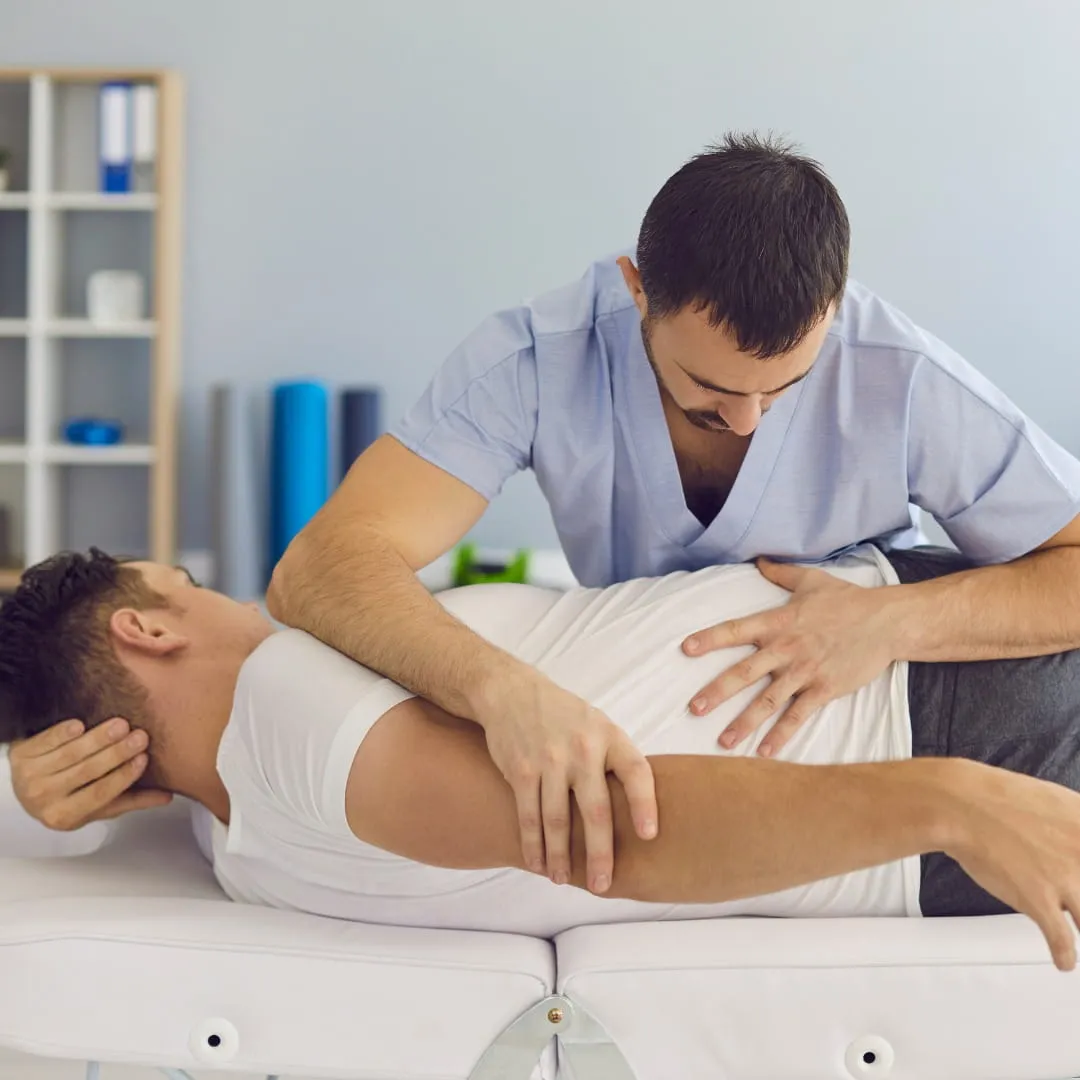
CONDITIONS TREATED
Conditions where manual therapy is central to our treatment approach.
Manual therapy is foundational to physiotherapy for many conditions. These are the most common applications in our practice.
Chronic Low Back Pain
The most common application. Joint mobilisation (Maitland, Kaltenborn), and McKenzie method address spinal joint dysfunction and disc-related conditions. Spinal manipulation selectively used with appropriate patients. Soft tissue work for associated muscle tension. Combined with exercise prescription for sustainable outcomes.
SPECIFIC TECHNIQUES APPLIED:
Maitland spinal mobilisation, Mulligan MWM, McKenzie method, selective manipulation, soft tissue work
Chronic Neck Pain & Cervicogenic Headaches
Highly responsive to manual therapy. Cervical joint mobilisation addresses restricted segments. Mulligan technique often produces immediate improvement. Suboccipital release for headache patterns. Combined with postural work and exercise. Particularly effective for headaches with cervical contribution.
SPECIFIC TECHNIQUES APPLIED:
Cervical Maitland mobilisation, Mulligan SNAGs, suboccipital release, soft tissue work
Frozen Shoulder (Adhesive Capsulitis)
Manual therapy is core treatment. Glenohumeral joint mobilisation in specific directions (inferior, posterior, anterior glides per Kaltenborn) restores capsular mobility. Mulligan techniques may produce immediate improvement. Combined with active and assisted range of motion exercises. Treatment progresses through frozen shoulder phases.
SPECIFIC TECHNIQUES APPLIED:
Kaltenborn glenohumeral glides, Maitland mobilisation, Mulligan techniques, scapular mobilisation
Sciatica & Lumbar Disc Conditions
McKenzie method (Mechanical Diagnosis and Therapy) is particularly effective. Repeated movements assess directional preference and guide treatment. Neural mobilisation for sciatic nerve involvement. Lumbar mobilisation addressing joint dysfunction. Combined with specific exercises based on directional preference.
SPECIFIC TECHNIQUES APPLIED:
McKenzie method, neural mobilisation, lumbar mobilisation, directional preference exercises
Sports Injuries with Joint Restrictions
Sport-specific applications. Ankle mobilisation after sprains. Hip mobilisation for restricted hip range. Mulligan techniques for various joints. Soft tissue work for sport-related muscle dysfunction. Neural mobilisation when relevant. Combined with sport-specific rehabilitation.
SPECIFIC TECHNIQUES APPLIED:
Joint mobilisation (multiple regions), soft tissue work, neural mobilisation, sport-specific application
Post-Surgical Rehabilitation
After many surgical procedures, joint mobilisation is essential to restore range of motion. Knee mobilisation after ACL reconstruction or knee replacement. Shoulder mobilisation after rotator cuff surgery. Ankle mobilisation after ankle surgery. Specific protocols respecting surgical precautions.
SPECIFIC TECHNIQUES APPLIED:
Surgery-specific joint mobilisation, soft tissue work for scar tissue, neural mobilisation when relevant
TMJ Dysfunction
Temporomandibular joint dysfunction often involves joint restriction and associated muscle tension. Specific TMJ mobilisation techniques. Soft tissue work for masseter and temporalis. Cervical involvement often present and addressed. Combined with patient education about jaw mechanics.
SPECIFIC TECHNIQUES APPLIED:
TMJ mobilisation techniques where appropriate, cervical mobilisation, soft tissue work
Chronic Musculoskeletal Pain
Various chronic pain presentations involving joint restrictions, soft tissue dysfunction, or neural mobility issues. Multimodal manual therapy approach. Particularly relevant for patients with persistent pain despite previous treatment. Integrated with chronic pain management approaches.
SPECIFIC TECHNIQUES APPLIED:
Multiple techniques based on assessment findings, integrated with chronic pain principles
Many other conditions benefit from manual therapy — comprehensive assessment identifies whether your specific condition is appropriate →
WHAT TO EXPECT
What a manual therapy session actually involves.
Understanding what happens in a manual therapy session helps you engage effectively with treatment.
Manual therapy is precise, skilled, hands-on physiotherapy. The session involves specific assessment, targeted treatment techniques, and integration with broader treatment. Understanding the process helps you participate effectively.
The comprehensive initial assessment
The first session is typically 60–75 minutes — longer than standard physiotherapy because manual therapy assessment is detailed. The session includes: thorough history-taking, posture assessment, movement screening, specific joint assessment (range of motion, end-feel, accessory motion), neurological assessment, muscle assessment, palpation findings, and integration of findings into a working diagnosis. The assessment identifies which specific techniques are likely to be most effective for your specific situation.
The first treatment session
Treatment typically begins in the same session as assessment. Specific techniques are chosen based on assessment findings — which joints need mobilisation, which soft tissues need work, which neural structures may be involved, whether manipulation is appropriate. Treatment is graded — meaning the intensity and depth are calibrated to your specific tolerance and response. Pain guides treatment intensity. Many patients experience immediate improvement after the first session.
What manual therapy actually feels like
Most manual therapy techniques are comfortable to mildly uncomfortable, not painful. Joint mobilisation feels like specific firm pressure or oscillating movements at the joint. Soft tissue work feels like deep pressure or sustained holds. Mulligan techniques feel like assisted movement with the therapist guiding direction. Neural mobilisation involves specific limb movements that may produce mild nerve symptoms briefly. Manipulation (when used) involves a brief quick movement, sometimes with an audible pop. Treatment should never be severely painful.
Spinal manipulation — only with informed consent
High-velocity low-amplitude techniques are one specific subset of manual therapy. We use them selectively, only when appropriate for the patient and condition, only with explicit informed consent, and only with appropriate safety screening. Most manual therapy uses graded mobilisation rather than manipulation. For patients with concerns about manipulation, complete mobilisation-based treatment is available with equivalent outcomes for most conditions.
After the session
Common post-treatment experiences: immediate improvement in range of motion or pain (often noticeable), brief sense of relaxation, sometimes mild soreness 24–48 hours after treatment (similar to post-exercise soreness, normal response). Many patients are advised to drink water, avoid heavy exercise for 24 hours, and continue with prescribed home exercises. The combination of manual therapy effects and exercise programme produces lasting improvement.
How many sessions are needed
Variable by condition. Acute conditions sometimes resolve in 2–4 sessions. Subacute conditions typically 4–8 sessions. Chronic conditions often 6–12 sessions integrated with broader treatment. Sessions are typically weekly initially, reducing as treatment progresses. Manual therapy alone rarely produces sustainable outcomes — combined with exercise prescription and education, outcomes are typically excellent.
SAFETY STANDARDS
For every manual therapy session:
- Comprehensive contraindication screening
- Specific informed consent for manipulation (when used)
- Graded treatment intensity respecting your tolerance
- Continuous communication during treatment
- Stopping point you can request anytime
- DPT-qualified manual therapy-trained practitioners only
Contraindications we screen for:
- Acute fractures
- Active inflammatory conditions
- Specific neurological conditions (CES screening)
- Vascular conditions (particularly before cervical manipulation)
- Severe osteoporosis (mobilisation modified)
- Recent surgery (treatment adapted)
- Pregnancy (techniques adapted)
- Specific medical conditions
Side effects you should know:
- Mild post-treatment soreness 24–48 hours (normal)
- Brief discomfort during specific techniques
- Rare: temporary symptom increase
- Very rare: significant adverse events
TECHNIQUES
The specific manual therapy techniques in our clinical practice.
Manual therapy is not one technique but a family of approaches. Specific techniques are matched to specific conditions and findings.
Maitland Mobilisation
Developed by Geoff Maitland, Australia
Graded oscillatory movements applied to joints — grades I through V with grades I–IV representing different intensities of mobilisation and grade V representing manipulation. The technique uses careful assessment of joint movement and assessment and treatment guidance based on patient presentation. Particularly evidence-supported for spinal conditions and peripheral joint dysfunction.
APPLICATIONS
Mulligan Mobilisation with Movement
Developed by Brian Mulligan, New Zealand
Combines therapist-applied mobilisation with active movement — the therapist provides a sustained gentle glide while the patient performs the previously painful movement. Often produces immediate dramatic improvement when correctly applied. Particularly useful for joints with movement-related pain. Includes specific techniques like SNAGs for spinal pain.
APPLICATIONS
Kaltenborn Technique
Developed by Freddy Kaltenborn, Norway
Specific joint mobilisation using glides parallel or perpendicular to the joint treatment plane. Highly precise application based on detailed joint biomechanics. Particularly effective for restoring accessory motion that limits range of motion. Foundational technique for joint mobilisation training internationally.
APPLICATIONS
McKenzie Method (MDT)
Developed by Robin McKenzie, New Zealand
Mechanical Diagnosis and Therapy — specific approach particularly for spinal pain. Uses repeated movements for assessment and treatment. Identifies directional preference or centralisation. Treatment based on identified clinical presentation. Particularly effective for disc-related conditions and certain cervical conditions. Substantial evidence base.
APPLICATIONS
Myofascial Release
Developed by Multiple developers, mainstream physiotherapy technique
Sustained pressure techniques addressing fascial restrictions and chronic tension patterns. Works with the connective tissue system. Particularly useful for patients with multiple musculoskeletal areas. Often combined with other manual therapy techniques.
APPLICATIONS
Neural Mobilisation
Developed by David Butler and others
Specific techniques addressing nerve mobility restrictions. Uses gentle active movements to mobilise neural structures throughout the body. Used for radiculopathies, nerve entrapment conditions, and chronic pain with nerve-related pain. Foundational technique for treating nerve pain.
APPLICATIONS
Specific technique selection depends on your specific presentation. Comprehensive assessment identifies which techniques are most likely to produce results in your situation. Most patients benefit from combination of techniques rather than single approach.
Manual therapy specialists at our JVC clinic.
Manual therapy is a craft developed through substantial postgraduate training and clinical experience. Our team includes physiotherapists with specific manual therapy certifications and substantial experience in the techniques described.

Dr. Layla Hassan, DPT
Spinal manual therapy, McKenzie MDT, cervicogenic headaches

Dr. Amit Sharma, DPT
Sports injuries, post-surgical rehabilitation, peripheral joints

Dr. Sofia Reyes, DPT
Frozen shoulder, TMJ dysfunction, myofascial release

Dr. James Mitchell, DPT
Chronic pain, sciatica, neural mobilisation
Real recoveries. Real outcomes.
"Chronic neck pain and tension headaches for three years. Multiple providers without progress. Vedara's approach combined Mulligan mobilisation with movement and specific Maitland techniques for the cervical spine — immediate improvement in the first session, substantial resolution over eight sessions. The integration with postural work and exercises was key. Two years later, still controlled with occasional maintenance sessions."
Sarah K.
Cervicogenic Headaches • 8-Week Programme • Dubai Marina • February 2026
"Frozen shoulder diagnosed by my GP — recommended cortisone injection. Vedara provided structured manual therapy programme using Kaltenborn mobilisation techniques specific to frozen shoulder pattern. Sixteen weeks of treatment combined with home programme. Substantial restoration without injection. The specific manual therapy approach for this condition made the difference."
Rajan M.
Frozen Shoulder • 16-Week Programme • Sports City • January 2026
"Sciatica for eight months — multiple treatments without progress. Vedara's McKenzie-trained physiotherapist identified directional preference and provided specific movement protocol combined with neural mobilisation. Six weeks of treatment — substantial improvement, return to normal activities. The accurate diagnosis using McKenzie method combined with appropriate hands-on treatment was the breakthrough."
Ahmed S.
Sciatica with Directional Preference • 6-Week Programme • JVC • March 2026
4.9
stars on Google
500+
manual therapy patients treated
Certified
Maitland, Mulligan, McKenzie practitioners
TRANSPARENT PRICING
What manual therapy costs at our JVC clinic.
Insurance direct-billing with seven major insurers. Manual therapy is part of standard physiotherapy benefits — coverage typically included without separate authorisation. Extended programmes may require pre-authorisation, which we handle on your behalf. WhatsApp your insurance card to +971 55 573 6312 before booking for specific coverage confirmation.
What patients ask about manual therapy before booking.
For broader physiotherapy questions, see our main physiotherapy page.
Ask a QuestionVISIT US
Where manual therapy happens at Vedara Care JVC.
NEARBY LANDMARKS
- ✓Walking distance from Circle Mall
- ✓3 minutes from FIVE Jumeirah Village Hotel
- ✓5 minutes from JSS Private School
- ✓Free patient parking
DISTANCE FROM DUBAI COMMUNITIES
READY FOR SKILLED MANUAL THERAPY?
The hands-on craft of evidence-based physiotherapy.
If you have chronic back or neck pain, frozen shoulder, sciatica, post-surgical rehabilitation needs, headaches with cervical contribution, TMJ dysfunction, sports injuries with joint or soft tissue restrictions, or other musculoskeletal conditions — skilled manual therapy may substantially help. The first step is comprehensive assessment determining manual therapy is appropriate for your specific situation and which techniques will be most effective. We are honest about when manual therapy helps and when other treatments are more appropriate. Same-week appointments typically available.
Initial assessment from AED 380 • Walking distance from Circle Mall, JVC • 500+ manual therapy patients treated • Certified specialists • Evidence-based techniques • Insurance direct-billing
EXPLORE FURTHER
Related services and conditions
Physiotherapy in JVC
Our complete physiotherapy department — manual therapy is foundational to comprehensive physiotherapy care.
Learn moreDry Needling Treatment
Often combined with manual therapy for chronic muscle tension and trigger point conditions.
Learn moreBack Pain Physiotherapy
The most common manual therapy application — chronic back pain with disc, joint, and soft tissue components.
Learn moreFrozen Shoulder Treatment
Manual therapy is core to frozen shoulder treatment — joint mobilisation in specific directions for capsular restriction.
Learn more