Migraine is a neurological disease. Treatment that respects that produces different outcomes.
Authentic Ayurvedic treatment for migraine in Dubai is a 4 to 6-month structured medical programme working alongside your neurologist — not instead of them. At our Jumeirah Village Circle (JVC) clinic, classical Shirodhara, Nasya, internal medicines, and trigger management address the underlying pattern most preventives only suppress. Realistic outcomes: 40-70% reduction in migraine days for most patients with episodic migraine over 6 months; meaningful but more variable results for chronic migraine.
WE READ YOUR DIARY, NOT YOUR AURA.
Bring your migraine tracker, your previous neurologist notes, and your current medications. Treatment starts from data.
THE QUICK ANSWER
Ayurvedic migraine treatment in Dubai, in one paragraph.
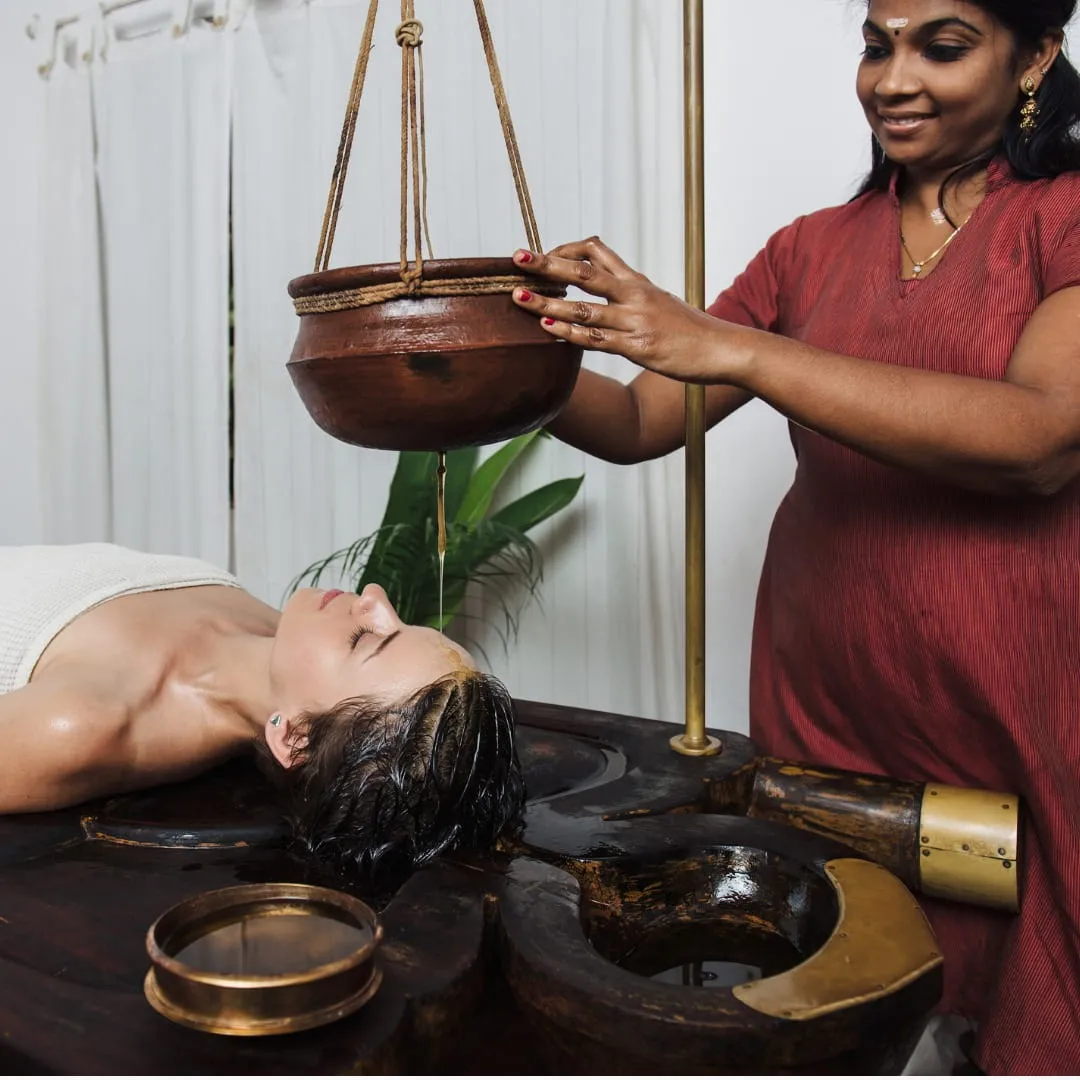
Ayurvedic treatment for migraine in Dubai is a 4 to 6-month structured medical programme combining classical Shirodhara (continuous warm medicated oil therapy on the forehead, the foundational treatment for headache disorders in Ayurveda), Nasya (medicated nasal therapy, classically the most direct treatment for head conditions), Takradhara (buttermilk variant for inflammatory migraine patterns), internal herbal medicines (typically including Brahmi, Pathyadi Kashayam, Shirashooladi Vajra Ras, and Pittahara formulations), trigger identification and management, and lifestyle modification. At Vedara Care Polyclinic in Jumeirah Village Circle (JVC), Dubai — next to Circle Mall — programmes work alongside neurology and existing migraine medications, never as replacement. Realistic outcomes: 40-70% reduction in migraine days for episodic migraine over 6 months. Initial consultations start from AED 350.
Medically reviewed by Dr. [Lead Ayurvedic Physician], BAMS, MD (Ayurveda), DHA-Licensed 2509266 · Last updated May 2026
Migraine is one of the most disabling neurological conditions globally — and the most under-treated.
Migraine is a primary neurological disease — not a symptom of stress, not "your body telling you to slow down," not a sign of poor lifestyle choices. It is a specific brain disorder involving cortical spreading depression, trigeminovascular system activation, neuroinflammatory cascades, and complex neurotransmitter dysregulation. Modern research has identified specific genetic variants associated with migraine susceptibility, mapped the involved brain pathways, and developed targeted treatments including CGRP inhibitors that have transformed care for some patients.
Despite this, migraine remains profoundly under-treated globally. The WHO ranks migraine as the second leading cause of years lived with disability in the world. In Dubai's expat population — particularly women aged 18-50 — prevalence is high, and the burden is often dismissed by employers, family members, and sometimes even healthcare providers who treat episodes rather than the underlying condition.
Classical Ayurveda describes multiple distinct headache patterns under the broader category of Shiroroga (head disorders), with specific subtypes for what modern medicine now calls episodic migraine (Ardhavabhedaka — literally "half-headache," describing the unilateral pain), cluster headache patterns (Suryavarta), and tension-type patterns (Shankhaka). The classification is over 2,000 years old. The treatment principles — addressing the Pitta-Vata imbalance underlying migraine, calming the nervous system through Shirodhara, clearing the head through Nasya, and managing triggers through diet and lifestyle — are still clinically valid.
Authentic Ayurvedic treatment at our JVC clinic respects both frameworks. We use classical Ayurvedic diagnostic principles and treatment protocols, working alongside modern neurology and current migraine medications. The combination addresses what neither alone can fully treat.
"Most clinics treating migraine treat the headache. The clinical task is to treat the migraine — the underlying disease — and reduce both the frequency and severity of headache days."

Six clinical patterns of migraine. Treatment for one is not treatment for another.
At our JVC clinic, the first step is identifying which specific pattern of migraine you have. The protocols differ significantly by subtype.
Episodic Migraine Without Aura
Ardhavabhedaka in classical Sanskrit
Ayurvedic emphasis for this type:
Episodic Migraine With Aura
Drishtimargakshaya-related patterns in classical texts
Ayurvedic emphasis for this type:
Chronic Migraine
Severe Ardhavabhedaka or related pattern
Ayurvedic emphasis for this type:
Menstrual Migraine
Yoshapasmara-adjacent patterns; often Pitta-dominant
Ayurvedic emphasis for this type:
Vestibular Migraine
Bhrama-associated patterns in classical texts
Ayurvedic emphasis for this type:
Medication Overuse Headache (MOH)
Pattern often masking underlying migraine
Ayurvedic emphasis for this type:
Most patients are not certain which subtype they have. Many have features of multiple subtypes (e.g., episodic migraine with menstrual exacerbation, or chronic migraine with medication overuse component). Pattern identification at consultation — including review of your migraine diary if you have one — is the foundation of effective treatment.
Ayurvedic migraine treatment has four pillars.
Shirodhara — The Foundational Therapy
Nasya — The Direct Head Therapy
Internal Medicines for Migraine
Trigger Management & Lifestyle Protocols
What four to six months of Ayurvedic migraine treatment at our JVC clinic looks like.
A representative protocol for episodic migraine with moderate frequency (4-10 migraine days per month). Chronic migraine and complex subtypes follow extended versions.
Assessment & Foundation
- 60-minute consultation with BAMS-qualified physician at our JVC clinic
- Detailed migraine history — onset, frequency, duration, intensity, aura, triggers, family history
- Review of previous treatments — all preventives tried, all acute medications, response to each
- Review of current neurological status, MRI reports, current medications
- Pulse diagnosis, dosha assessment, pattern classification (which of the six subtypes)
- Migraine diary protocol if not already tracking
- Coordination with your neurologist (with consent)
- Initial internal medicines prescribed (60-90 days)
- Weekly Abhyanga sessions begin
- First Shirodhara sessions at end of month
- Trigger identification and initial management protocol
Intensive Shirodhara & First Nasya
- 7-14 Shirodhara sessions (2-3 per week) with pattern-specific oil
- First 7-day Nasya course (typically days 1-7 of month)
- Continued Abhyanga (now fortnightly)
- Refined internal medicines based on initial response
- Trigger management protocols sharpened
- Mid-month doctor review
Continued Active Treatment
- Mid-programme comprehensive review with migraine diary analysis
- Refined internal medicines
- Maintenance Shirodhara (weekly)
- Continued trigger management
- Coordination with neurologist for medication review if appropriate
Second Nasya & Consolidation
- Second 7-day Nasya course
- Continued maintenance Abhyanga
- Possible introduction of Takradhara variant if hormonal or inflammatory component significant
- Continued internal medicines
- Lab work review if updated bloodwork available
- Mid-month doctor review
Refinement
- Personalised maintenance dose of internal medicines
- Reduced clinic visits (every 2-3 weeks)
- Continued lifestyle protocol refinement
- Long-term plan discussion
Discharge & Long-Term Plan
- Final assessment with migraine diary comparison
- Transition to maintenance protocol
- 6-month home herbal course
- Long-term trigger and lifestyle plan documented
- Coordinated handover communication with your neurologist
- 3-month, 6-month, and 12-month follow-up appointments scheduled
- Annual review considered for ongoing support
This is a representative protocol for episodic migraine. Chronic migraine patients often need the full 6 months, with possible extension. Vestibular migraine patients typically follow gentler protocols at slower pace. Menstrual migraine patients have cycle-aware protocols built into the standard programme.
Honest outcome ranges based on migraine subtype.
Different migraine subtypes respond differently to Ayurvedic treatment. These ranges are based on our 280+ migraine patients at the JVC clinic with documented migraine diaries before and after 6-month programmes.
| Subtype | Reduction in Migraine Days (6 months) | Reduction in Attack Severity | Reduction in Acute Medication Use |
|---|---|---|---|
| Episodic Migraine Without Aura | 40-70% reduction typical | 30-50% reduction | Often 40-60% reduction |
| Episodic Migraine With Aura | 30-60% reduction typical | 25-45% reduction | Often 30-50% reduction |
| Chronic Migraine | 25-50% reduction typical | 20-40% reduction | Variable — often less reduction due to baseline high use |
| Menstrual Migraine | 40-70% reduction in menstrual attacks; non-menstrual attacks vary | 30-50% reduction in attack severity | Often 40-60% reduction |
| Vestibular Migraine | 30-60% reduction in episodes | 30-50% reduction in vertigo severity | Variable depending on baseline medication |
| Medication Overuse Headache | After withdrawal: outcomes match underlying migraine subtype | Withdrawal period: temporary increase before improvement | Significant reduction (the goal of treatment) |
These are honest ranges based on patients who complete the full 6-month programme with consistent adherence. Patients who land at the lower end are typically those whose programme is interrupted, who do not implement lifestyle protocols, or who have complex co-existing conditions. Patients who exceed the upper ranges exist but are not the norm — honesty matters more than aspirational claims for this patient demographic.
Ayurvedic migraine treatment works alongside your medications — not instead of them.
1. If You Are on Migraine Preventives
Many of our migraine patients are on daily preventives — propranolol, topiramate, amitriptyline, candesartan, flunarizine, or CGRP inhibitors (Aimovig/erenumab, Ajovy/fremanezumab, Emgality/galcanezumab, Vyepti/eptinezumab). Ayurvedic treatment is compatible with all of these. We never ask you to stop preventive medication. Medication changes are decisions made by your neurologist based on documented frequency reduction, never based on Ayurvedic treatment recommendations.
2. If You Are Using Acute Medications
Triptans (sumatriptan, rizatriptan, eletriptan, etc.), gepants (rimegepant, ubrogepant), and other acute treatments remain available throughout the programme. We do not ask you to "tough out" attacks. The goal is reducing the frequency of attacks so that acute medication use decreases naturally — not eliminating acute medication. For patients with medication overuse headache, withdrawal is supervised by your neurologist with Ayurvedic supportive care during the withdrawal period.
3. If You Are on Botox or CGRP Inhibitors
For patients on Botox preventive therapy or CGRP inhibitors, Ayurvedic treatment provides complementary care addressing the underlying pattern these medications suppress. Many patients in this category see further reduction in breakthrough migraines and sometimes — with their neurologist's supervision — extension of intervals between Botox treatments or simplification of CGRP regimens after documented improvement.
Migraine medications represent decades of neuroscience research. We are not anti-medication, and we are not 'natural alternative' medicine. We are integrative — addressing the layers conventional medications do not address while respecting what they do address. We coordinate with your neurologist throughout the programme.
When we refer you to neurology first.
The 'worst headache of your life,' sudden severe headache, or headache with neurological symptoms (weakness, numbness, vision loss, speech changes, confusion) requires immediate emergency evaluation. Call 999.
Urgent neurology evaluation required:
- First-ever severe headache after age 50 (rule out secondary causes)
- Headache pattern that has changed significantly in the last 3 months
- Headache with new neurological symptoms (vision changes, weakness, numbness)
- Headache with fever and stiff neck (rule out meningitis)
- Headache that wakes you from sleep regularly
- Suspected secondary headache (post-trauma, post-procedure, with systemic symptoms)
When Ayurveda works alongside neurology:
- You have an established migraine diagnosis from a neurologist
- You are on preventive or acute migraine medications
- You have completed neurological workup (MRI if indicated, no red flags)
- Your migraine pattern is stable but inadequately controlled
- You want to address root patterns alongside medications
- You have chronic migraine and want to reduce medication burden
Real Ayurvedic doctors at our JVC clinic refer to neurology for diagnostic workup and never treat undiagnosed headache as migraine without proper evaluation. We work with several Dubai neurology practices and can recommend appropriate referrals if you do not currently have a neurologist.
"Twelve migraine days a month for fifteen years. Six months at Vedara alongside my neurologist — down to three migraine days a month. My neurologist agreed to a topiramate dose reduction."
Sarah K.
Episodic Migraine · 6-Month Programme · JVC District 12 · February 2026
"My menstrual migraines were so bad I lost two days every cycle. Five months at Vedara — the cycle migraines are gone, the occasional non-menstrual ones are mild."
Priya R.
Menstrual Migraine · 5-Month Programme · Al Barsha South · January 2026
"Daily headache for six years on three medications. The medication overuse withdrawal was hard. Twelve months later, I have migraine 7-9 days a month — and I am off two of the three medications."
Rohan D.
Chronic Migraine with MOH · 12-Month Integrated Programme · Dubai Marina · March 2026
4.9
STARS ON GOOGLE
94
MIGRAINE REVIEWS
82%
ACHIEVED 30%+ REDUCTION
64%
ACHIEVED 50%+ REDUCTION
What Ayurvedic migraine treatment at our JVC clinic costs.
Indicative pricing for our three most-common migraine programmes. Final pricing depends on subtype, severity, and protocol intensity confirmed at consultation.
Migraine Initial Assessment
- Comprehensive consultation with BAMS-qualified physician
- Detailed migraine history and trigger pattern review
- Review of all previous treatments and current medications
- Review of neurologist notes and any imaging
- Subtype identification (which of the six clinical patterns)
- Pulse diagnosis and dosha assessment
- Coordination plan with your neurologist
- Written treatment plan with realistic outcome expectations
- Full programme pricing in writing
First step for every migraine patient — required before any treatment programme
Standard 6-Month Migraine Programme
- All Initial Assessment components
- 14-21 Shirodhara sessions during active phase (months 2-3)
- Two Nasya courses (months 2 and 4, 7 days each)
- Weekly-then-fortnightly Abhyanga
- 6 months of pattern-specific internal medicines
- Trigger management and lifestyle protocols
- Monthly doctor reviews
- 3-month and 12-month follow-up after programme
Episodic migraine, menstrual migraine, vestibular migraine, and most migraine subtypes
Comprehensive Chronic Migraine Programme
- All Standard Programme components
- Extended Shirodhara protocols (often 21-30 sessions total)
- Three Nasya courses across the programme
- Possible Panchakarma component (typically months 3-4)
- Medication overuse headache withdrawal support if applicable (coordinated with neurologist)
- Extended internal medicine protocols
- 12-month follow-up programme
Chronic migraine, medication overuse headache, severe or treatment-resistant patterns, complex integrated care
Insurance direct-billing available with seven major insurers — coverage for Ayurvedic migraine treatment varies. Migraine is recognised as a medical condition for insurance purposes which often supports coverage. WhatsApp us your card before booking to confirm.
What patients ask before starting Ayurvedic migraine treatment.
For Shirodhara specifically, see the treatment page. For stress-related headache without migraine pattern, see our stress and anxiety page.
Ask the Clinical TeamREADY?
Begin with the assessment that treats migraine as the disease it is.
If you have been managing migraine for years — with medications that partially work, triggers you cannot always avoid, and neurologist appointments that feel rushed — the first useful step is a 60-minute consultation that takes your migraine seriously. We identify your specific subtype, review what you have already tried, design a 6-month programme tailored to your pattern, and coordinate with your neurologist throughout. Migraine is a serious neurological condition. We treat it as one.
Initial consultation from AED 350 · Walking distance from Circle Mall, JVC · Coordinated with your neurologist · Insurance direct-billing · Free clinic parking
VISIT OUR JVC CLINIC
Where migraine treatment happens at Vedara Care.
NEARBY LANDMARKS
- ✓Next to Circle Mall
- ✓2 minutes from FIVE Jumeirah Village Hotel
- ✓5 minutes from JSS Private School
- ✓Easy access from JVC, JVT, Al Barsha South, Sports City, Motor City
DISTANCE FROM DUBAI COMMUNITIES
EXPLORE FURTHER
Related pages.
Shirodhara in Dubai →
The foundational Ayurvedic treatment for migraine. Full protocol description, oils used, and what to expect during sessions.
Learn moreAyurveda for Stress & Anxiety in Dubai →
For migraine patients with prominent stress and anxiety components — often co-existing — the conditions are treated together.
Learn moreAyurveda for PCOS in Dubai →
For women with menstrual migraine and PCOS — common co-occurrence — both conditions are treated in integrated programmes.
Learn morePanchakarma in Dubai →
For chronic migraine or treatment-resistant patterns, classical Panchakarma addresses systemic root patterns over 14-21 days.
Learn more