Physiotherapy for neck pain in JVC. Understanding it, addressing it, preventing it.
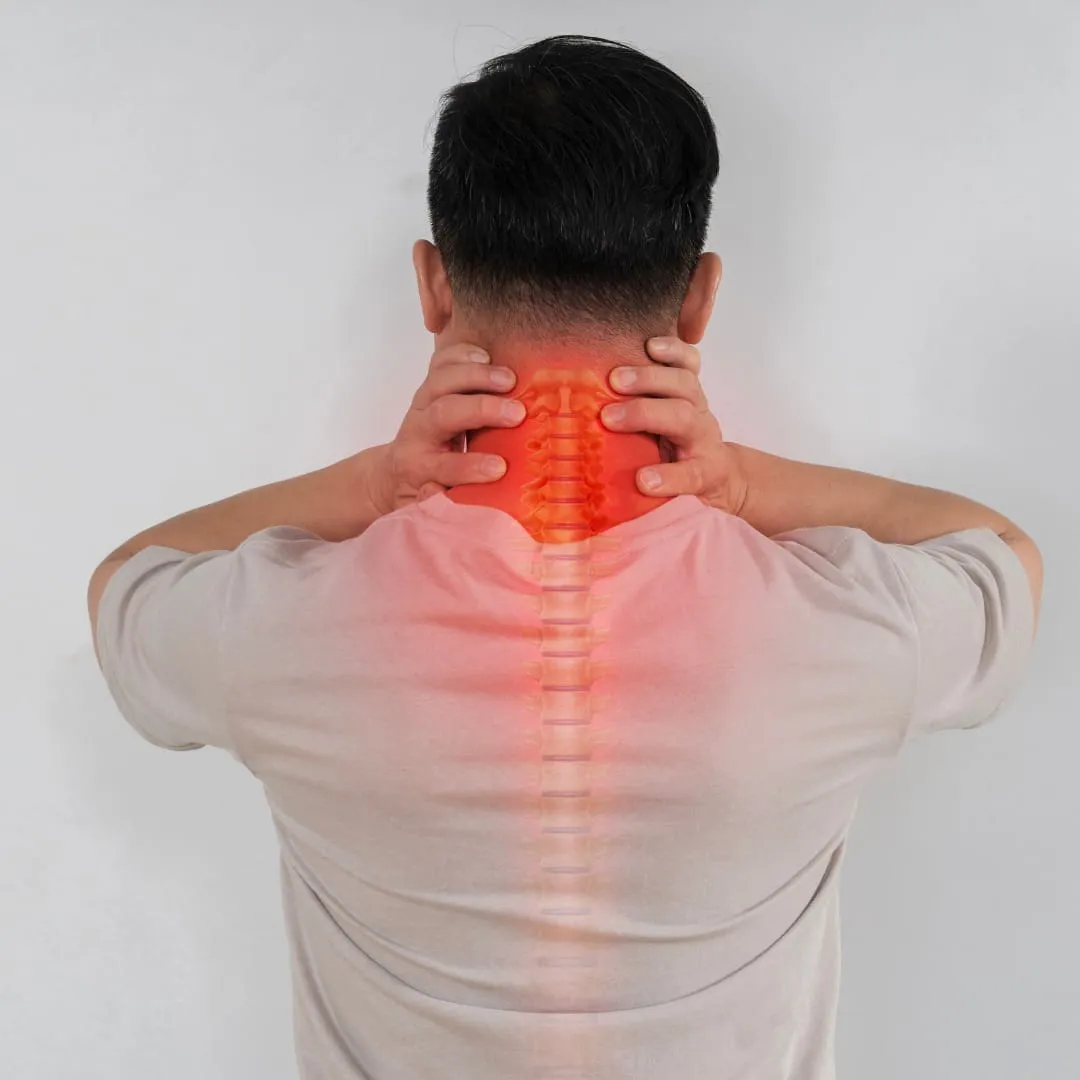
Most neck pain is mechanical, treatable, and meaningfully responsive to evidence-based physiotherapy. At our Jumeirah Village Circle clinic, our DPT-qualified physiotherapists treat acute and chronic neck pain, forward head posture, cervical spondylosis, whiplash, and cervicogenic headaches.

Educational Approach
This page is designed to help you understand neck pain before you book. Skip ahead to book directly, or read on to learn what we treat and how.
THE QUICK ANSWER
Neck pain physiotherapy at our JVC clinic, in one paragraph.
Neck pain physiotherapy at Vedara Care Polyclinic in Jumeirah Village Circle (JVC), Dubai — walking distance from Circle Mall — is evidence-based conventional physiotherapy delivered by DPT-qualified specialists. We treat acute neck pain (recent onset, often work or sleep-related), chronic neck pain (persistent patterns from posture, repetitive strain, or trauma), forward head posture and tech neck, cervical spondylosis, whiplash, cervicogenic headaches, and cervical radiculopathy. Treatment combines hands-on manual therapy (cervical mobilisation, soft tissue work), specific exercise prescription (postural correction, motor control, strengthening), dry needling for chronic muscle patterns, and ergonomic education for prevention. Patients travel to our JVC clinic from JVT, Al Barsha South, Sports City, Motor City, Arjan, Dubai Hills, and across Dubai. Insurance direct-billing with seven major insurers.
Medically reviewed by Dr. Aisha Khalid, DPT · DHA-Licensed 2509266 · Last updated June 2026
Why neck pain has become epidemic in modern life.
Most neck pain is not from a single injury — it builds over weeks, months, or years from sustained patterns. Understanding the cause helps explain the treatment.
The human cervical spine evolved to support a head weighing approximately 5kg in a neutral upright position. Modern life — desks, screens, devices, sustained postures — frequently positions the head forward of neutral, which dramatically increases the load on cervical muscles and joints.
The physics is striking. For every 2.5cm the head moves forward of neutral, the effective weight on the cervical spine roughly doubles. A head tilted forward 15 degrees creates approximately 12kg of effective load. At 30 degrees — typical when looking down at a phone — the load reaches 18kg. Modern adults sustain these positions for hours daily.
The Dubai context
Dubai's expat workforce is concentrated in desk-intensive industries — finance, technology, government, professional services. Combined with long working days (often 9–11 hours) and significant device use, the sustained postural load is substantial. Neck pain has become one of the most common physiotherapy presentations across Dubai's working population.
The patterns we see most often
Forward head posture with rounded shoulders, upper trapezius tension, weakness in the deep cervical flexor muscles, restricted thoracic spine mobility, and protective muscle guarding. Each component contributes to the others. The pattern develops gradually, often goes unnoticed for years, and presents as pain only when the system can no longer compensate.
The good news
Modern evidence-based physiotherapy is highly effective for most neck pain. Manual therapy releases acute symptoms. Structured exercise addresses the underlying postural patterns. Education enables long-term self-management. Most patients see substantial improvement within 6–12 weeks. The body that developed the pattern can also unwind it — with the right approach.
"Most modern neck pain is not really about the neck. It is about the system that holds the head — and the patterns the system has fallen into."

The patterns we treat at our JVC clinic.
Different neck pain patterns require different treatment approaches. Identifying your specific pattern is the first step.
Acute Mechanical Neck Pain
Typical signs:
Stiff neck, limited rotation, pain on movement, recent onset
Chronic Mechanical Neck Pain
Typical signs:
Ongoing tension, worse with sustained activity, improves with movement and rest
Forward Head Posture / 'Tech Neck'
Typical signs:
Visible forward head position, upper back stiffness, headaches, end-of-day fatigue
Cervical Spondylosis
Typical signs:
Stiffness more than pain, worse in morning, may have associated arm symptoms
Whiplash (Post-Accident Neck Injury)
Typical signs:
Post-trauma onset, pain with movement, sometimes headache and arm symptoms
Cervicogenic Headaches
Typical signs:
One-sided headache, associated with neck position, neck stiffness alongside headache
Cervical Radiculopathy
Typical signs:
Arm symptoms along nerve distribution, worsens with certain neck positions, sometimes weakness
Postural and Occupational Neck Pain
Typical signs:
Worse at end of working day, related to work patterns, may improve over weekends
Self-Assessment
Should you see a physiotherapist for your neck pain?
Most neck pain is appropriate for physiotherapy treatment. However, some presentations require different approaches — medical evaluation, imaging, or specialist referral. Here is guidance on whether physiotherapy is the right next step.
Physiotherapy is typically the right first step if:
Your neck pain is mechanical (related to movement, position, or activity)
The pain started without specific significant trauma
You do not have progressive neurological symptoms (significant arm weakness, numbness affecting daily function)
Your pain has lasted more than a week and is not improving
You have recurring episodes of neck pain
Postural or work-related patterns seem to contribute
You want to address underlying patterns, not just manage symptoms
Medical evaluation should come first if:
Significant recent trauma (vehicle accident, fall, sports collision) — A&E first
Severe pain unrelieved by position changes
Fever with neck pain (could indicate infection)
Significant arm weakness or progressive neurological symptoms
History of cancer with new neck pain
Severe night pain that wakes you from sleep
Severe headache with neck stiffness (could indicate meningitis — emergency)
A note on imaging
Current evidence does not support routine imaging for mechanical neck pain. Many people have significant imaging findings without any pain. Imaging may be appropriate if symptoms do not improve or significant neurological features develop. Your physiotherapist can advise during assessment.
When to Seek Urgent Care
A&E immediately
GP or specialist first
Physiotherapy first
Ready to book an assessment?
60-minute initial assessment with a DPT-qualified physiotherapist. Same-week appointments typically available.
Book Neck Pain AssessmentWhatsApp Us FirstHow we actually treat neck pain at our JVC clinic.
Effective neck pain treatment combines several elements that work together. No single approach addresses all the factors involved in most neck pain — the treatment must be comprehensive.
Detailed initial assessment
The first session is comprehensive — typically 60 minutes including detailed history-taking, postural assessment, cervical range of motion testing, neurological examination where appropriate, specific orthopaedic tests, and assessment of contributing factors (thoracic spine, shoulders, work patterns). Accurate diagnosis determines effective treatment.
Manual therapy for symptom modulation
Hands-on manual therapy — cervical mobilisation, soft tissue work, joint manipulation where appropriate, manual stretching — provides effective symptom relief and creates a window for active rehabilitation. Evidence-based for both acute and chronic neck pain. Performed by DPT-qualified physiotherapists with manual therapy training.
Specific exercise prescription
The most evidence-supported intervention for neck pain is structured exercise — but specific exercise for your pattern. Common components: deep cervical flexor strengthening (weakened in forward head posture), postural correction, thoracic spine mobility, scapular control, and graduated functional movement.
Dry needling for chronic muscle patterns
For chronic muscle tension — upper trapezius, levator scapulae trigger points, suboccipital muscle tension — dry needling is highly effective. Releases trigger points and reduces protective muscle guarding. Particularly useful for chronic headache patterns and persistent muscle tension.
Postural and ergonomic education
For most neck pain patients, the sustained patterns of daily life are part of the problem — workstation setup, screen position, device use habits, sleep positioning. We provide specific guidance on optimising these factors. Many patients find that workstation changes alone produce meaningful symptom improvement.
Home programme and self-management
What you do between sessions matters more than what happens during sessions. We provide structured home exercise programmes, specific guidance on movement breaks during work, sleep position recommendations, and ongoing self-management strategies. The goal is enabling you to manage your own neck health long-term.
"Treating neck pain without addressing the sustained patterns that created it is treating symptoms while the cause continues. The treatment must address the patterns — or the patterns will recreate the pain."
Treatment Phases
The four phases of neck pain physiotherapy.
Symptom Reduction
Weeks 1–32 sessions per weekActive Rehabilitation
Weeks 3–8Weekly sessionsStrengthening and Integration
Weeks 8–16Bi-weekly or monthlyMaintenance and Prevention
Months 4+Periodic as neededThese phases are illustrative. Acute presentations often resolve in Phases 1–2 only. Chronic patterns typically extend through all four phases. Your specific timeline is documented at initial assessment.
Techniques and Modalities
Evidence-based physiotherapy techniques for neck pain.
01
Cervical Manual Therapy
Spinal mobilisation (graded oscillatory movements to restore cervical joint motion), manipulation in carefully selected patients, soft tissue work for muscle tension, and manual stretching. Evidence-based for both acute and chronic neck pain. Performed by DPT-qualified physiotherapists with manual therapy training.
02
Deep Cervical Flexor Training
Specific exercise prescription targeting the deep cervical flexor muscles (longus colli, longus capitis) which are weakened in most chronic neck pain patterns. Modern motor control training is meaningfully different from generic neck exercises — calibrated to your specific dysfunction. Highly evidence-supported.
03
Dry Needling
Fine needles inserted into trigger points and tight muscle bands — particularly effective for upper trapezius tension, levator scapulae trigger points, and suboccipital muscle patterns. Different from acupuncture in mechanism. Performed by physiotherapists with specific dry needling certification.
04
Thoracic Spine Mobilisation
Most chronic neck pain involves restricted thoracic spine mobility. When the thoracic spine is stiff, the cervical spine compensates. Thoracic mobilisation often produces substantial neck pain improvement — a component frequently overlooked elsewhere. Specific to our neck pain treatment approach.
05
Postural Re-Education
Structured retraining of postural patterns through specific exercises, sustained postural awareness work, and habit change strategies. Specific motor learning protocols — meaningfully different from generic advice. Particularly important for significant forward head posture and tech neck.
06
Workplace Ergonomic Assessment
For desk-working patients — the majority of our neck pain presentations — workplace ergonomic optimisation is integral to treatment. Workstation height, screen position, keyboard and mouse placement, chair selection, lighting, and break patterns all contribute meaningfully to recovery.
Real neck pain outcomes from real patients.
"Chronic neck pain for four years. Office worker, desk-bound. Tried multiple things including chiropractor and massage. Vedara identified the specific pattern, treated thoracic stiffness I did not know was contributing, and taught me exercises that actually work. Eight weeks later, the pain that defined my mornings is rare and brief."
Sarah K.
Chronic Mechanical Neck Pain · 8-Week Programme
Al Barsha South resident · February 2026
"Whiplash after a small vehicle accident. Headache and neck stiffness that did not resolve. Vedara provided structured rehabilitation over six weeks including manual therapy and progressive exercise. Returned to normal activity by week four, fully resolved by month three. Cannot fault the care."
James M.
Whiplash · 12-Week Programme
JVC resident · January 2026
"Tech neck and chronic cervicogenic headaches for two years. Same headache pattern weekly. Vedara identified the cervical source and provided treatment combining dry needling, postural correction, and specific exercises. The weekly headaches stopped within five weeks. Six months later, occasional only and manageable."
Priya R.
Cervicogenic Headache + Tech Neck · 12-Week Programme
Sports City resident · March 2026
4.9
stars on Google
220+
neck pain patients treated
89%
report significant improvement within 8 weeks
Physiotherapy specialists for neck pain at our JVC clinic.

Dr. Aisha Khalid
DPT · OMPT Certified
9 years of clinical experience. Post-graduate training in orthopaedic manual physiotherapy. Sub-specialist in cervical spine rehabilitation.
Languages: English, Arabic, Urdu
View full profile
Dr. Marcus Silva
DPT · MSc Sports Physio
Specialist in sports-related cervical injuries and occupational neck pain. Extensive experience with Dubai's desk-working population.
Languages: English, Portuguese, Spanish
View full profile
Dr. Fatima Al Rashid
DPT · Cert. Dry Needling
Sub-specialist in cervicogenic headache management and postural rehabilitation. Certified dry needling practitioner with 7 years of experience.
Languages: Arabic, English, French
View full profileWhat neck pain physiotherapy at our JVC clinic costs.
Initial neck pain assessment (60 minutes)
AED 350
Follow-up physiotherapy session (45-60 minutes)
AED 250
Same-day urgent assessment (severe acute neck pain)
AED 420
Dry needling (add-on per session)
AED 150
Workplace ergonomic assessment (optional)
AED 550
Acute neck pain package (6 sessions over 3-4 weeks)
AED 1,400
Chronic neck pain programme (12 sessions over 8-12 weeks)
AED 2,700
Extended chronic care (20 sessions over 12-24 weeks)
AED 4,200
Home physiotherapy session (when clinic travel impractical)
AED 400
Insurance direct-billing: Daman, AXA, Allianz, Oman Insurance, Now Health, Bupa, and MetLife. Most Dubai insurance plans cover neck pain physiotherapy. WhatsApp your insurance card to confirm coverage →
What people ask about neck pain physiotherapy.
For general physiotherapy questions, see our main physiotherapy page.
Ask a QuestionVISIT US
Where neck pain physiotherapy happens at Vedara Care JVC.
+971 55 573 6312
LANDMARKS & ACCESS
Operating Hours
Take the Next Step
You have learned about neck pain. Ready to address yours?
Most neck pain is treatable. If your neck pain is mechanical, has lasted more than a week, is affecting daily life, or is recurring — physiotherapy is typically the right next step. The first useful step is a 60-minute neck pain assessment at our JVC clinic. We assess thoroughly, explain findings clearly, and design an evidence-based treatment plan. Same-week appointments typically available.
Initial assessment from AED 350 · JVC · DPT-qualified physiotherapists · Insurance direct-billing · Same-day appointments for severe acute pain · Walking distance from Circle Mall
EXPLORE FURTHER
Related physiotherapy services
Shoulder Pain Physiotherapy
Comprehensive shoulder pain treatment for rotator cuff, impingement, and other shoulder conditions — related anatomical region.
Learn moreSciatica Physiotherapy
Specialised sciatica treatment at our JVC clinic — McKenzie method certified therapists for disc herniation, piriformis syndrome, and pregnancy-related sciatica.
Learn morePhysiotherapy in JVC
Our complete physiotherapy department — all seven specialisations, the full team, and every condition we treat.
Learn moreCupping Therapy
Can be used as an adjunct treatment for neck pain and muscle tension.
Learn moreBack Pain Physiotherapy
Evidence-based physiotherapy for acute and chronic back pain — same approach, different spinal region.
Learn moreSports Injury Physiotherapy
For sports-related neck pain — gym training, contact sports, padel-related cervical strain.
Learn morePediatric Physiotherapy
For children and adolescents with neck pain — increasingly common from device use and gaming.
Learn more