PRP hair treatment in JVC, Dubai. Sophisticated protocols delivered by consultant dermatologists for measurable results.
Specialist PRP (platelet-rich plasma) hair treatment at our Jumeirah Village Circle (JVC) clinic, walking distance from Circle Mall. DHA-licensed consultant dermatologists delivering evidence-based PRP protocols for androgenetic alopecia, female pattern hair loss, telogen effluvium, hair transplant support, and general hair thinning. Combination approach with medical therapy typically produces superior outcomes to standalone PRP.
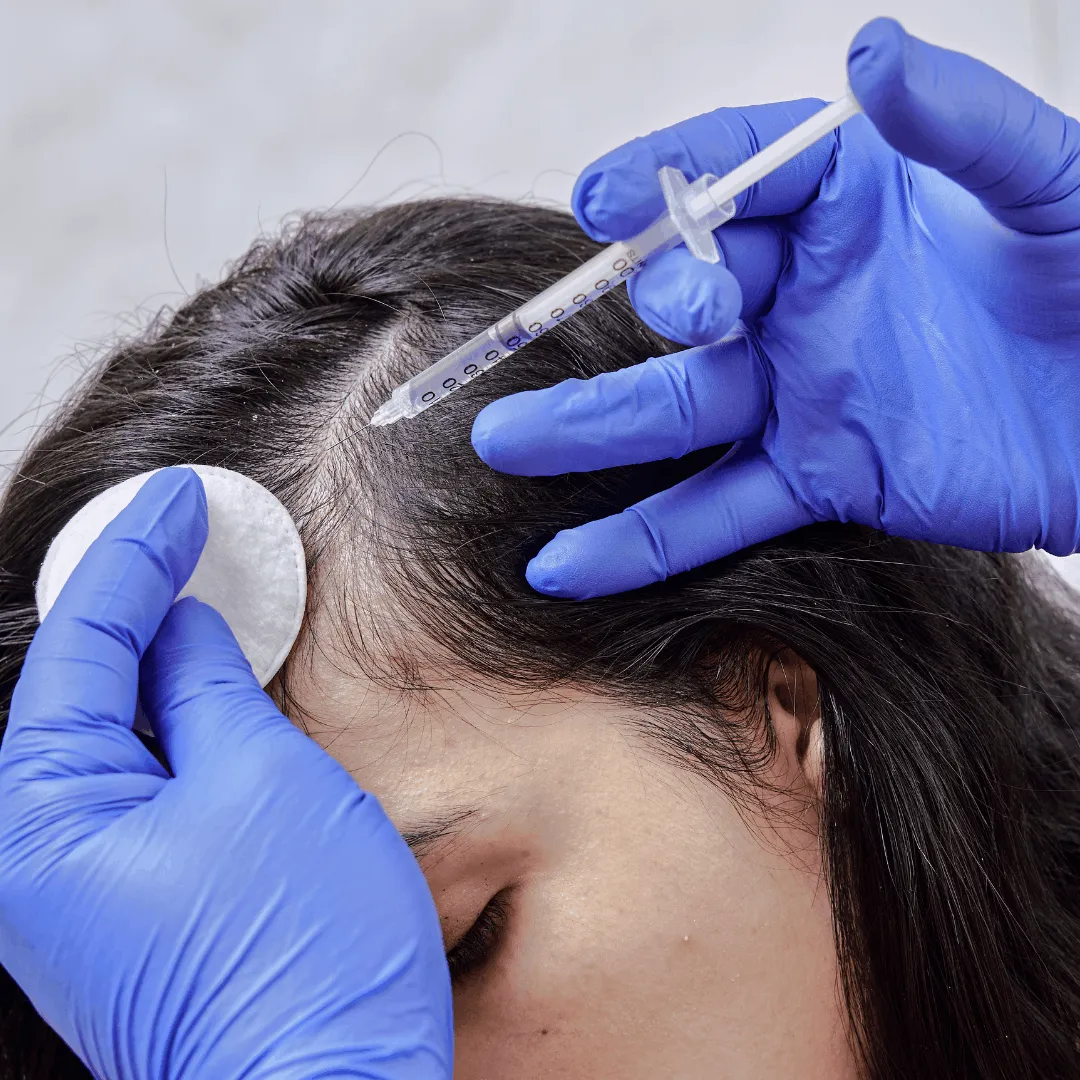
Protocol quality determines outcomes.
PRP is offered by many providers in Dubai — aesthetic clinics through medical dermatology practices. Protocol quality varies substantially: patient selection, blood processing technique, and combination approach all determine whether PRP produces measurable results or minimal improvement. Specialist protocols matter.
THE QUICK ANSWER
PRP hair treatment at Vedara Care, in one paragraph.
PRP hair treatment at Vedara Care Polyclinic in Jumeirah Village Circle (JVC), Dubai — walking distance from Circle Mall — is specialist PRP therapy delivered by DHA-licensed consultant dermatologists using evidence-based protocols. PRP (platelet-rich plasma) uses concentrated growth factors from your own blood to stimulate hair follicles, improve hair thickness, and support hair regrowth. Suitable for: androgenetic alopecia (male and female pattern hair loss) in appropriate patients, telogen effluvium (post-illness, post-partum, stress-related), hair transplant support to enhance graft survival and stimulate native hair, and general hair thinning in patients seeking non-systemic treatment options. Our protocol: comprehensive hair loss consultation; standardized blood draw and quality centrifugation to concentrate platelets; activation techniques where appropriate; systematic injection using specific techniques; and typically a series of 4–6 sessions initially, then maintenance every 3–6 months. Combination approach with medical therapy typically produces superior outcomes to standalone PRP. Realistic outcomes: measurable improvement for appropriate patients within 4–6 months. Session pricing from AED 1,800; treatment packages provide better value. Patients travel to our JVC clinic from across Dubai for specialist PRP hair treatment.
Medically reviewed by Lead Consultant Dermatologist, MD, DHA-Licensed 2509266 · Last updated July 2026
What PRP actually is — and why protocol quality determines outcomes.
PRP is a specific procedure with substantial variation in delivery quality between providers. Understanding what makes PRP effective guides informed provider selection.
PRP (platelet-rich plasma) is one of the most widely offered aesthetic treatments in Dubai — and one of the most inconsistently delivered. Understanding the biology and procedure helps you evaluate whether PRP is right for you and select a quality provider.
What PRP actually is
PRP is your own blood processed to concentrate platelets and their growth factors. Whole blood contains platelets that release growth factors (PDGF, VEGF, EGF, IGF-1, TGF-β) and others when activated. These growth factors stimulate cellular activity, collagen production, vessel formation, and tissue regeneration. For hair, growth factors stimulate hair follicle cells, promote anagen (growth) phase, improve hair thickness, and support hair regrowth. PRP is fully biocompatible because it uses your own blood.
The biology in hair follicles
Hair grows in cycles: anagen (growth phase), catagen (transition), telogen (resting/shedding). Hair loss disorders disrupt these cycles — androgenetic alopecia causes progressive follicle miniaturization; telogen effluvium shifts follicles into shedding phase. PRP growth factors influence these cycles: extending anagen phase, stimulating dormant follicles, improving follicle health, potentially reversing early miniaturization. Treatment stimulates dormant follicles but limited — PRP cannot completely resurrect dead follicles.
Why protocol quality determines outcomes
Substantial variation between providers means substantial variation in outcomes. Critical factors: blood draw quality; centrifugation quality — proper equipment and protocols produce true PRP with adequate platelet concentration (5–6× baseline); activation techniques to enhance growth factor release; injection technique — depth, distribution, and injection pattern; session frequency and total sessions; combination with other treatments — standalone PRP is typically inferior to PRP combined with medical therapy.
Patient selection matters substantially
PRP works better for some patients than others. Best candidates: androgenetic alopecia in earlier stages; female pattern hair loss earlier stages; telogen effluvium after underlying cause addressed; post-hair transplant patients supporting graft survival. Poor candidates: end-stage hair loss with complete follicle destruction; unrealistic expectations; refusing combination with medical therapy where clinically appropriate. Honest patient selection produces good outcomes.
Combination approach vs standalone PRP
Standalone PRP is typically inferior to PRP combined with medical therapy. For androgenetic alopecia: PRP + minoxidil topical + finasteride or dutasteride oral (for appropriate patients) produces substantially superior outcomes to PRP alone. For female pattern hair loss: PRP + minoxidil + hormonal treatment. For post-transplant: PRP supports graft survival while systemic medications preserve native hair. Providers offering standalone PRP without discussing combinations often produce disappointing results.
Dubai-specific considerations
Substantial diverse ethnic hair patterns require expertise: Indian, Arab, Filipina, European hair characteristics all differ in treatment response. Climate factors (heat, humidity, water quality) affect scalp environment. Sun exposure affects PRP treatment recovery. Cultural preferences around modesty during treatment. Access to quality PRP centrifuges and consumables generally excellent in Dubai but not universal — provider quality varies.
"The difference between excellent PRP outcomes and disappointing PRP outcomes usually comes down to protocol quality, patient selection, and combination approach — not the PRP itself."
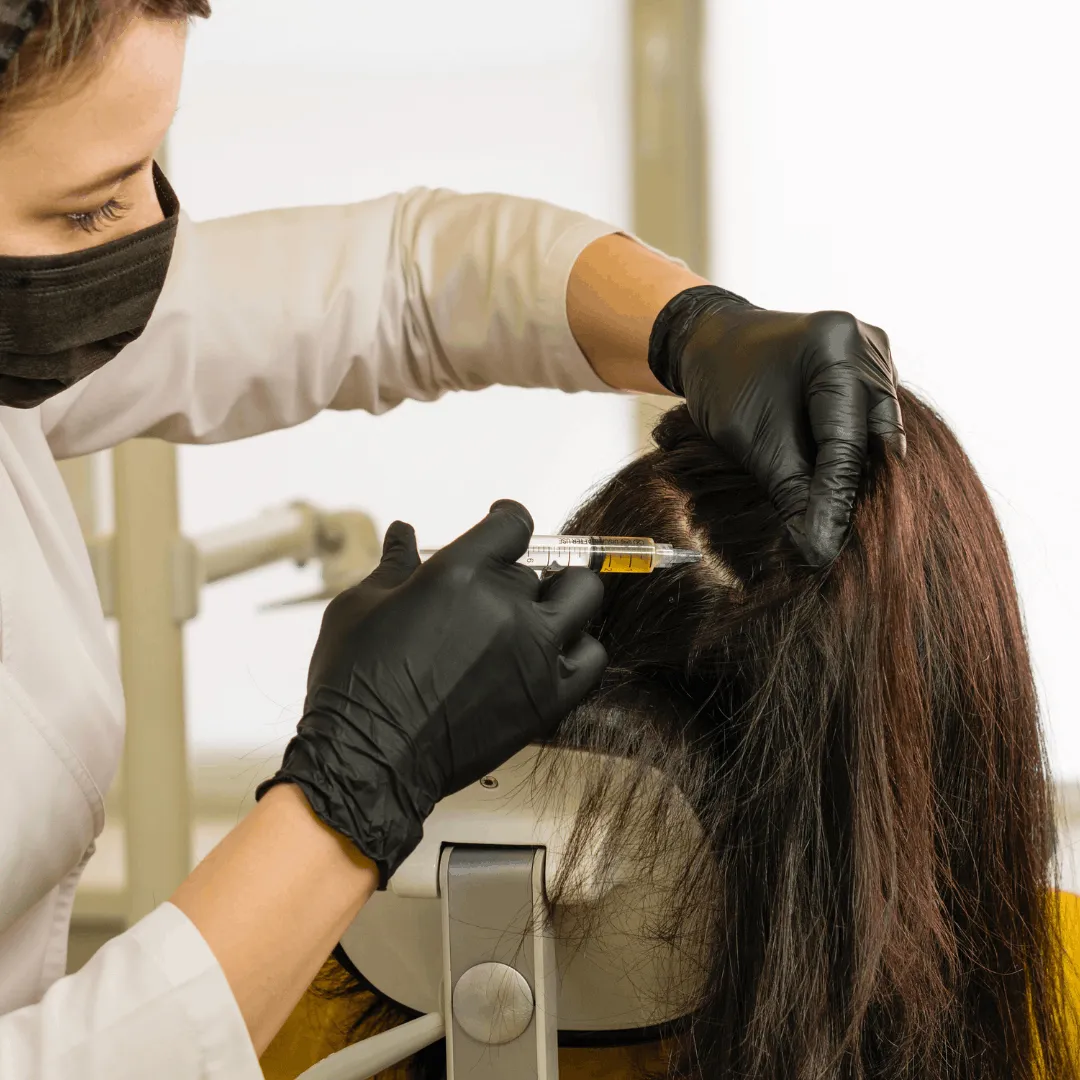
KEY GROWTH FACTORS IN PRP
What happens during a PRP hair treatment session at our JVC clinic.
Session-by-session transparency about the actual procedure. Sophisticated patients want to understand what will happen.
Comprehensive Consultation
FIRST VISIT
Duration:
- 45–60 minutes
Pre-Treatment Preparation
DAYS BEFORE
Duration:
- Preparation over days before
Arrival & Session Preparation
AT THE CLINIC
Duration:
- 20–30 minutes
Blood Draw
FROM YOUR ARM
Duration:
- 5–10 minutes
Centrifugation & Platelet Concentration
QUALITY PROCESSING
Duration:
- 15–20 minutes
PRP Preparation & Activation
PRE-INJECTION
Duration:
- 5–10 minutes
Systematic Injection
THE TREATMENT
Duration:
- 15–25 minutes
Post-Treatment Care & Follow-Up
RECOVERY & NEXT STEPS
Duration:
- 15–20 minutes; sessions repeated monthly
Why we typically combine PRP with medical therapy.
Providers offering PRP as standalone treatment without discussing combinations often produce disappointing outcomes. Combination approach with medical therapy typically produces substantially superior results.
Why standalone PRP is typically inferior
PRP addresses one dimension of hair loss (stimulating existing follicles) but does not address underlying mechanisms in most conditions. In androgenetic alopecia (the most common hair loss), the underlying mechanism involves DHT-mediated follicle miniaturisation. Standalone PRP without addressing DHT typically provides temporary improvement that requires increasing session frequency to sustain. Combination with DHT-blocking medications (finasteride or dutasteride) addresses the underlying mechanism while PRP stimulates follicles.
Combination protocols we typically recommend
Depending on your specific situation: Male androgenetic alopecia — PRP + topical minoxidil + oral finasteride or dutasteride (in appropriate patients); Female pattern hair loss — PRP + topical minoxidil + hormonal treatment (if appropriate); Telogen effluvium — PRP after addressing underlying cause + topical minoxidil to support regrowth; Post-hair transplant — PRP supporting graft survival while systemic medications preserve native hair.
Patients who prefer standalone PRP
Some patients understandably prefer to avoid systemic medications. This is respected. Standalone PRP is offered with clear expectations: outcomes will certainly be inferior to combination approach (androgenetic alopecia) may be more frequent for sustained results; telogen effluvium or post-transplant scenarios may show minimal response to standalone PRP. Comprehensive consultation includes honest discussion of standalone PRP outcomes for your specific situation.
Why we discuss combinations upfront
Sophisticated hair loss treatment requires honesty about what specific treatments can achieve. Providers offering PRP without discussing combinations often produce disappointing results and require patients to return for increasing numbers of sessions. Honest upfront discussion — even if it means some patients prefer PRP or select combinations — produces better patient outcomes and treatment satisfaction. This is the difference between comprehensive medical dermatology and menu-based service.
Combination Approaches
Male Androgenetic Alopecia
Female Pattern Hair Loss
Telogen Effluvium
Post-Hair Transplant
Standalone PRP (patient preference)
What PRP can and cannot achieve.
Honest framing helps you make informed decisions about PRP treatment investment.
Initial Sessions & Preparation
MONTHS 0-2
First 2 sessions complete. Reduced hair shedding begins; continued reduced change (though inconsistent). Any expected medical therapy (minoxidil, systemic medications) initiated. Photography documentation begins. No dramatic visible improvement yet expected — this is normal.
Building Response
MONTHS 2-4
Sessions 3-4 complete. Some patients noticed reduced shedding, subtle improvement in hair thickness, slight increase in hair density. Others see no visible change yet — variable. Comparison photography at month 3 may show changes not apparent day-to-day. Treatment continues.
Measurable Improvement
MONTHS 4-6
Sessions 5-6 complete. Most responding patients show measurable improvement: increased hair density, better hair thickness, some regrowth in previously miniaturised areas. Photography comparison shows clear differences. Patients often receive positive feedback from family, friends or colleagues. Maintenance planning begins.
Maintenance Phase
MONTH 6+
Sustained results require maintenance. Typically includes continued medical therapy if part of treatment plan (minoxidil, finasteride/dutasteride); PRP maintenance sessions every 3-6 months; ongoing monitoring. Patients maintaining sustained approach achieve substantially better long-term results.
These timelines describe typical patterns. Individual variation occurs substantially based on hair loss type, severity, patient factors, treatment adherence, and combination approach. Patients responding well typically show measurable improvement at 4-6 months; some show earlier response; some show slower or minimal response despite appropriate treatment.
WHAT PRP CAN ACHIEVE
- ✓Improved hair thickness in existing hairs
- ✓Increased hair density in miniaturising areas
- ✓Reduced hair shedding
- ✓Support for hair transplant graft survival
- ✓Potential regrowth in early hair loss stages
- ✓Substantial improvement when combined with medical therapy
WHAT PRP CANNOT ACHIEVE
- —Resurrect completely dead follicles
- —Produce hair transplant-equivalent results
- —Substitute for medical therapy in appropriate patients
- —Produce dramatic improvement in far-advanced hair loss
- —Permanent results without ongoing maintenance
- —Universal effectiveness — some patients respond minimally
Real PRP hair treatment outcomes.
""Early-stage male pattern hair loss noticed in my early 30s. Previous consultations at aesthetic clinics suggested PRP as standalone treatment. Vedara's approach completely different: comprehensive assessment identifying androgenetic alopecia with clear progression pattern, honest discussion about PRP as one component rather than complete solution, combination protocol including PRP monthly, topical minoxidil, and oral finasteride after full discussion. Six months later: substantial improvement — reduced shedding, thicker hair, better density on crown. The combination approach with medical therapy produced results standalone PRP would not have achieved.""
MALE PATIENT, 34
Male Androgenetic Alopecia · Combination PRP + Medical Therapy · Downtown Dubai · February 2026
""Female pattern hair loss developing in my 40s — noticed after my second pregnancy and never fully recovered. Previous treatments at other clinics provided minimal results. Vedara's assessment identified female pattern hair loss with early stages allowing meaningful treatment options. Combination protocol including PRP monthly, topical minoxidil, and comprehensive hormonal workup identifying subtle thyroid dysfunction I had not connected. Coordinated approach: thyroid management alongside PRP and minoxidil. Substantial improvement over 6 months — hair volume, density, and thickness all improved measurably.""
FEMALE PATIENT, 42
Female Pattern Hair Loss with Thyroid Contributing · 8-Month Programme · Dubai Marina · January 2026
""Six months after hair transplant surgery elsewhere I researched PRP to support graft survival and stimulate my remaining native hair. Vedara's approach comprehensive: assessment of my transplant results and remaining hair loss progression, PRP protocol matched to post-transplant timing, continued medical therapy coordination. PRP monthly for 4 sessions then quarterly maintenance. My grafts survived excellently and my native hair thickened noticeably. The specialist approach addressing both graft support and native hair preservation was exactly what I needed.""
MALE PATIENT, 47
Post-Hair Transplant PRP Support · Ongoing Programme · Palm Jumeirah · March 2026
4.9
Stars on Google
600+
PRP hair patients treated
DHA
Licensed Consultant Dermatologists
JVC
Dubai clinic location
Consultant dermatologists for PRP hair treatment at our JVC clinic.
PRP hair treatment is delivered by our consultant dermatologists — DHA-licensed specialists with substantial expertise in hair loss and PRP procedures. Not aestheticians or nurses alone — medically qualified specialists. Female and male dermatologists available. Multiple languages including Arabic, English, Hindi, Urdu.

Dr. Layla Al-Hassan, MD
12 years specializing in hair loss and PRP procedures across diverse ethnic hair types.
Dr. Rahul Menon, MD
Extensive experience in male and female pattern hair loss, PRP protocols, and combination therapy.
Dr. Sara Khalid, MD
Specialist focus on female pattern hair loss, postpartum hair shedding, and hormonal hair conditions.
What PRP hair treatment at our JVC clinic costs.
Initial hair loss consultation with comprehensive assessment (45-60 minutes)
AED 650
Trichoscopy examination and photography documentation
AED 250
Follow-up consultation
AED 350
Hair loss blood work panel (thyroid, iron studies, hormonal, vitamin D)
From AED 450
Single PRP hair session
From AED 1,800
PRP hair treatment package (course of 4 sessions)
From AED 6,500
PRP hair treatment package (course of 6 sessions)
From AED 9,200
PRP maintenance session
From AED 1,500
Combination protocol (PRP + minoxidil + oral therapy monitoring)
From AED 2,200/month
Post-hair-transplant PRP support protocol
From AED 7,200
Medical therapy prescription and monitoring (minoxidil, finasteride)
From AED 350
Comprehensive 6-month hair loss programme with PRP
From AED 12,500
What patients ask about PRP hair treatment.
For broader hair loss treatment questions, see our comprehensive hair loss condition page.
Ask Our Team on WhatsAppVISIT US
Where PRP hair treatment happens at Vedara Care JVC.
NEARBY LANDMARKS
- ✓Walking distance from Circle Mall
- ✓3 minutes from FIVE Jumeirah Village Hotel
- ✓5 minutes from JSS Private School
- ✓Free patient parking available
- ✓Easy access from Sheikh Mohammed Bin Zayed Road and Al Khail Road
DISTANCE FROM DUBAI COMMUNITIES
READY TO ADDRESS YOUR HAIR LOSS?
Comprehensive consultation identifies whether PRP is right for your hair loss.
Whether you are experiencing early pattern hair loss, post-partum or stress-related shedding, hair transplant support needs, or general hair thinning — comprehensive specialist consultation is the right starting point, because PRP is most effective as part of a tailored approach rather than a generic treatment. We assess your specific hair loss type, identify underlying contributors, and discuss realistic expectations for PRP alone versus combination approaches. Same-week appointments typically available at our JVC clinic.
Initial consultation from AED 650 · Walking distance from Circle Mall, JVC · DHA-licensed consultant dermatologists · 600+ PRP hair patients treated · Sophisticated evidence-based protocols · Combination treatment approach · Female and male dermatologists
RELATED RESOURCES & TREATMENTS
Related dermatology services.
Complete Hair Loss Treatment
For patients wanting comprehensive hair loss care beyond PRP — medical therapy, workup, and full trichology services.
Learn moreDermatology Clinic
Our complete dermatology department — full medical and aesthetic services, team, comprehensive information.
Learn moreSkin Rejuvenation
For patients interested in additional aesthetic treatments alongside hair care — our JVC skin clinic services.
Learn moreSkin Concern Navigation
For patients with skin concerns beyond hair loss — guidance hub for various skin conditions.
Learn more