Janu Basti Treatment in JVC | Vedara Care Polyclinic
Janu Basti Treatment in JVC is a traditional Ayurvedic therapy in which warm herbal oil is gently retained around the knee within a specially formed boundary. Also written as Janu Vasti, this localized treatment has long been used within Ayurveda for knee-related concerns such as stiffness and discomfort. At Vedara Care Polyclinic in Jumeirah Village Circle, every Janu Basti plan begins with an individual consultation, because not every knee concern responds the same way to the same approach. If you’re exploring Ayurvedic options for your knee near JVC, our team can help you understand whether this therapy may be appropriate for you
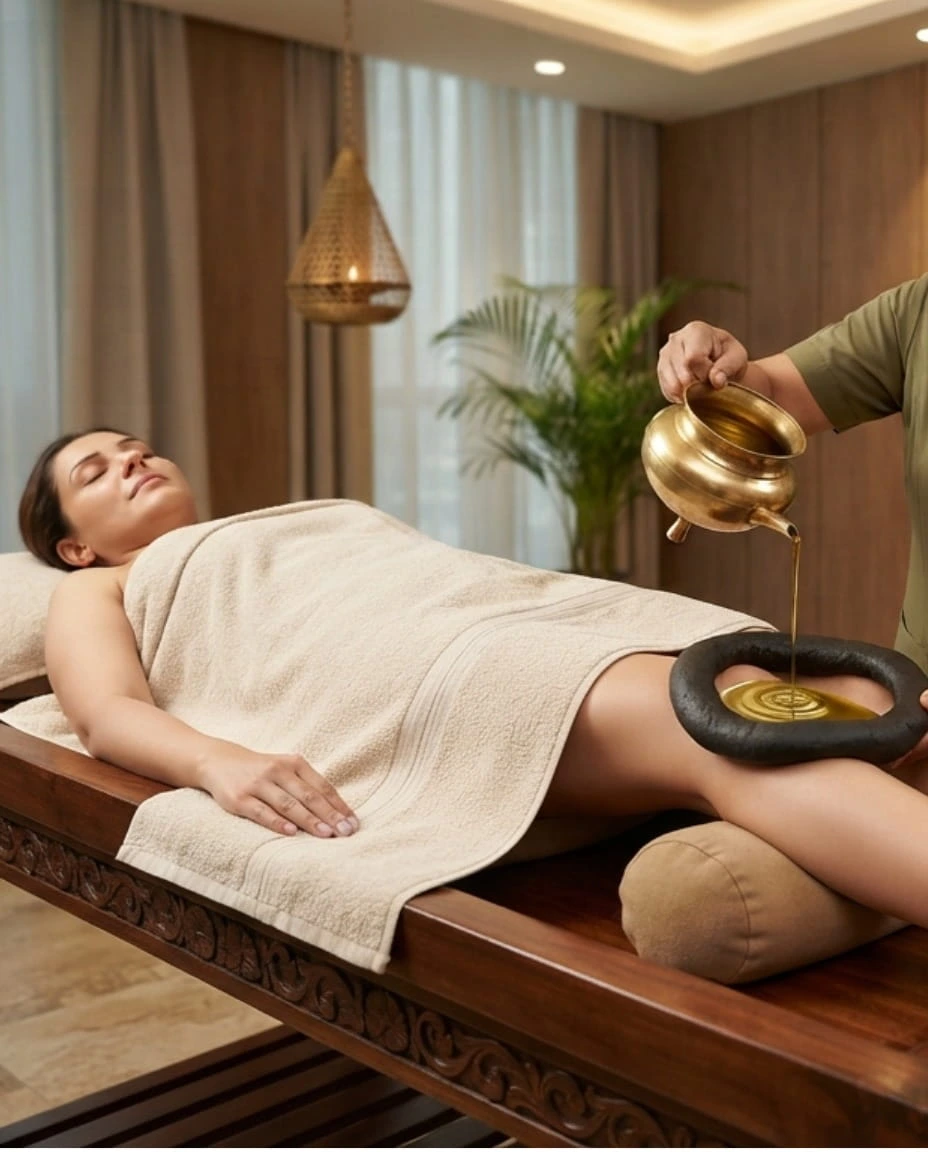
Localised Knee Warmth
Janu Basti (Janu Vasti) is a traditional Ayurvedic retention therapy in which warm herbal oil is held over the knee joint within a custom boundary.
THE QUICK ANSWER
What is Janu Basti Treatment in JVC?
Janu Basti (also spelled Janu Vasti) is a localized Ayurvedic therapy focused specifically on the knee joint. During the treatment, a practitioner forms a low reservoir — traditionally made using a dough-like paste or a specially designed frame — around the knee. Warm herbal oil, or another Ayurvedic liquid selected by the practitioner, is then poured into this reservoir and retained over the knee for a period of time determined individually for each patient. Within Ayurvedic practice, Janu Basti may be considered as part of an individualized care plan for selected knee-related concerns, including general stiffness, discomfort, reduced flexibility, and certain chronic musculoskeletal complaints affecting the knee. It is not applied the same way for every person, and it is not intended as a one-size-fits-all solution. Whether Janu Basti is suitable depends heavily on the underlying cause of your knee symptoms. It is not presented as a cure for osteoarthritis or for structural damage within the joint. A proper assessment — ideally combined with awareness of any relevant medical history — helps determine whether this therapy has a role in your care.
Reviewed by Ayurveda Team, DHA-Licensed 2509266 · Last updated August 2026
What Is Janu Basti?
In Ayurveda, the term “Janu” refers to the knee, while “Basti” in this context describes a localized retention therapy — quite different from the internal Basti procedures used in Panchakarma. Janu Basti, therefore, translates roughly to a “knee-retention therapy,” in which warm oil is held in place over the knee joint rather than administered internally. You may also see this treatment written as Janu Vasti — the two names refer to the same therapy, and the difference is purely one of transliteration from Sanskrit rather than a distinct clinical procedure.
Traditional Ayurvedic texts describe the knee as a joint that can be particularly affected by imbalance, especially as people age or place repeated stress on it through daily activity. Because the knee is a weight-bearing joint with relatively less surrounding soft tissue than areas like the lower back, Ayurvedic tradition holds that localized, sustained warmth may be more comfortably and effectively delivered through an external retention method rather than a brief massage alone.
Unlike oral Ayurvedic medicines, which work through the digestive and metabolic systems over time, Janu Basti is an external, localized application. The oil is meant to stay in direct, prolonged contact with the skin over the knee, rather than being absorbed through general circulation. This is one of the reasons Ayurvedic practitioners view it as a targeted therapy rather than a whole-body treatment.
It's worth emphasizing early on: Janu Basti is not standardized in the way a manufactured pharmaceutical product might be. The oil selected, the duration of retention, and the overall treatment plan are meant to be personalized based on an individual's constitution, symptoms, and health history, as assessed by the treating practitioner.
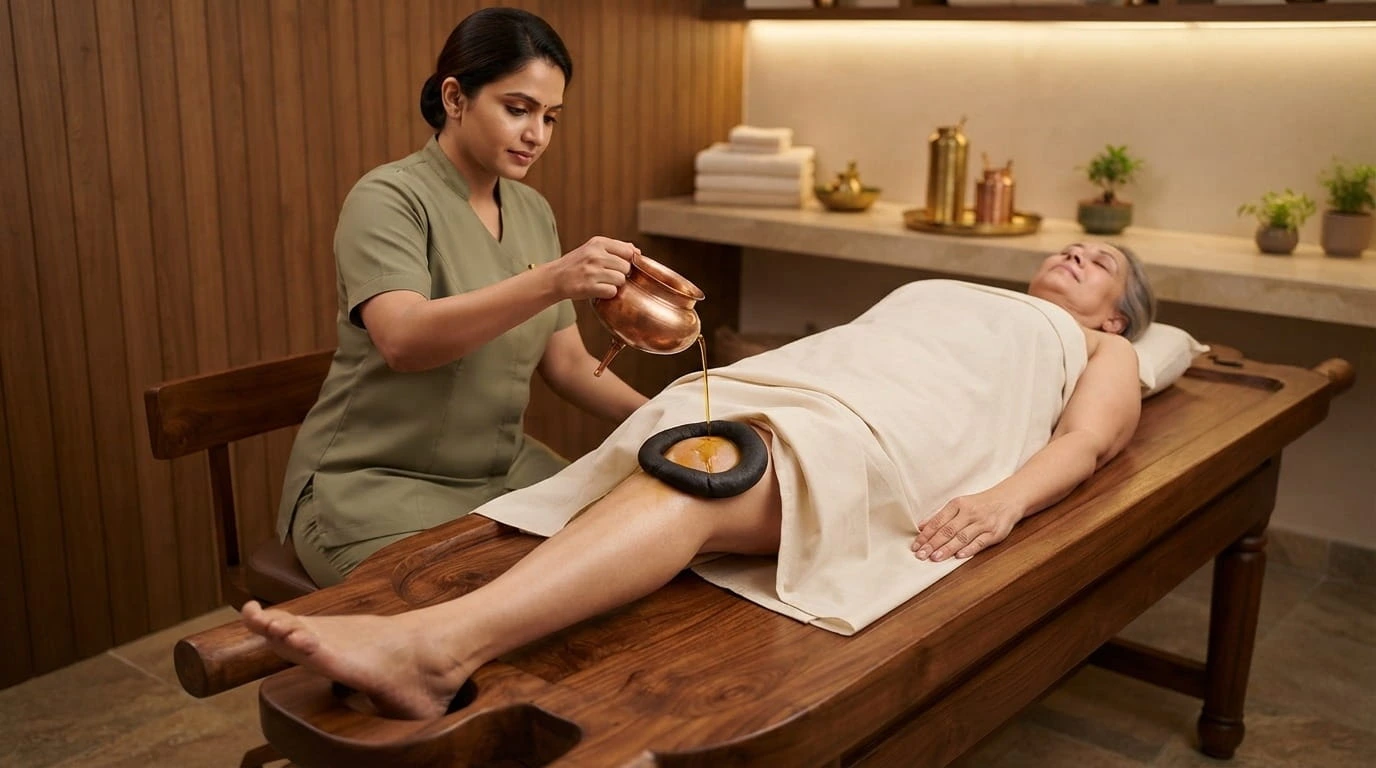
Warm herbal oil is retained around the knee within a specially formed boundary.
TREATMENT PROTOCOL
How Janu Basti Is Performed
While exact protocols can vary between practitioners and clinics, a typical Janu Basti session generally follows a structured patient journey:
Step 1 — Initial Assessment
The practitioner begins by understanding your primary knee concern — where the discomfort is located, how long it has been present, and how it affects your daily activities.
Step 2 — Knee and Health History Review
A more detailed history is taken, covering previous knee injuries, any diagnosed joint conditions, other medical conditions, and current medications, since these factors can influence whether Janu Basti is appropriate and how it should be approached.
Step 3 — Treatment Preparation
The treatment area is prepared, and the practitioner selects an Ayurvedic oil or preparation suited to your individual case.
Step 4 — Creating the Oil-Retaining Boundary
A boundary — traditionally shaped from a dough-like paste, or using a purpose-made ring or frame — is formed around the knee to create a shallow reservoir capable of holding the oil in place.
Step 5 — Applying Warm Ayurvedic Oil
Warm oil is gently poured into the reservoir until the knee is covered, and the practitioner monitors the temperature to keep it within a comfortable range throughout.
Step 6 — Maintaining the Treatment
The oil is retained over the knee for a period determined by the practitioner, who periodically checks in on comfort and may replenish or gently warm the oil as needed.
Step 7 — Removing the Oil and Cleaning the Area
Once the retention period is complete, the boundary is removed, excess oil is cleared away, and the knee area is cleaned.
Step 8 — Practitioner Guidance and Aftercare
The practitioner typically discusses what to expect afterward, any activity recommendations, and whether follow-up sessions may be considered.
Exact details such as oil temperature, quantity, session duration, and the number of sessions recommended are determined individually by the treating Ayurvedic practitioner at Vedara Care based on your specific assessment — they are not fixed figures that apply to everyone.
Why Warm Oil Is Used
The use of warm oil in Janu Basti reflects a traditional Ayurvedic rationale rather than a claim rooted in modern biomedical research. Within Ayurvedic principles, sustained, localized warmth is thought to support comfort and relaxation in the treated area, and oil is traditionally viewed as a vehicle that interacts meaningfully with the tissue it contacts.
It's important to draw a clear line here between traditional Ayurvedic perspective and modern medical evidence. Ayurvedic theory has its own internal logic regarding warmth, oils, and localized treatment that has been passed down through centuries of practice. Modern clinical research on Janu Basti specifically is limited, and results can vary significantly between individuals. Warm oil application should not be understood as something that will reliably repair cartilage, reverse joint degeneration, or produce a specific measurable outcome for every patient. Instead, it is best understood as a traditional therapeutic approach that some patients seek out as part of a broader, individualized Ayurvedic care plan.
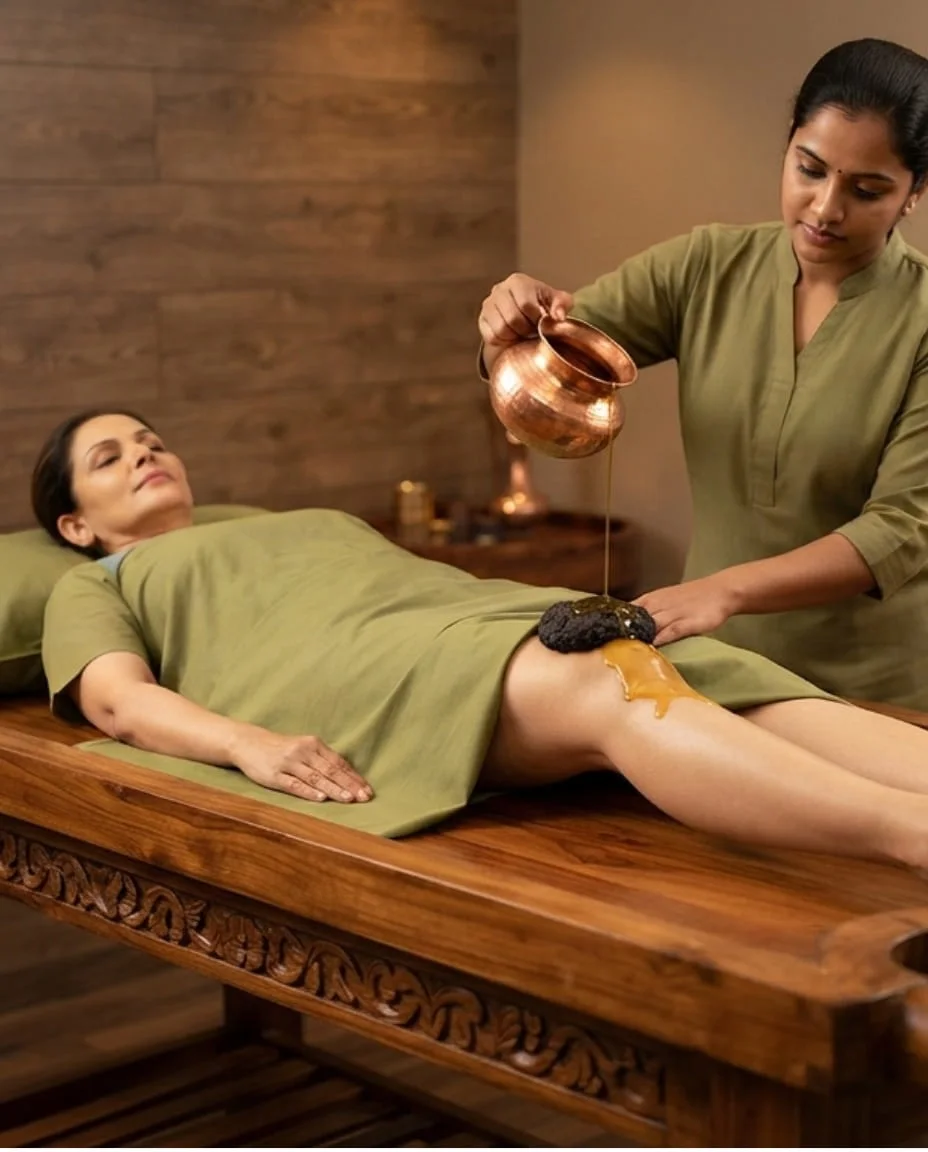
Knee Concerns Janu Basti May Be Considered For
Patients researching Janu Basti typically have one or more of the concerns below. None of these outcomes is guaranteed — suitability and response depend on individual assessment, the underlying cause, and the broader care plan being followed.
Janu Basti for Knee Pain
Knee pain is one of the most common reasons people search for Ayurvedic knee therapy JVC options, but it's worth understanding that "knee pain" is not a single condition — it's a symptom that can arise from many different underlying causes, including osteoarthritis, tendon-related problems, ligament injury, overuse from repetitive activity or sport, trauma or a recent injury, localized inflammation, and pain referred from the hip or lower back. Because the causes of knee pain differ so widely, Janu Basti should not be assumed to be the right approach for every case. A practitioner assessing your knee pain will typically want to understand the pattern, triggers, and history of your symptoms before considering whether this therapy has a place in your care plan — and whether a conventional medical opinion should come first.
Janu Basti for Knee Stiffness
Knee stiffness can feel different from pain — some people describe a sense of tightness, restricted bending, or difficulty with certain movements like climbing stairs or getting up from a low seat. Stiffness can affect how confidently someone moves through their day, particularly if it's present first thing in the morning or after periods of inactivity. As with pain, identifying what's causing the stiffness matters. In an individualized Ayurvedic plan, localized warmth and Janu Basti may be incorporated as one part of addressing stiffness-related discomfort. However, this treatment is not presented as a guarantee of restoring full mobility, and results are understood to vary from person to person depending on the underlying cause and overall treatment approach.
Janu Basti and Osteoarthritis
Knee osteoarthritis is a condition involving gradual changes within the joint, including changes to the cartilage that cushions the bones, and it's one of the more common reasons people research knee-related Ayurvedic treatment in Dubai. Because osteoarthritis is such a frequent search topic, it deserves particularly careful and responsible discussion. Janu Basti should not be presented — and is not presented here — as a cure for osteoarthritis. It does not reverse the structural changes associated with the condition. What can be said, within a responsible framework, is that Ayurvedic therapy, including Janu Basti, may be considered as part of a broader individualized care plan for managing certain symptoms associated with osteoarthritis, when this is judged clinically appropriate by the treating practitioner. For many patients with osteoarthritis, a conventional medical assessment — potentially including clinical examination or imaging — remains an important part of understanding the condition and the treatment options available, alongside or independent of any Ayurvedic therapy being considered.
Janu Basti for Age-Related Knee Discomfort
Knee-related symptoms become more common as people get older, but age is only one part of a much larger picture. Several different conditions — from osteoarthritis to tendon changes to reduced muscle support around the joint — can produce broadly similar symptoms in older adults, which is exactly why a proper assessment matters before assuming a cause. For older patients, an individualized treatment plan should also take into account general health status, any other medical conditions present, and current medications, since these can all influence what's appropriate. Age alone does not automatically make someone a suitable candidate for Janu Basti — the decision is based on the full clinical picture rather than a birthday.

Possible Benefits of Janu Basti
Within a balanced and honest view of this therapy, some potential aims associated with Janu Basti — based on traditional use and patient-reported experience — include:
A sense of local warmth around the treated knee
Relaxation in the surrounding area
Temporary comfort following treatment
A reduced feeling of stiffness for some individuals
Support for mobility as one part of a broader, individualized care plan
These are described deliberately using cautious language — may, can be considered, some patients report — because they are not guaranteed medical outcomes, and experiences differ meaningfully from person to person.
WHO MAY CONSIDER
Who May Consider Janu Basti?
Interest in the treatment is only the starting point — actual suitability depends on a proper assessment by a qualified practitioner, not simply on matching one of the categories below.
Patients who inquire about Janu Basti
- ✓Mild to moderate knee discomfort
- ✓General stiffness around the knee
- ✓Chronic musculoskeletal concerns affecting the joint
- ✓Selected symptoms related to osteoarthritis
- ✓Reduced comfort during everyday movement
Situations requiring medical assessment first or where treatment may be avoided
- !Seek medical first: Sudden, severe knee pain
- !Seek medical first: Major trauma to the knee
- !Seek medical first: Inability to bear weight on the affected leg
- !Seek medical first: Significant swelling
- !Seek medical first: Severe redness or warmth around the joint
- !Seek medical first: Fever accompanying joint symptoms
- !Seek medical first: Suspected fracture
- !Seek medical first: A knee that feels "locked" or won't move through its normal range
- !Seek medical first: Sudden instability or the knee giving way
- !Seek medical first: Unexplained, persistent pain that hasn't been evaluated
If any of these apply to you, please seek appropriate medical care rather than booking Janu Basti as a first step. This page is not intended to diagnose your condition, and only a qualified healthcare professional who examines you can do that.
These can include, but are not limited to the above. This is not an exhaustive list, and your practitioner at Vedara Care will discuss your specific situation with you during consultation.
Consultation at Vedara Care
Every Janu Basti Treatment in JVC at Vedara Care Polyclinic begins with a consultation rather than an assumption. During this conversation, the practitioner may consider:
Point 1
Your main knee symptoms
Point 2
How long you've had these symptoms
Point 3
Any previous knee injuries
Point 4
Your broader medical history
Point 5
Current medications
Point 6
Any treatments you've already tried
Point 7
Your general activity level
Point 8
Relevant lifestyle factors
Point 9
How your knee currently moves
Point 10
What you're hoping to achieve from treatment
If, based on this assessment, Janu Basti doesn't appear to be the most appropriate option, the practitioner may recommend a different Ayurvedic approach — or suggest that you seek conventional medical evaluation instead. This willingness to recommend alternatives, rather than defaulting to a single treatment, reflects a responsible, patient-first approach to care.

PATIENT EXPERIENCE
What Does Janu Basti Feel Like?
Most people describe the sensation of Janu Basti as one of gentle, contained warmth settling around the knee as the oil is poured and retained. There's often a sense of relaxation as the treatment continues, particularly once the initial temperature of the oil has settled to a comfortable level. That said, it wouldn't be accurate to say the treatment is always entirely painless for every person — sensitivity varies, and some individuals may notice mild discomfort, particularly if the knee is already inflamed or sensitive. This is exactly why the practitioner should actively monitor your comfort and the temperature of the oil throughout the session, adjusting as needed.
How Long Does Janu Basti Take?
Session length isn't fixed — it depends on several factors, including the specific clinical plan developed for you, the oil or preparation being used, your individual needs, the area being treated, and whether the session is part of a longer course of procedures. Rather than quoting a single duration that may not apply to your situation, your practitioner at Vedara Care will explain the expected time commitment during your consultation.
Janu Basti Recovery
Janu Basti is generally considered a localized, external Ayurvedic therapy rather than an invasive procedure, but that doesn't mean aftercare instructions can be skipped. Following your practitioner's specific guidance remains important. General recovery considerations include: • Keeping the treated area comfortable in the hours following treatment • Following any activity recommendations given by your practitioner • Maintaining basic cleanliness around the treated knee • Watching for any unusual irritation and reporting it promptly It would be inaccurate to promise "zero recovery time" for every patient — while Janu Basti doesn't involve incisions or injections, individual responses to the warm oil and treatment process can still vary.
Janu Basti Aftercare
After your session, general aftercare guidance typically includes: • Following the specific instructions given by your practitioner • Avoiding excessive rubbing or pressure on the treated area immediately afterward • Keeping the area appropriately clean • Following any activity recommendations discussed during your consultation • Reporting any unusual or persistent irritation to your practitioner • Attending any recommended follow-up sessions or reviews Please note that Ayurvedic practitioners at Vedara Care do not provide pharmaceutical medication prescriptions as part of Ayurvedic aftercare guidance.
TREATMENT COURSE
How Many Janu Basti Sessions May Be Needed?
There's no universal number of sessions that applies to everyone, and it would be misleading to suggest otherwise. The number of sessions that may be recommended in your case can depend on:
The nature and severity of your symptoms
How long you've been experiencing them
Your age and general health
The underlying condition contributing to your knee concern
The Ayurvedic assessment carried out during consultation
How you respond to initial treatment
The overall care plan agreed upon with your practitioner
Your practitioner will discuss a proposed plan with you, but this remains something that may be adjusted as treatment progresses rather than a fixed prescription.
When Can Patients Notice Changes?
Experiences with Janu Basti vary considerably from person to person, and it wouldn't be honest to promise a specific timeline. Some people report noticing a degree of temporary comfort shortly after a session, while for others, any perceived change may take longer to become noticeable — if it does at all. Longer-term improvement, where it occurs, tends to depend heavily on the underlying cause of the knee concern and the broader care plan being followed, not on Janu Basti in isolation. It's also worth noting that Janu Basti shouldn't be judged based on a single session. Ayurvedic therapy is generally approached as a course of treatment integrated into a wider plan, rather than a one-time fix. Claims such as "pain disappears after three sessions" are not something this page — or a responsible clinic — should make.
Janu Basti and Physiotherapy
Janu Basti and physiotherapy approach the knee from genuinely different angles, and understanding this distinction is useful. Physiotherapy typically focuses on:
Physiotherapy focuses on
Building strength around the joint Improving mobility and range of motion Restoring functional movement patterns Addressing muscle imbalance Structured rehabilitation following injury or surgery
Janu Basti, by contrast, is a localized Ayurvedic retention therapy centered on warmth and traditional principles rather than active strengthening or movement-based rehabilitation. Where clinically appropriate, a practitioner may view these two approaches as complementary rather than interchangeable — but this isn't automatic, and not every patient will need both.

Frequently Asked Questions About Janu Basti
Answers to common questions about Janu Basti (Janu Vasti), suitability, treatment protocol, aftercare, results and availability in JVC, Dubai.
Book ConsultationVISIT OUR JVC CLINIC
Janu Basti Treatment at Vedara Care Polyclinic
9:00 AM - 10:00 PM
NEARBY LANDMARKS
- ✓Walking distance from Circle Mall
- ✓3 min from FIVE Jumeirah Village Hotel
- ✓5 min from JSS Private School
- ✓Free patient parking
DISTANCE FROM DUBAI COMMUNITIES
LOCAL ACCESSIBILITY
Why Choose Janu Basti Treatment in JVC?
Jumeirah Village Circle has grown into one of Dubai's most established residential communities, with a steady population of residents from neighbouring areas including Al Barsha South, Jumeirah Village Triangle, Dubai Sports City and Motor City who look locally for Ayurvedic therapy options rather than travelling across the city. For a traditional, session-based therapy like Janu Basti — where a course of sessions rather than a single visit is often involved — having a clinic within the community makes it far more practical to stay consistent with a treatment plan.
A proper assessment helps confirm whether Janu Basti is suitable for your knee concern.
Important Information
Medical Disclaimer
This page provides general educational information about Janu Basti (Janu Vasti) as a traditional Ayurvedic therapy and is not a substitute for personalised medical advice. Janu Basti may not be suitable for everyone, and results vary between individuals. Certain medical conditions, injuries, and medications may affect suitability or require that a conventional medical opinion be sought first. A professional assessment is recommended before beginning any course of treatment, and any decisions about your knee care should be made in consultation with a qualified provider.
READY TO START?
Explore Janu Basti Treatment in JVC
If you are considering Janu Basti Treatment for knee discomfort, stiffness, or localized support for your knee, the most useful next step is a consultation at Vedara Care Polyclinic, Al Barsha South Fourth, Binghatti Azure, Shop -4, Jumeirah Village Circle (JVC), Dubai, UAE. During your consultation, it helps to discuss your specific knee symptoms, how long they have been present, any previous injuries or diagnosed conditions, your current medications and relevant medical factors, any treatments you've already tried, and what you're realistically hoping to achieve. We will not promise a specific outcome — our aim is to help you understand whether Janu Basti is a reasonable option for your case, and what to expect if it is.
EXPLORE MORE
Related services and conditions
Ayurveda Treatment in JVC
Broader Ayurvedic care context and full range of traditional therapies in JVC.
Learn morePhysiotherapy in JVC
Structured rehabilitation, strength, mobility and knee-focused physiotherapy options.
Learn moreAyurvedic Treatment in Dubai
Overview of broader Ayurvedic services offered by Vedara Care Polyclinic across Dubai.
Learn moreAbhyanga
A broader Ayurvedic oil massage, generally applied more widely across the body.
Learn morePanchakarma
Broader classical Ayurvedic purification framework.
Learn moreAyurvedic Back Pain Treatment
Ayurvedic management considerations for related musculoskeletal concerns like back pain.
Learn more