Cupping therapy in Dubai. Dry cupping, massage cupping, and Hijama. Evidence-balanced clinical care.
Specialist cupping therapy at our Jumeirah Village Circle (JVC) clinic, walking distance from Circle Mall. We offer dry cupping (static and dynamic), massage cupping, and where applicable Hijama (wet cupping) — each with distinct applications and traditions. DHA-licensed practitioners, sterile single-use equipment, transparent about evidence and limitations, with deep cultural respect for Hijama's significance in Islamic tradition.
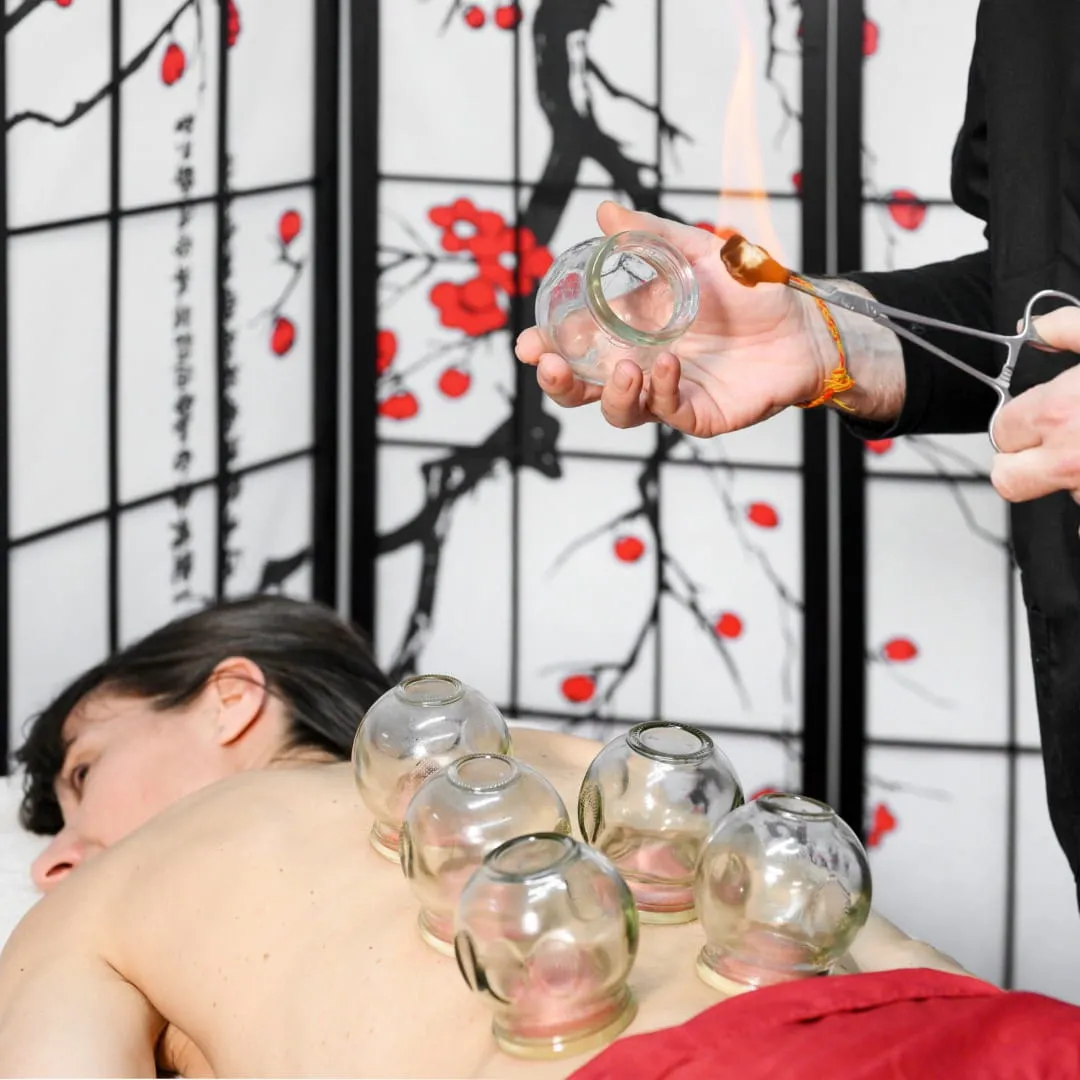
MULTIPLE TYPES OF CUPPING EXIST.
Dry cupping, massage cupping, and Hijama (wet cupping with small controlled incisions, deeply rooted in Islamic tradition) are distinct practices with different applications. Understanding which is appropriate for your situation matters.
THE QUICK ANSWER
Cupping therapy at Vedara Care, in one paragraph.
Cupping therapy at Vedara Care Polyclinic in Jumeirah Village Circle (JVC), Dubai — walking distance from Circle Mall — encompasses several distinct practices delivered by DHA-licensed practitioners. Dry cupping uses cups (silicone, glass, or plastic) applied to the skin with suction to create localised vacuum effect, addressing chronic muscle tension, trigger points, sports recovery, and various musculoskeletal conditions. Massage cupping (dynamic cupping) involves moving cups across oiled skin for broader soft tissue treatment. Hijama (wet cupping) involves controlled small skin incisions to draw small amounts of blood — practiced widely in Islamic tradition as a Sunnah practice with both religious and therapeutic significance; where offered, performed with sterile single-use equipment and appropriate clinical standards. We integrate dry and massage cupping into physiotherapy programmes for chronic back and shoulder pain, sports muscle recovery, chronic muscle tension, fibromyalgia, and select other conditions. Evidence base for cupping is moderate for musculoskeletal applications. Cupping leaves visible circular marks (1-2 weeks typically) which are normal therapeutic effects, not bruises. Single sessions from AED 250; structured programmes from AED 1,200. Patients travel to our JVC clinic from across Dubai.
Medically reviewed by Lead Physiotherapist, DPT, DHA-Licensed 2509266 · Last updated June 2025
The different types of cupping therapy — and what each one is for.
Cupping is not one practice but a family of related techniques with different applications, traditions, and clinical evidence. Understanding the distinctions helps you make informed choices.
Cupping therapy involves applying cups to the skin to create localised suction. The suction draws skin and underlying soft tissue upward into the cup, producing therapeutic effects including increased local blood flow, soft tissue mobilisation, stimulation of mechanoreceptors, and relaxation of muscular tension.
Dry cupping (static)
The most common cupping method in modern clinical practice. Cups (silicone, glass, or plastic) are applied to the skin with suction or — traditionally with cups — we heat air inside glass cups, move the cup to hold firmly, and leave in place for 2-15 minutes. Used for chronic muscle tension, trigger points, sports recovery, and musculoskeletal conditions.
Massage cupping (dynamic cupping)
Cups are applied with reduced suction and moved across the skin with oil or lotion. Creates a similar effect to deep tissue massage but with less immediate discomfort; more comfortable to deep manual pressure for many patients.
Fire cupping
Traditional method using flame to heat air inside glass cups, creating suction when applied to the skin. The flame never touches the patient — it is used only to remove air from inside the cup before placement. Practiced for millennia from Traditional Chinese medicine and Middle Eastern traditions; where used, this method is performed with care. Modern clinical practice often uses pump-based cups for more controlled, consistent suction.
Hijama (wet cupping) — the Islamic Sunnah practice
Hijama has deep significance in Islamic tradition as a Sunnah practice — practiced following the example of the Prophet Muhammad (peace be upon him) and recommended for maintenance of health. The practice involves applying cups to specific points, making small controlled skin incisions, and re-applying cups to draw out small amounts of blood. Where offered clinically, Hijama is performed with sterile single-use equipment and appropriate clinical protocols.
The evidence base — honest positioning
Cupping has moderate research evidence for certain musculoskeletal applications: chronic neck pain, chronic lower back pain, and certain sports recovery contexts. Evidence is less clear for systemic claims. We use cupping where evidence supports application, and we are honest about limitations. Cupping is not appropriate for all patients; comprehensive assessment guides appropriate use.
Cupping has been practiced for millennia across many cultures and continues to be used widely. Modern clinical practice combines respect for traditional applications with honest assessment of current evidence.
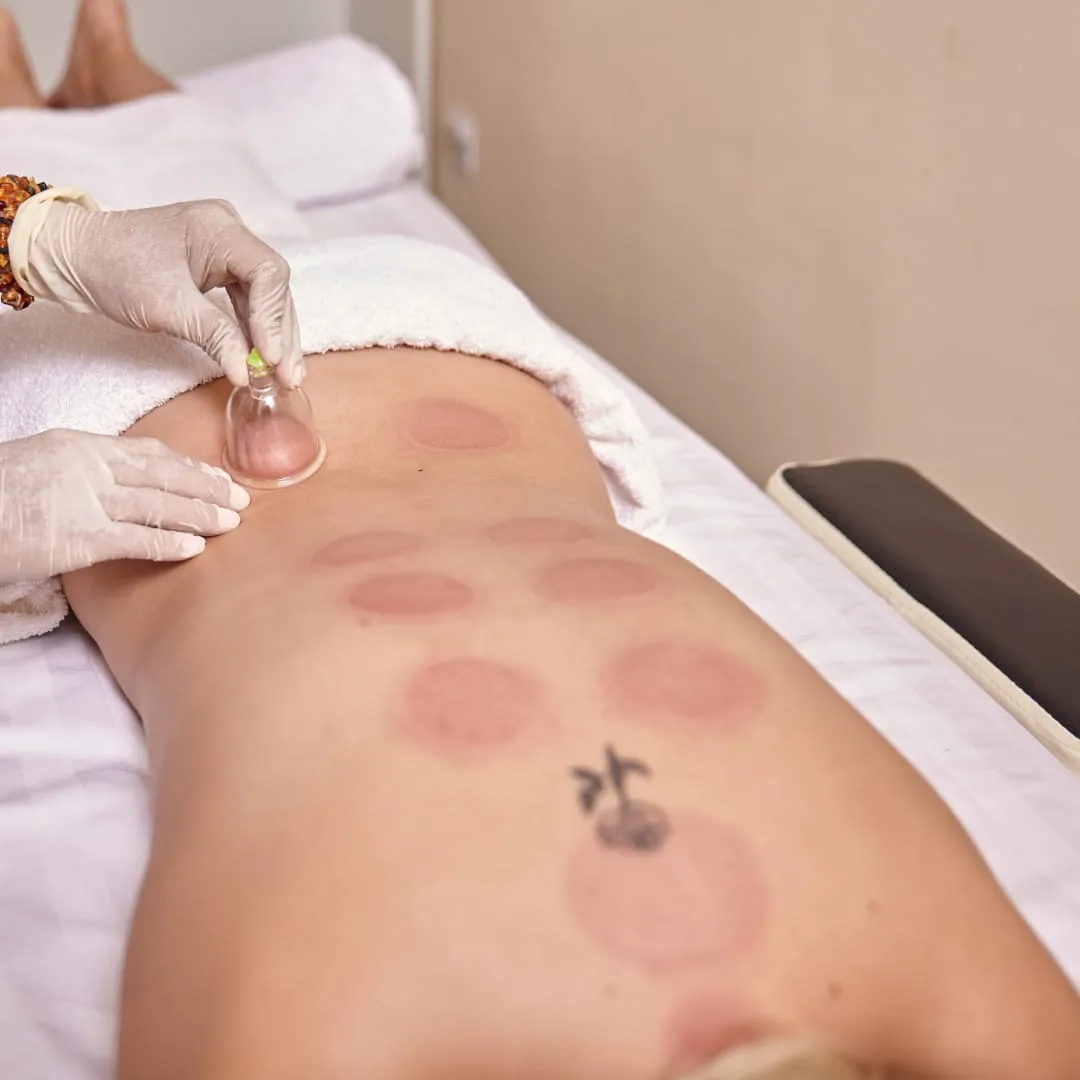
Chronic muscle tension in back, shoulders, and neck. Sports recovery and trigger point treatment. Office worker shoulder and upper back tension. Fibromyalgia-related muscle tension.
CONDITIONS TREATED
Conditions where we use cupping at our JVC clinic.
Cupping is most evidence-supported for specific musculoskeletal conditions. These are the most common applications in our practice.
Chronic Back Pain with Muscle Tension
The most common cupping application. Dry cupping along the paraspinal muscles addresses chronic tension patterns. Massage cupping for broader treatment. Combined with manual therapy and exercise for sustainable outcomes. Particularly useful for office workers with chronic lower and upper back tension.
CUPPING TYPE TYPICALLY USED:
Dry cupping plus massage cupping
Chronic Neck and Shoulder Tension
Highly responsive to cupping. Dry cupping on upper trapezius, levator scapulae, and rhomboid areas addresses chronic tension. Reasonable evidence base for chronic neck pain. Often combined with manual therapy techniques and postural work.
CUPPING TYPE TYPICALLY USED:
Dry cupping, sometimes massage cupping
Sports Muscle Recovery
Increasingly popular among athletes. Cupping after intense training sessions or competitions may help muscle recovery, reduce delayed onset muscle soreness, and address chronic training-related tension. Often used as part of a broader sports recovery programme.
CUPPING TYPE TYPICALLY USED:
Dry cupping and massage cupping
Chronic Pain Conditions and Fibromyalgia
Used for chronic pain syndromes including fibromyalgia. Effects may include pain modulation, improved local circulation, and reduction in chronic muscle guarding patterns. Integrated with broader chronic pain management. Patient response varies significantly.
CUPPING TYPE TYPICALLY USED:
Dry cupping plus massage cupping
Trigger Points and Myofascial Pain
Cupping addresses muscle trigger points and chronic myofascial pain patterns. Mechanism includes local circulation increase, fascial mobilisation, and neural modulation. Often combined with dry needling for comprehensive trigger point treatment.
CUPPING TYPE TYPICALLY USED:
Dry cupping at specific trigger points
Hijama for Religious Practice (Where Offered)
For Muslim patients seeking Hijama as Sunnah practice, treatment may be available on traditional Sunnah-recommended days (17th, 19th, 21st of Islamic months). Combines religious significance with therapeutic effects. Performed with sterile single-use equipment when offered clinically.
CUPPING TYPE TYPICALLY USED:
Hijama (wet cupping)
Cupping may help your specific condition — comprehensive assessment determines whether it is appropriate and which type is most suitable. Book an assessment →
WHAT TO EXPECT
What a cupping session actually involves.
Understanding what happens — including the visible aftermaths — helps you make informed decisions and prepare appropriately.
Cupping is generally comfortable and well-tolerated. Most patients describe the suction sensation as unusual but not painful. Marks are normal therapeutic effects — not bruises — and resolve typically within 1-2 weeks.
The initial assessment
Before cupping treatment, comprehensive assessment determines which cupping is appropriate for your specific situation, which types would be most suitable, and how it integrates with broader treatment. This includes history-taking, identification of treatment areas, contraindication screening, discussion of what to expect, and obtaining informed consent.
The cupping treatment itself
For dry cupping treatment, cups are applied to specific areas, suction is created, cups are in place for 2-10 minutes. For massage cupping, cups are applied to oiled areas, suction with reduced intensity, cups are moved across treatment areas. For Hijama, a clean area is prepared, sterile single-use equipment is used, cups are applied, small incisions are made, and suction is applied. All clinical materials are then safely disposed of.
What it feels like
Most patients describe cupping as pulling or drawing sensation as suction is applied, sometimes brief intensity with stronger cupping, generally comfortable during treatment, sometimes increasing tolerance with repeated cupping sessions. Some find it quite relaxing, many use it specifically for relaxation purposes. Hijama involves the brief sharp sensation of small incisions — typically much less uncomfortable than patients expect.
The visible marks — important to know
Cupping leaves circular marks on treated areas. These are not bruises — they are localized ecchymoses (red-purple discoloration) caused by rupturing small blood vessels below skin surface. Marks are typically variable-reddish purple, fading through different colours over 1-2 weeks. Some patients have minimal marks, others have more prominent marks. Consider this before booking if you have upcoming events where marks would be noticed — they can be covered by clothing in most cases.
After the session
Common post-treatment experiences: mild soreness in treated areas for 24-48 hours (normal), visible marks as discussed, and for some patients, mild fatigue or deep relaxation. After Hijama: avoid heavy exercise/activity for 24 hours, keep incision sites clean and dry, and avoid swimming or hot tubs until fully healed.
How many sessions are needed
Variable by condition and treatment type. Acute presentations sometimes resolve in 1-3 sessions. Chronic conditions typically benefit from regular sessions over weeks to months. For Hijama wellness, Sunnah-recommended timing (17th,19th,21st of Islamic months). Many patients use cupping as part of ongoing wellness routine. Integration with broader physiotherapy treatment usually produces better outcomes than cupping alone.
SAFETY STANDARDS
For every cupping session:
- DHA-licensed practitioners
- Comprehensive contraindication screening
- Sterile preparation for dry cupping
- Sterile single-use equipment for Hijama
- Informed consent before treatment
- Documented treatment protocols
Contraindications we screen for:
- Bleeding disorders
- Anticoagulant medications (relative)
- Skin infections at treatment site
- Skin conditions (eczema, psoriasis in active phase)
- Pregnancy (certain areas — modified approach)
- Diabetes with circulation issues
- Anemia (particularly for Hijama)
IMPORTANT TO KNOW
- Visible marks: 1–2 weeks — normal
- Mild soreness: 24–48 hours — normal
- Hijama: brief sharp sensation from incisions
- Avoid heavy activity 24 hours after Hijama
- Practitioner can adjust suction strength
HIJAMA — THE ISLAMIC SUNNAH PRACTICE
Hijama — religious significance and therapeutic practice.
Hijama (wet cupping) has deep significance in Islamic tradition. We respect both its religious dimension and its therapeutic application.
Hijama is a Sunnah practice with deep roots in Islamic tradition. It has both religious and therapeutic significance for Muslim patients. We approach Hijama with respect for both dimensions.
The Sunnah significance
Hijama is described in authentic hadith as a practice the Prophet Muhammad (peace be upon him) engaged in and recommended. Multiple hadith reference Hijama and its benefits, including narrations from Sahih al-Bukhari, Sahih Muslim, and other authentic sources. For many Muslim patients, Hijama is pursued primarily as religious practice — following the Sunnah — with therapeutic benefits viewed as additional rather than primary motivation.
Traditional Sunnah days
Traditional Sunnah practice recommends Hijama on specific days: the 17th, 19th, and 21st of the Islamic (lunar) month, particularly when these fall on Mondays, Tuesdays, or Thursdays. Many patients pursuing Hijama for Sunnah practice schedule treatment on these days. Where offered at our clinic, we can accommodate these traditional Sunnah days.
Specific Sunnah locations
Traditional Hijama practice recommends specific body locations including the upper back area between the shoulder blades, the back of the neck, and specific other points. Different schools of thought identify different priority points. We work with patient preference and traditional guidance regarding location selection.
Clinical safety standards
Where Hijama is offered, it is performed with appropriate clinical standards: sterile single-use cups for every patient (never reused), sterile single-use lancets for the small incisions (medical-grade, never reused), antiseptic skin preparation, sterile dressings afterwards, comprehensive contraindication screening, and informed consent. The religious significance of the practice does not change the need for clinical safety standards — we believe both can be respected simultaneously.
Therapeutic perspectives
Beyond religious significance, Hijama has therapeutic claims including pain reduction, circulation improvement, and various systemic effects. Clinical evidence for these therapeutic claims is mixed. We are honest about evidence: patients pursuing Hijama primarily for religious reasons are making a different decision than those pursuing it for specific clinical conditions. Hijama may still be considered if patients prefer it for religious or personal reasons.
- Sterile single-use equipment
- Trained DHA-licensed practitioners
- Sunnah days scheduling available
- Traditional location preferences accommodated
- Cultural sensitivity throughout
- WhatsApp us to inquire about availability
- Discuss specific scheduling needs
- Confirm practitioner availability
- Discuss any religious or cultural preferences
For patients seeking Hijama specifically as religious practice: we respect this motivation, provide clinical safety regardless of motivation, and do not require justification beyond patient choice.
Real experiences from our patients.
"Chronic upper back tension from years of desk work — tried multiple treatments without lasting improvement. Vedara's combination of dry cupping with broader physiotherapy approach produced substantial relief. Eight sessions over eight weeks. The cupping addressed something that manual therapy alone had not — the chronic deep tension patterns. Maintenance sessions every few months keep things manageable."
Sarah K.
Chronic Office Worker Back Tension · 8-Week Programme Dubai Marina · February 2026
"Athlete with chronic shoulder tension from training. Sports cupping sessions integrated into recovery routine. The combination of cupping with the broader physiotherapy approach allowed me to maintain training intensity without the chronic tension affecting performance. Use cupping regularly after intense training blocks."
Raj M.
Sports Recovery · Ongoing Programme Sports City · January 2026
"Sought Hijama for Sunnah practice. Vedara accommodated traditional days and locations with respect for the religious significance while maintaining clinical standards. The sterile single-use equipment and professional clinical environment was important to me. Combined both religious and clinical considerations appropriately."
Ahmed S.
Hijama as Sunnah Practice · JVC Clinic JVC · March 2026
4.9
stars on Google
400+
cupping treatments delivered
DHA
licensed practitioners
100%
sterile single-use equipment
Cupping practitioners at our JVC clinic.
Cupping at Vedara Care is delivered by DHA-licensed practitioners with appropriate training. Dry cupping and massage cupping are integrated into physiotherapy practice by qualified physiotherapists. Hijama, where offered, is performed by specifically qualified practitioners with appropriate religious and clinical understanding.

Dr. Fatima Al-Rashidi, DPT
Advanced training in cupping modalities including Hijama. Special interest in sports recovery and chronic pain conditions.

Daniel Mendes, MSc PT
Post-graduate training in cupping therapy. Specialises in sports cupping for athletic performance recovery and muscle rehabilitation.

Priya Sharma, BPT
Integrated cupping within comprehensive physiotherapy programmes. Focus on chronic musculoskeletal conditions and office worker presentations.
TRANSPARENT PRICING
What cupping therapy costs at our JVC clinic.
Insurance coverage for cupping varies by plan and condition — many insurance plans do not cover cupping as standalone treatment but may cover it when integrated with physiotherapy treatment for specific conditions. Hijama is typically not covered by insurance plans. We are direct-billing partners with Daman, AXA, Allianz, Oman Insurance, Now Health, Bupa, and MetLife for physiotherapy services. WhatsApp for coverage discussion.
What patients ask about cupping before booking.
For broader physiotherapy questions, see our main physiotherapy page.
Ask a QuestionVISIT US
Where cupping therapy happens at Vedara Care JVC.
NEARBY LANDMARKS
- ✓Walking distance from Circle Mall
- ✓3 min from FIVE Jumeirah Village
- ✓5 min from JSS Private School
- ✓Free patient parking
DISTANCE FROM DUBAI COMMUNITIES
READY TO TRY CUPPING?
Multiple cupping types. Honest evidence positioning. Cultural respect.
Whether you are interested in dry cupping for chronic back pain, sports cupping for athletic recovery, massage cupping for broader tension relief, or Hijama as Sunnah practice — appropriate cupping treatment in a clinical environment combines therapeutic benefit with safety standards. The first step is comprehensive assessment determining whether cupping is appropriate for your specific situation and which type would be most suitable. We are honest about evidence, respectful of religious and cultural significance, and integrated with broader physiotherapy when appropriate.
Sessions from AED 250 · Walking distance from Circle Mall, JVC · 400+ cupping treatments delivered · DHA-licensed practitioners · Sterile single-use equipment · Cultural and religious respect
EXPLORE FURTHER
Related services and treatments
Physiotherapy in JVC
Our complete physiotherapy department — cupping is integrated into broader physiotherapy treatment for musculoskeletal conditions.
Learn moreDry Needling Treatment
Often combined with cupping for chronic muscle tension and trigger point conditions.
Learn moreManual Therapy
Hands-on physiotherapy techniques often combined with cupping for comprehensive musculoskeletal treatment.
Learn moreBack Pain Physiotherapy
Common cupping application — chronic back pain with muscle tension often responds to cupping integrated with broader treatment.
Learn more