Natural-looking facial rejuvenation without traditional facelift surgery.
When people search for the non-surgical facelift in JVC, they usually mean something specific: a way to address facial ageing — loosening skin, softened jawline definition, fine lines — without going through surgery. It's less a single treatment and more a category of approaches, and which one applies to you depends entirely on what your face actually needs. Facial ageing happens broadly across the following processes: skin gradually loses firmness and elasticity, volume in parts of the face shifts and reduces in volume, and bone structure gradually changes shape. Non-surgical treatments target different parts of this picture — some stimulate collagen from the skin, others improve skin quality, and others address lost volume through restoration and quality. What works well for one person's concerns may do very little for another's, which is why 'non-surgical facelift' isn't one product you can simply order. It's often worth being direct about this upfront: a non-surgical facelift is not equivalent to a surgical facelift. It cannot reproduce the degree of tissue lift that surgery can, and for patients with significant excess skin or advanced facial laxity, surgical consultation may be a more appropriate and effective path. A proper assessment — not a menu of treatments — is where this conversation should start.
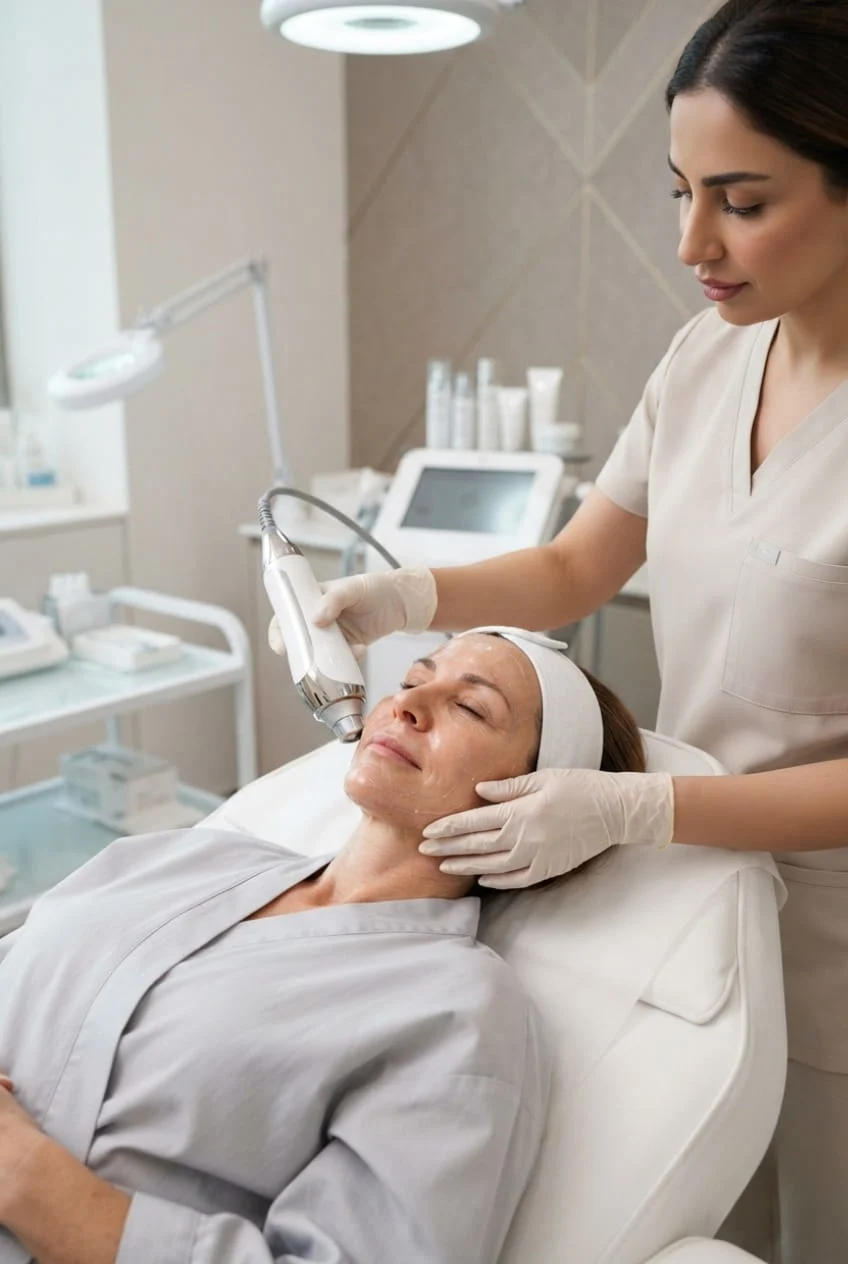
Start With a Facial Assessment
Every face has different skin quality, contours, and signs of ageing. A proper assessment helps evaluate facial firmness, skin texture, areas of concern, and your aesthetic goals before recommending the most suitable non-surgical facelift approach.
QUICK ANSWER
Non-surgical Facelift at Vedara Care, in one paragraph.
A non-surgical facelift refers to a combination of non-invasive or minimally invasive treatments used to address selected signs of facial ageing without surgery. Depending on your concerns, this may involve skin tightening to improve firmness, collagen-stimulating treatments to gradually improve texture and elasticity, and — where clinically appropriate — carefully placed volume restoration to support facial contours. Many patients assume a non-surgical facelift produces results similar to a surgical treatment; because skin laxity, volume loss, and texture changes often occur together but respond to different techniques. Results build gradually rather than appearing all at once, and realistic expectations must be founded on the degree of ageing present. For patients with significant excess skin or advanced facial laxity, surgical consultation may be a more appropriate and effective option, and your dermatologist will discuss the relevance of that openly.
WHAT DOES 'NON-SURGICAL FACELIFT' ACTUALLY MEAN?
What Does 'Non-Surgical Facelift' Actually Mean?
The term is used loosely in the aesthetics industry, so it's worth being precise. A non-surgical facelift is not one treatment — it's a category describing a combination of non-surgical or minimally invasive aesthetic treatments chosen to improve selected signs of facial ageing.
Within that category, different treatments serve different purposes:
- Skin tightening: uses energy-based technology to stimulate collagen and improve firmness
- Volume restoration: uses treatments like fillers to support areas that have lost fullness, where clinically appropriate
- Collagen stimulation: treatments encouraging the skin to rebuild its own structural proteins over time
- Facial contouring: uses combinations of treatments to manage tone, improving balance to facial proportions
- Skin resurfacing: addresses texture, pores, and skin tone as part of an overall approach
- Surgical facelift: is a separate category entirely — it physically lifts deeper tissue under general or local anaesthesia
It needs to be stated plainly: a non-surgical facelift does not reproduce the lifting effect of traditional facelift surgery. Many patients improve through this approach, through the right combination of treatments, non-surgical treatment does genuinely offer improvement — firmer skin, better texture, a more defined jawline in appropriate cases — not a surgical-grade repositioning of facial tissue.
WHY NON-SURGICAL FACIAL REJUVENATION SHOULD BE PERSONALISED
Why Non-Surgical Facial Rejuvenation Should Be Personalised
Facial assessment comes first: Before any treatment is discussed, your dermatologist assesses skin quality, degree of laxity, facial proportions, volume distribution, the appearance of fine lines, and any previous cosmetic procedures. This isn't a formality — it's what determines whether treatment is likely to help at all.
Facial ageing patterns differ: Everyone's face ages differently, based on different underlying skin structure, skin thickness, and rate of ageing. This is precisely why one patient's treatment plan can look nothing like another's, even when their concerns feel similar on the surface.
Natural proportions are important: Too much filler, too aggressive settings, chasing an 'instant' transformation — tend to produce an unnatural appearance rather than a refreshed one. Restraint is a deliberate part of good practice, not a sign of limited treatment options.
Treatment should match the concern: Skin laxity, volume loss, and textural changes are different problems requiring different solutions. A treatment plan built around your actual concerns, rather than a fixed package, tends to produce more satisfying results.
Conservative treatment can be appropriate: Starting conservatively and reassessing before adding further treatment is a reasonable, often preferable, approach — particularly for patients newer to aesthetic treatments.
Expectations need to be realistic: The honest goal of non-surgical facial rejuvenation is improvement — not a transformation. Patients who understand this going in tend to be far more satisfied with their results than those expecting a dramatic overhaul.
WHAT CHANGES CAN A NON-SURGICAL FACELIFT POTENTIALLY IMPROVE?
What Changes Can a Non-Surgical Facelift Potentially Improve?
Skin laxity:
Patients often notice their skin doesn't feel as taut as it used to. Skin tightening treatments may improve firmness in mild-to-moderate cases, but they cannot correct significant loose skin the way surgical tissue removal can.
Fine lines:
Repeated expression and reduced collagen contributes to skin lines. Collagen-stimulating treatments and energy-based options may gradually reduce their appearance through deeper, more even collagen rebuilding over time.
Loss of facial definition:
A general 'softening' of facial contours is common with age. Combination approaches — skin tightening plus selective volume restoration — can support improvement, but the degree of improvement depends on how much structural change has occurred.
Mild jowling:
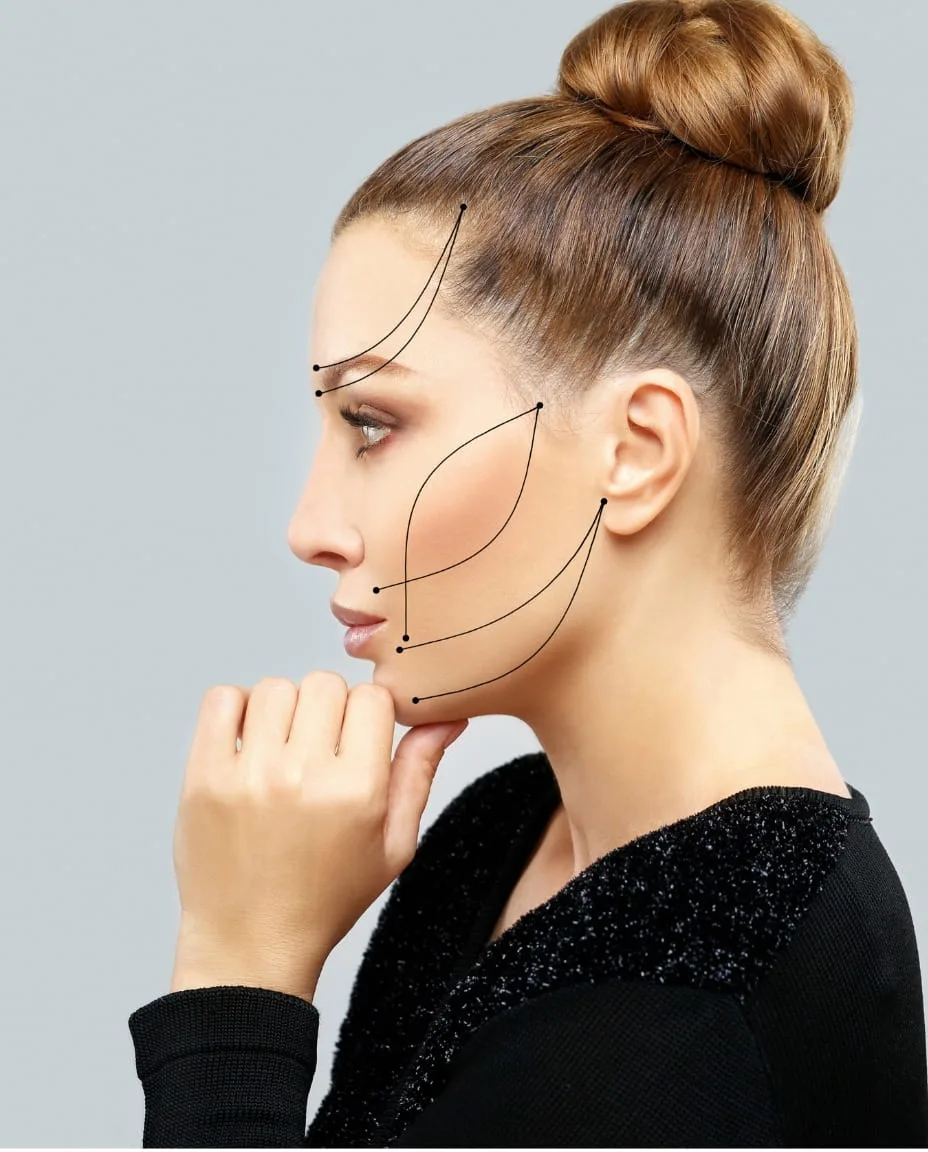
Many patients specifically ask about this. Early jawline softening can respond reasonably well to non-surgical treatment, and skin tightening alongside carefully placed collagen stimulation can meaningfully improve its appearance.
Reduced cheek support:
Volume loss in the mid face can make cheeks appear flatter. Where clinically appropriate, filler-based volume restoration can address this, but this must be conservative and proportionate.
Dull or uneven skin texture:
This is often the most widely improved concern, through resurfacing, microneedling, or skin-quality treatments.
Early neck laxity:
Neck skin often shows laxity before the face does. Non-surgical tightening may offer mild improvement, though the neck generally responds more slowly than facial skin.
Volume changes:
Fat and bone volume naturally reduces with age. This can be partially addressed through targeted, conservative filler placement, but non-surgical treatment cannot fully reverse structural volume loss.
WHICH NON-SURGICAL FACELIFT TREATMENT MAY BE RIGHT FOR YOU?
Which Non-Surgical Facelift Treatment May Be Right for You?
RF Skin Tightening: Radiofrequency energy heats targeted skin tissue to stimulate collagen production. Suited to mild-to-moderate laxity concerns across the face and neck. Improvement is gradual, and multiple sessions are typically part of a realistic plan. It will not correct significant sagging on its own.
RF Microneedling: Combines microneedling with radiofrequency energy delivered through fine needles, reaching deeper tissue with more precision. Also useful for skin quality concerns, and it's often used to moderate laxity together. Involves more downtime than some other non-surgical tightening treatments.
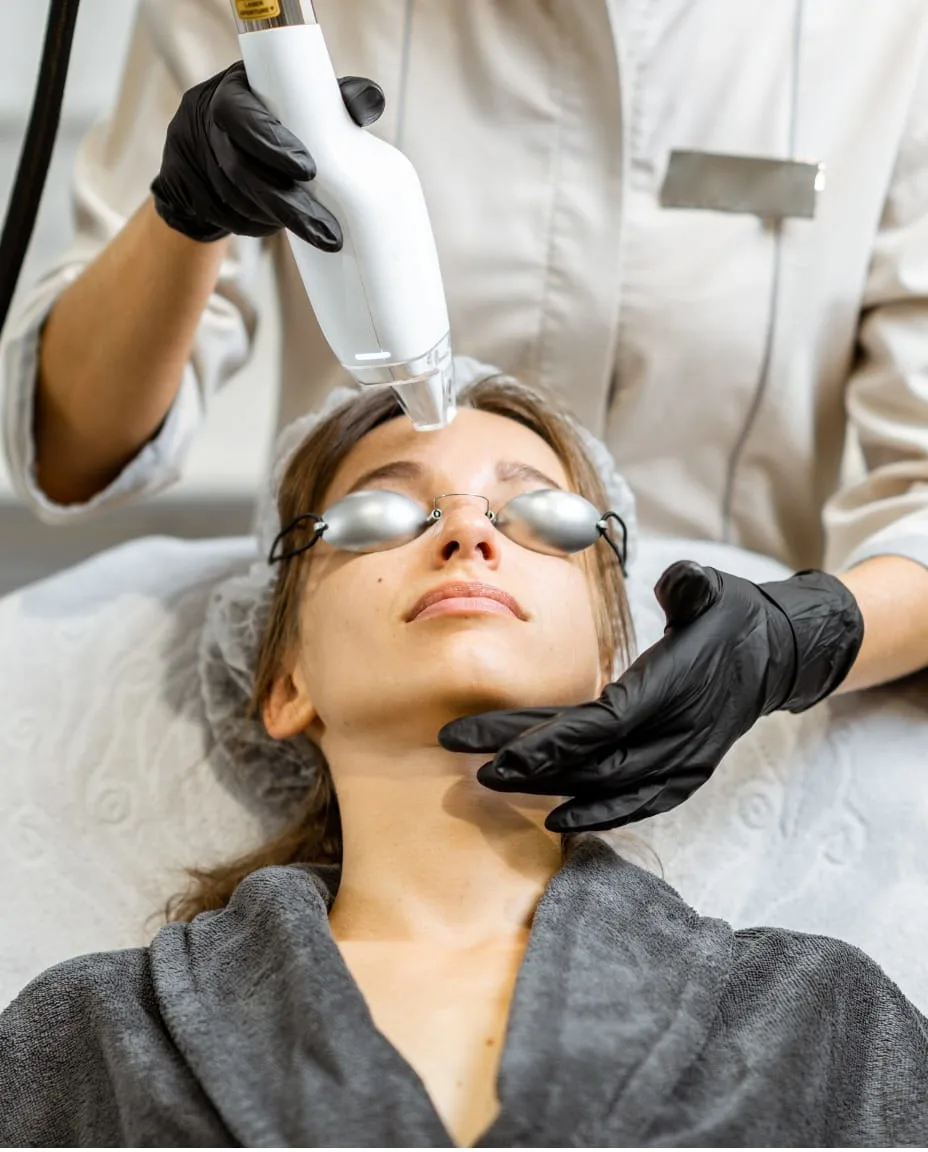
Laser-Based Rejuvenation: Laser technology can improve skin texture, fine lines and — depending on the laser type — pigmentation concerns. Results vary significantly by skin type and tone, which your dermatologist will assess before recommending a specific device or settings.
Dermal Fillers: Used for strategic, conservative volume restoration and facial contouring in areas that have lost structural support. Fillers provide targeted support — they do not physically 'lift' the entire face, and overuse can create an unnatural, overfilled appearance rather than a rejuvenated one.
Skin Boosters: Improve skin hydration, texture, and overall quality. These support the skin rather than functioning as a lifting or firming treatment, and are frequently recommended as a broader skin-quality plan alongside lifting solutions.
Other Energy-Based Treatments: Some non-surgical facelift approaches use ultrasound-based technology targeting deeper tissue layers. [INSERT VERIFIED DEVICE / TECHNOLOGY USED BY VEDARA CARE] for details on what is specifically available at our JVC clinic.
AREAS COMMONLY CONSIDERED DURING A NON-SURGICAL FACELIFT PLAN
Areas Commonly Considered During a Non-Surgical Facelift Plan
01 — Cheeks
Patients often notice reduced fullness or support here first. Volume restoration or skin tightening may help, depending on whether the concern is volume loss or laxity.
02 — Jawline
A frequent priority concern. Mild softening can respond well to tightening treatments; more advanced jowling has more limited non-surgical options.
03 — Lower Face
Often shows a combination of laxity and volume change, which usually calls for a combined rather than single-treatment approach.
04 — Nasolabial Area
The folds running from nose to mouth corners can deepen with volume loss. Conservative filler placement may help in appropriate cases; this is assessed individually.
05 — Chin
Volume or contour adjustments here are sometimes considered as part of overall facial balance, depending on your goals.
06 — Under-Chin Area
Mild laxity may respond to skin tightening. More significant fullness or looseness in this area may require a different conversation.
07 — Neck
Neck skin tends to show laxity earlier and respond more slowly to treatment than facial skin; improvement here is usually modest and gradual.
08 — Overall Facial Skin Quality
Texture, tone, and general skin health are addressed through resurfacing and skin-quality treatments, which support — but don't replace — structural treatments. Not every area responds well to every technology, and your treatment plan will reflect which areas genuinely need attention rather than treating everything by default.
What Happens During a Non-Surgical Facelift Consultation and Treatment?
1. Consultation
Your dermatologist reviews your medical history, specific skin and facial ageing concerns, any previous cosmetic treatments, current skincare routine, medications, allergies, and what you're hoping to achieve.
2. Facial Assessment
This includes evaluation of skin laxity, volume distribution, facial symmetry, overall skin quality, and identification of which treatment areas are relevant to your concerns.
3. Recommended Treatment
What happens next depends entirely on which procedure or combination is selected — the approach and what you can expect during and after treatment will be different and fully explained for your specific plan.
4. Aftercare
General aftercare guidance is given, though specific instructions vary considerably by procedure — your dermatologist will walk you through what applies to your specific treatment.
IS RECOVERY LIKE AFTER A NON-SURGICAL FACELIFT?
Is Recovery Like After a Non-Surgical Facelift?
Downtime depends heavily on which treatment or combination was used — this is not a single, predictable recovery process.
Immediately after treatment: Mild redness or warmth is common with energy-based treatments; slight swelling is common after fillers.
First 24-48 hours: Bruising, tenderness, or mild swelling may appear, particularly after injectable treatments or more intensive procedures like RF microneedling.
First week: Most visible redness and swelling typically settle, though this varies by treatment and individual healing.
Following weeks: Any peeling (from resurfacing treatments) generally resolves, and the skin continues its underlying repair and collagen-remodelling process.
We do not promise 'no downtime' — every treatment carries some degree of recovery, and being upfront about that is part of setting realistic expectations before you commit to a plan.
NON-SURGICAL FACELIFT RESULTS
Non-Surgical Facelift Results: What Should You Realistically Expect?
Results tend to build gradually rather than appear all at once. Patients who respond well may notice improved skin firmness, better defined facial features, improved skin quality and tone, and a generally more refreshed appearance. Where volume restoration is part of the plan, some contour improvement can also be part of the outcome.
When Will You See Non-Surgical Facelift Results?
Immediately after treatment: Some treatments — particularly filler-based volume restoration — show a visible change right away, though initial swelling can temporarily exaggerate this.
First few days: Redness and swelling from energy-based treatments generally begin to settle.
Several weeks: Collagen-stimulating treatments begin to show subtler improvements in texture and firmness.
Longer-term: The fuller effect of collagen remodelling typically develops within this window for most energy-based treatments.
How Long Do Non-Surgical Facelift Results Last?
Results from non-surgical treatment are not permanent. Natural ageing continues throughout and after treatment, and factors like sun exposure and general skin health influence how long improvements are visible. Maintenance needs vary meaningfully by treatment type — filler-based volume restoration and energy-based collagen treatments have different longevities, and the rate at which these treatments fade varies differently from patient to patient. Ongoing skincare and sun protection genuinely support the longevity of your results, though we won't promise a fixed duration that applies to everyone.
NON-SURGICAL FACELIFT BEFORE AND AFTER
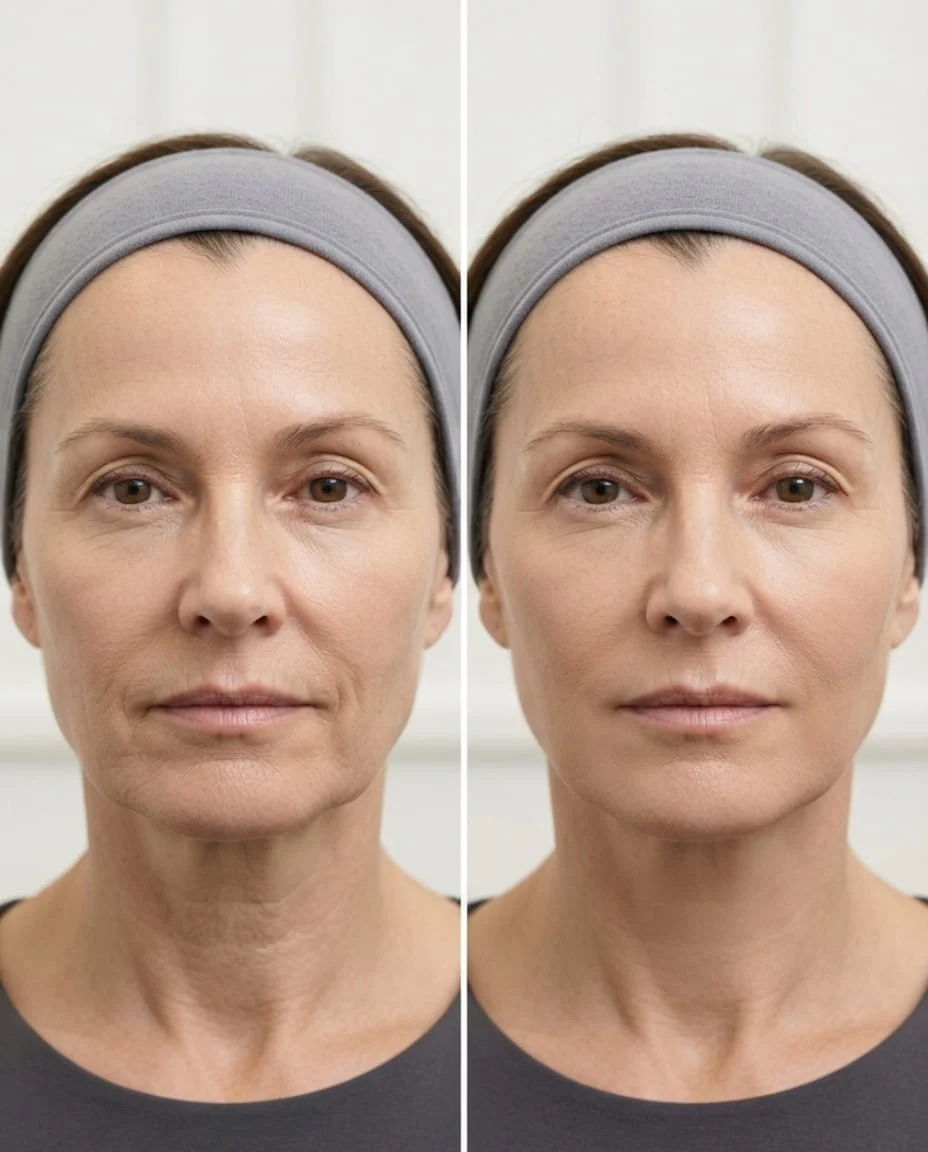
Non-Surgical Facelift Before and After: What to Look For
When reviewing before and after comparisons — whether ours or anyone else's — pay attention to:
- Consistent lighting between the two photos
- Similar camera position and distance
- Neutral facial expressions
- No excessive filtering or retouching
- How much time has passed between photos
- Whether an appropriate treatment timeline is disclosed
Before and after images should not be interpreted as a guarantee of your own outcome — they show one person's individual result under specific factors. We do not fabricate patient images or testimonials, and any before-and-after photography we display uses genuine, consented patient results only.
WHO MAY BE A SUITABLE CANDIDATE FOR A NON-SURGICAL FACELIFT?
Who May Be a Suitable Candidate for a Non-Surgical Facelift?
Non-surgical facial rejuvenation tends to suit patients with:
- Early signs of facial ageing
- Mild-to-moderate skin laxity
- Reduced jawline definition without significant jowling
- Mild volume loss
- Dull or uneven skin quality
- A preference for gradual improvement over dramatic change
- A wish to avoid (additional) surgery, at least for now
As with any aesthetic treatment, suitability can only be properly determined through professional assessment — this is a starting point for discussion, not a self-assessment checklist.
WHEN NON-SURGICAL MAY NOT BE ENOUGH
When May a Non-Surgical Facelift Not Be Enough?
Being honest about limitations is part of responsible care. Non-surgical treatment may not achieve a satisfying result for patients with:
- Significant excess skin
- Advanced facial laxity
- Severe jowling
- Significant structural changes to facial support
- Expectations of surgical-level lifting or transformation
In these situations, a consultation with a plastic surgeon may be a more appropriate and effective path than pursuing non-surgical treatments that are unlikely to deliver the desired outcome. A dermatologist who has your interests at heart will say this directly, rather than recommending treatment that won't meet your goals.
NON-SURGICAL FACELIFT SAFETY AND POSSIBLE SIDE EFFECTS
Non-Surgical Facelift Safety and Possible Side Effects
Potential effects vary considerably depending on which treatment is used.
More common, generally temporary effects: redness, swelling, bruising, tenderness, temporary sensitivity, and — with some energy-based treatments — temporary numbness.
Less common risk, depending on procedure: pigmentary changes, burns from energy-based devices, infection, scarring — and — specifically for injectable treatments, these shouldn't be taken either. Risk depends on the specific procedure, the technology or product used, practitioner technique, and individual patient factors. Your dermatologist will walk through which relevant to your specific treatment plan before you proceed.
DARKER SKIN TONES
Is Non-Surgical Facial Rejuvenation Suitable for Darker Skin Tones?
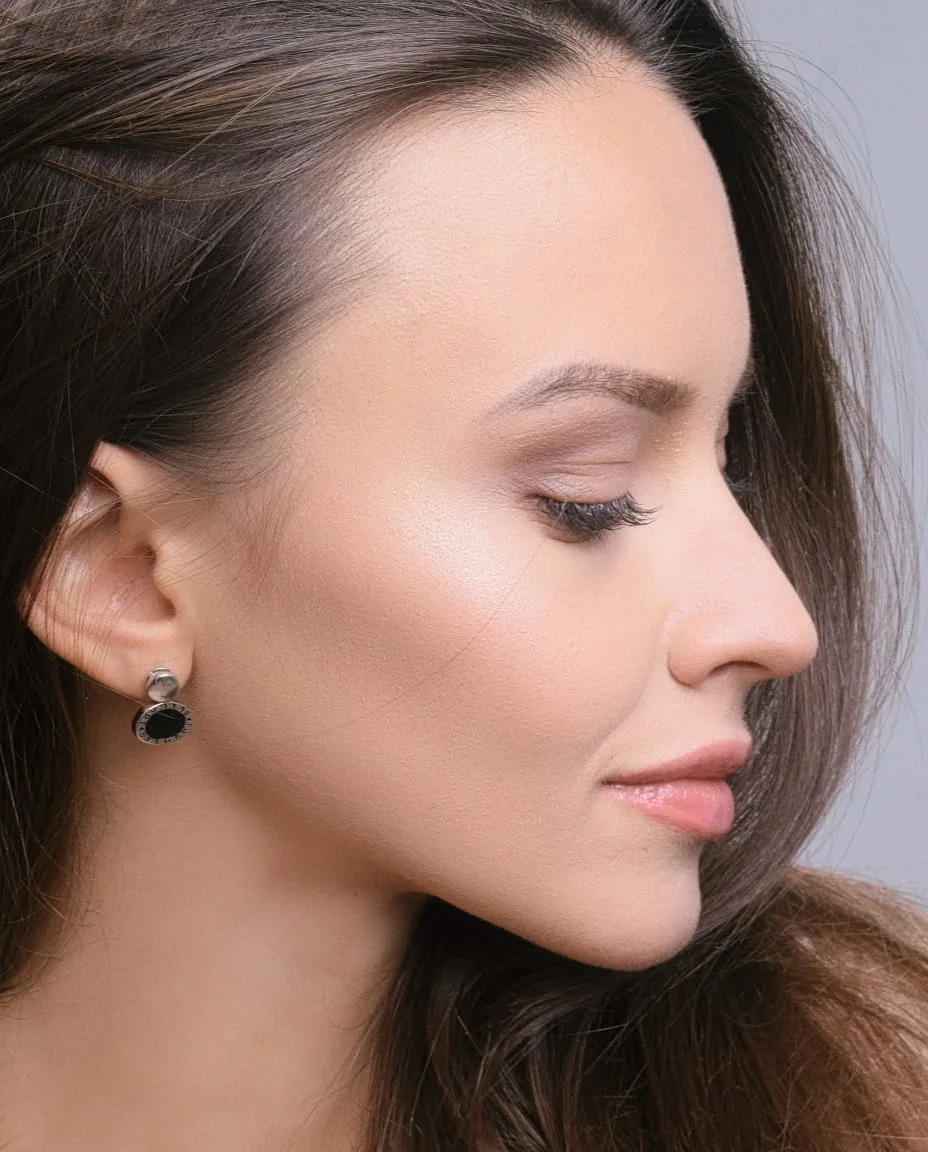
Skin tone is a genuine factor in treatment planning, not a minor detail. Certain lasers and energy-based procedures carry greater pigmentation risk in darker skin and need to be selected and set differently to reflect this. Any previous history of pigmentation problems should be discussed openly at your consultation, and recent sun exposure also factors into risk. Not every treatment is equally suitable for every skin type — this is exactly why individual assessment, rather than a standard protocol, guides what's recommended for you.
CAN DIFFERENT TREATMENTS BE COMBINED FOR A NON-SURGICAL FACELIFT?
Can Different Treatments Be Combined for a Non-Surgical Facelift?
Depending on your goals, combinations sometimes discussed include:
- Skin tightening + RF microneedling
- Skin tightening + skin treatment
- Energy-based treatment + carefully selected injectables
- Resurfacing + skin-quality treatments
- Facial contouring + skin tightening
Combination treatment is not automatically better — it should be based on your specific assessment: skin condition, treatment history, consultation findings, appropriate timing between treatments, and clinically reasonable expectations. Adding treatments without a clear reason tends to increase cost and risk without proportionate benefit.
HOW MANY TREATMENTS MIGHT A NON-SURGICAL FACELIFT REQUIRE?
How Many Treatments Might a Non-Surgical Facelift Require?
This varies according to the technology used, treatment area, degree of skin laxity, your age, skin quality, desired outcome, and the way your skin responds. There is no fixed number — the most energy-based treatment frequency and number of sessions is the realistic expectation [INSERT VERIFIED VEDARA CARE PROTOCOL IF AVAILABLE].
PRICING
What Does a Non-Surgical Facelift Cost in JVC?
| Service | Price |
|---|---|
| Initial dermatology consultation | [VERIFY PRICE] |
| Skin tightening | [VERIFY PRICE] |
| RF Microneedling | [VERIFY PRICE] |
| Facial rejuvenation treatment | [VERIFY PRICE] |
| Facial rejuvenation assessment | [VERIFY PRICE] |
| Book a Consultation | [VERIFY PRICE URL] |
How much does a non-surgical facelift cost in JVC? This depends on the treatments selected and number of sessions. See the pricing table above; your consultation includes a clear cost breakdown.
INSURANCE
Is a Non-Surgical Facelift Covered by Insurance in Dubai?
Elective cosmetic facial rejuvenation is generally not covered by standard health insurance policies. Coverage may differ in cases involving medically necessary dermatological treatment, rather than aesthetic concerns. We recommend confirming your specific coverage directly with your insurance provider, as we cannot claim or guarantee insurance coverage on your behalf.
FACIAL REJUVENATION OUTCOMES AT VEDARA CARE
Facial Rejuvenation Outcomes at Vedara Care
[INSERT VERIFIED PATIENT TESTIMONIAL]
Where genuine, consented before-and-after photography is available, it will be displayed with clear patient consent and an accurate treatment timeline. We do not publish fabricated names, ages, dates, ratings, or outcomes.
Everything patients ask before their first visit.
Short, honest answers from our clinical team. Cannot find what you are looking for? WhatsApp us, usually answered in under 15 minutes.
Ask a QuestionNON-SURGICAL FACIAL REJUVENATION AT OUR JVC CLINIC
Non-Surgical Facial Rejuvenation at Our JVC Clinic
NEARBY LANDMARKS
- ✓Walking distance from Circle Mall
- ✓3 min from FIVE Jumeirah Village Hotel
- ✓5 min from JSS Private School
- ✓Free patient parking
DISTANCE FROM DUBAI COMMUNITIES
Important Information
Medical Disclaimer
This page is for informational purposes only and does not constitute medical advice. All treatments carry risks and benefits that should be discussed with a qualified healthcare professional. Results vary between individuals. Vedara Care Polyclinic is a DHA-licensed facility.
READY TO START?
Start With a Personalised Facial Assessment
The right first step toward a non-surgical facelift isn't choosing a treatment from an online description — it's a proper consultation. Your assessment covers your degree of skin laxity, skin type, treatment suitability, which technology options are genuinely appropriate for you. This conversation covers your concerns about expected results, risks, and recovery — and, where relevant, whether non-surgical treatment is likely to meet all your goals at all.
RELATED SERVICES AND RESOURCES
Related services and resources
Dermatology in JVC
DHA-licensed dermatology clinic in Jumeirah Village Circle.
Learn moreSkin Tightening Treatment
Energy-based skin tightening at Vedara Care JVC.
Learn moreRF Microneedling
Radiofrequency microneedling for collagen and texture improvement.
Learn moreSkin Boosters
Injectable hydration for skin quality and radiance.
Learn moreMicroneedling
Collagen induction therapy for skin texture and tone.
Learn moreChemical Peel
Exfoliating treatments for texture, tone and pigmentation.
Learn moreLaser Treatments
Laser-based treatments for pigmentation, texture and more.
Learn moreFacial Rejuvenation
Comprehensive facial rejuvenation options at Vedara Care.
Learn moreDermatologist profile
Meet the team at Vedara Care Polyclinic.
Learn more