Nasya Therapy in JVC | Vedara Care Polyclinic
Nasya Therapy in JVC is a traditional Ayurvedic nasal therapy in which a selected medicated oil or other appropriate preparation is administered through the nasal passages under the guidance of a trained practitioner. Within Ayurveda, this route is traditionally associated with care of the head and neck region. At Vedara Care Polyclinic in Jumeirah Village Circle, Nasya is never a fixed, one-size-fits-all procedure — the preparation and approach are determined individually, following a proper consultation. If you’re exploring Ayurvedic options for head, sinus, or neck-related concerns in JVC.
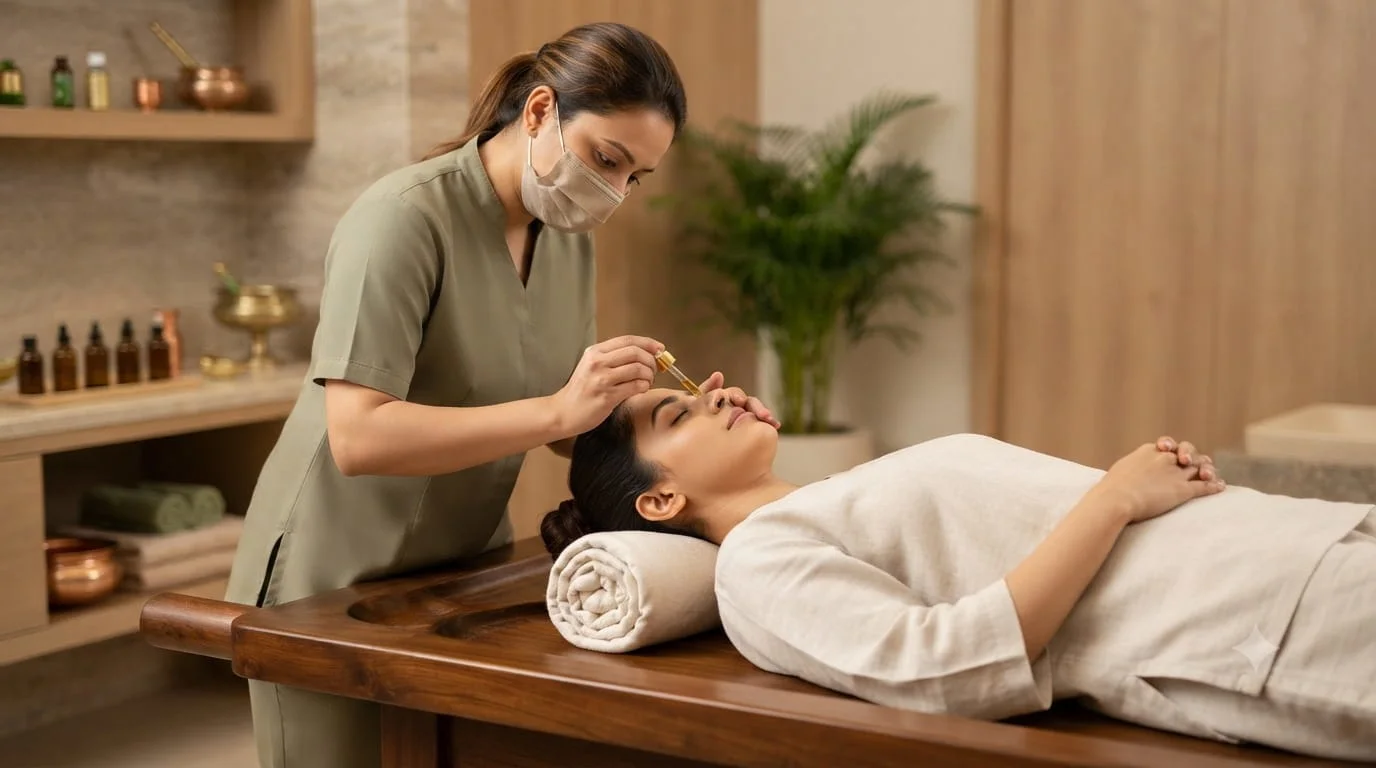
Ayurvedic Nasal Care
Nasya is a traditional Ayurvedic therapy in which a selected medicated preparation is administered through the nasal passages under practitioner guidance.
THE QUICK ANSWER
What is Nasya Therapy in JVC?
Nasya is a traditional Ayurvedic therapy that involves administering an appropriate medicated preparation through the nasal passages, carried out under practitioner guidance rather than at home. Within classical Ayurvedic thought, the nasal route has long been connected to the care of the head and neck region, and Nasya is one of several therapies practitioners may draw on when addressing concerns in this area. The specific preparation used, and the way the treatment is carried out, can vary considerably from patient to patient. A practitioner will typically take into account your individual constitution, your current symptoms, what you're hoping to achieve from treatment, and their own clinical assessment before deciding on an appropriate protocol — there isn't a single standard version of Nasya that applies to everyone. People sometimes look into Nasya Therapy in JVC as part of a broader Ayurvedic care plan for selected concerns involving the nose, sinuses, head, or neck. That said, it's important to be upfront: Nasya is not appropriate for every person, and it is not a default answer for every sinus issue or headache. Whether it has a place in your care depends on a proper individual assessment.
What Is Nasya Therapy?
Nasya refers to the Ayurvedic practice of administering a selected substance — most often a medicated oil, though other preparations are also used depending on the case — through the nasal passages. It is one of several external and internal therapies described within classical Ayurvedic texts, and it sits within a broader category of treatments aimed at the head and neck region.
Ayurvedic tradition has, for centuries, described the nose as a route with a particular connection to the head — sometimes referred to in classical texts using language along the lines of the nose being a "gateway" relevant to the head region. It's worth being clear about what this means and doesn't mean: this is a traditional Ayurvedic concept describing the rationale behind the therapy, not an established anatomical or biomedical claim about brain function. We mention it here because it helps explain why Ayurvedic practitioners have historically directed treatment toward the head and neck through the nasal route — not as a statement of modern medical fact.
It's also worth distinguishing therapeutic Nasya, as practiced in a clinical Ayurvedic setting, from the casual, informal use of nasal oils some people may have come across outside of a professional context. Therapeutic Nasya is meant to be carried out under supervision, using a preparation and protocol chosen specifically for the individual — not a generic routine performed without assessment. This distinction matters both for safety and for whether the treatment is likely to be appropriate for your particular situation.
A selected medicated preparation is administered through the nasal passages under practitioner supervision.
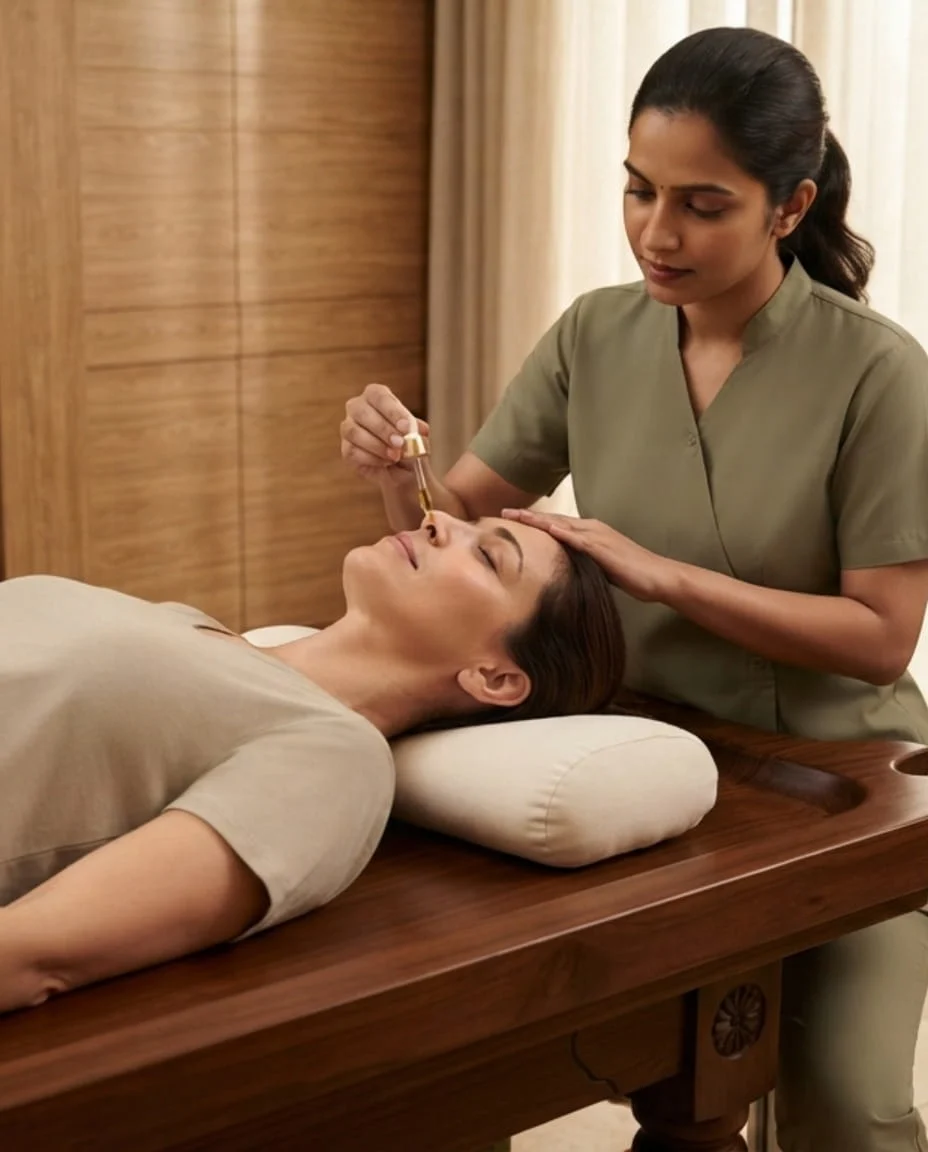
Nasya and Panchakarma
Nasya is often mentioned alongside Panchakarma, the broader classical Ayurvedic framework of purification-oriented therapies, and it's worth clarifying how the two relate. Nasya is traditionally recognized as one of the therapies that can form part of a Panchakarma programme. However, receiving Nasya on its own does not automatically mean you are undergoing a full Panchakarma course — the two are not the same thing, and a single Nasya session is not equivalent to a complete Panchakarma protocol.
Whether Nasya is offered as a standalone therapy or as part of a broader multi-therapy Panchakarma plan depends entirely on your practitioner's assessment of your symptoms, goals, and overall health. At Vedara Care, Nasya is listed among the classical Ayurvedic therapies offered as part of our JVC Ayurveda service, and it's discussed with each patient in relation to their specific head, sinus, or neck-related concerns — not applied as a default add-on to every visit.
Nasya may be offered as a standalone therapy or as part of a broader Panchakarma plan, depending on assessment.
FORMULATIONS
Different Types of Nasya
Ayurvedic practice recognizes that Nasya is not a single fixed procedure — different preparations may be used depending on what the practitioner is aiming to address. Broadly, these can include:
We're intentionally not providing home-treatment instructions or naming a specific oil or preparation here, because therapeutic Nasya is meant to be selected and administered by a trained practitioner — not carried out by patients on their own. Self-administering nasal preparations without professional guidance is not something this page recommends.
INDIVIDUALISED CARE
Why the Preparation Matters
The reason a practitioner spends time selecting a specific preparation, rather than using the same one for every patient, comes down to several individual factors considered within the Ayurvedic framework, including:
Your current symptoms and how long you've had them
Your Ayurvedic constitution (dosha considerations)
The season and how it may relate to your presentation
Your age and general strength
The specific objective of treatment
Your overall health picture

Each preparation is selected individually based on assessment.
It's important to understand that dosha-based assessment is part of the traditional Ayurvedic framework and is not a substitute for medical diagnosis. If your symptoms suggest an underlying medical condition, a conventional diagnostic assessment remains important alongside, or ahead of, any Ayurvedic evaluation.
Concerns Nasya May Be Considered For
Patients researching Nasya Therapy in JVC typically have one or more of the concerns below. None of these outcomes is guaranteed — suitability and response depend on individual assessment, the underlying cause, and the broader care plan being followed.
Nasya for Sinus-Related Concerns
Sinus-related discomfort is one of the more common reasons people search for Ayurvedic sinus treatment JVC options. People may seek Ayurvedic care for concerns such as nasal congestion, a feeling of pressure around the sinuses, head heaviness, or recurring sinus-type symptoms that seem to come and go. It would not be accurate to say Nasya cures sinusitis, and this page does not make that claim. Sinus symptoms can have a range of underlying causes — from allergies to structural nasal issues to recurring infection — and persistent or severe symptoms may need conventional medical assessment to properly identify the cause. If you're currently taking prescribed medication for sinus-related symptoms, please don't stop it without first speaking to the prescribing doctor; Nasya is not presented here as a substitute for that guidance.
Nasya for Headache
Headaches are extremely common and can arise from a wide variety of causes — tension, dehydration, eye strain, sinus involvement, and many other factors, some of which need medical attention and some of which don't. Some patients explore Ayurvedic approaches, including Nasya, for recurring headache patterns as part of a broader individualized plan. Nasya may be considered for headache-related concerns, but only after an appropriate assessment has taken place — it isn't assumed to be the right fit simply because someone has headaches. It's also important to flag that persistent, new, or severe headaches warrant medical evaluation, and this page does not suggest that Nasya eliminates headaches or replaces that evaluation.
Nasya and Migraine
Migraine deserves particularly careful treatment on a page like this, because it is a recognized neurological condition, not simply a severe headache. Migraine symptoms and triggers vary considerably from person to person, and established migraine management — whether through medication, trigger identification, or specialist care — should not be replaced by Ayurvedic therapy alone.If you have diagnosed migraine and are considering Nasya, it's important to continue discussing your ongoing migraine treatment with the healthcare professional managing that condition. In selected cases, and following proper assessment, Nasya may be considered as a complementary Ayurvedic approach alongside your existing care — but it is not presented here as a cure for migraine, and it should not be treated as one.
Nasya for Neck Stiffness
Neck stiffness is another symptom with more than one possible explanation. Musculoskeletal causes — such as poor posture, muscle strain, or joint-related issues — are quite different from neurological or other medical causes, and the appropriate treatment approach depends heavily on which is actually behind your symptoms. Nasya is traditionally associated with head-and-neck Ayurvedic care and may be considered within that context following assessment. That said, a proper evaluation of what's actually causing your neck stiffness matters before deciding on treatment. If your neck stiffness relates more to posture, muscle strength, or movement, our Physiotherapy in JVC service may be more directly relevant, either instead of or alongside Ayurvedic therapy.
Nasya for Head Heaviness and Nasal Discomfort
Patients sometimes describe a cluster of related sensations — head heaviness, nasal blockage, facial pressure, dryness, or general congestion — that don't necessarily point to one single diagnosis. These descriptions are genuinely useful during a consultation, but on their own they don't establish what's actually causing the symptoms.If these symptoms are mild, occasional, or clearly linked to something like seasonal changes, they may be reasonable to discuss within an Ayurvedic consultation. If they are persistent, worsening, or accompanied by other symptoms, we'd encourage a proper assessment — Ayurvedic or conventional — rather than assuming a cause and proceeding straight to treatment.

Potential Aims of Nasya
Within the traditional Ayurvedic framework, Nasya is associated with several therapeutic aims. It's worth stating these using appropriately cautious language, since they reflect traditional use rather than guaranteed clinical outcomes:
Traditionally used to support nasal comfort
Traditionally associated with head-and-neck Ayurvedic care
May be linked, in Ayurvedic thought, with a sense of lightness in the head
Traditionally used to support relaxation
May be considered for selected Ayurvedic symptom patterns identified during assessment
WHO MAY CONSIDER
Who May Consider Nasya?
Interest in the treatment is only the starting point — actual suitability depends on a proper assessment by a qualified practitioner, not simply on matching one of the categories below.
Patients who inquire about Nasya
- ✓Selected recurring sinus-type complaints
- ✓Nasal congestion that isn't linked to an acute infection requiring urgent care
- ✓A sense of head heaviness
- ✓Certain headache patterns, once assessed
- ✓Neck stiffness with a suspected head-and-neck component
- ✓Other head-and-neck concerns identified during practitioner assessment
Situations requiring medical assessment first or where treatment may be avoided
- !Seek medical first: A severe or sudden-onset headache, especially if it's different from your usual pattern
- !Seek medical first: High fever
- !Seek medical first: Significant facial swelling
- !Seek medical first: Severe breathing difficulty
- !Seek medical first: Repeated, unexplained nosebleeds
- !Seek medical first: Sudden neurological symptoms, such as weakness, numbness, or confusion
- !Seek medical first: Vision changes
- !Seek medical first: Severe neck stiffness accompanied by fever
- !Seek medical first: Symptoms following significant trauma
- !Seek medical first: Symptoms that are persistent or steadily worsening
If any of these apply to you, please seek appropriate medical care rather than pursuing Ayurvedic therapy first. None of the guidance on this page is intended to diagnose your condition.
This is not intended as a complete or exhaustive medical contraindication list. These can include, but are not limited to the above. Your practitioner will discuss your individual circumstances with you directly.
Consultation Before Nasya
A proper consultation is the starting point for every Nasya Therapy in JVC session at Vedara Care. During this conversation, the practitioner may explore:
Point 1
Your main symptoms and what's prompted you to seek treatment
Point 2
How long you've experienced these symptoms
Point 3
Any previous sinus or headache history
Point 4
Existing nasal problems
Point 5
Known allergies
Point 6
Current medications
Point 7
Any previous procedures, Ayurvedic or otherwise
Point 8
Your general health
Point 9
A traditional Ayurvedic assessment of your constitution
Point 10
What you're hoping to achieve from treatment
If Nasya doesn't appear to be the right fit based on this assessment, the practitioner may recommend a different Ayurvedic approach, or suggest that a medical referral is more appropriate before proceeding with any Ayurvedic therapy.
Every Nasya treatment plan begins with an individual consultation.
TREATMENT PROTOCOL
What Happens During Nasya Therapy?
While specific protocols vary between practitioners and individual cases, a typical Nasya session generally follows this general patient journey:

A calm, professional setting for Nasya therapy.
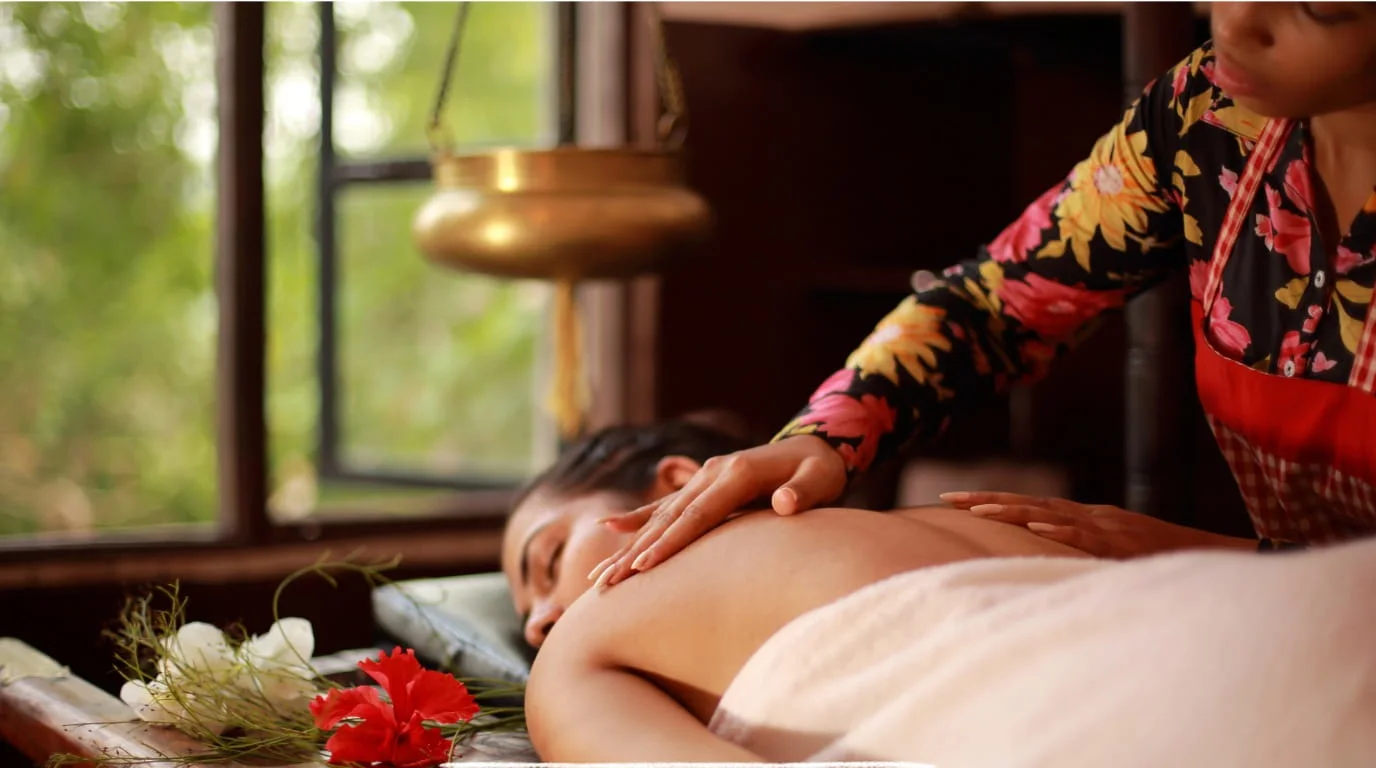
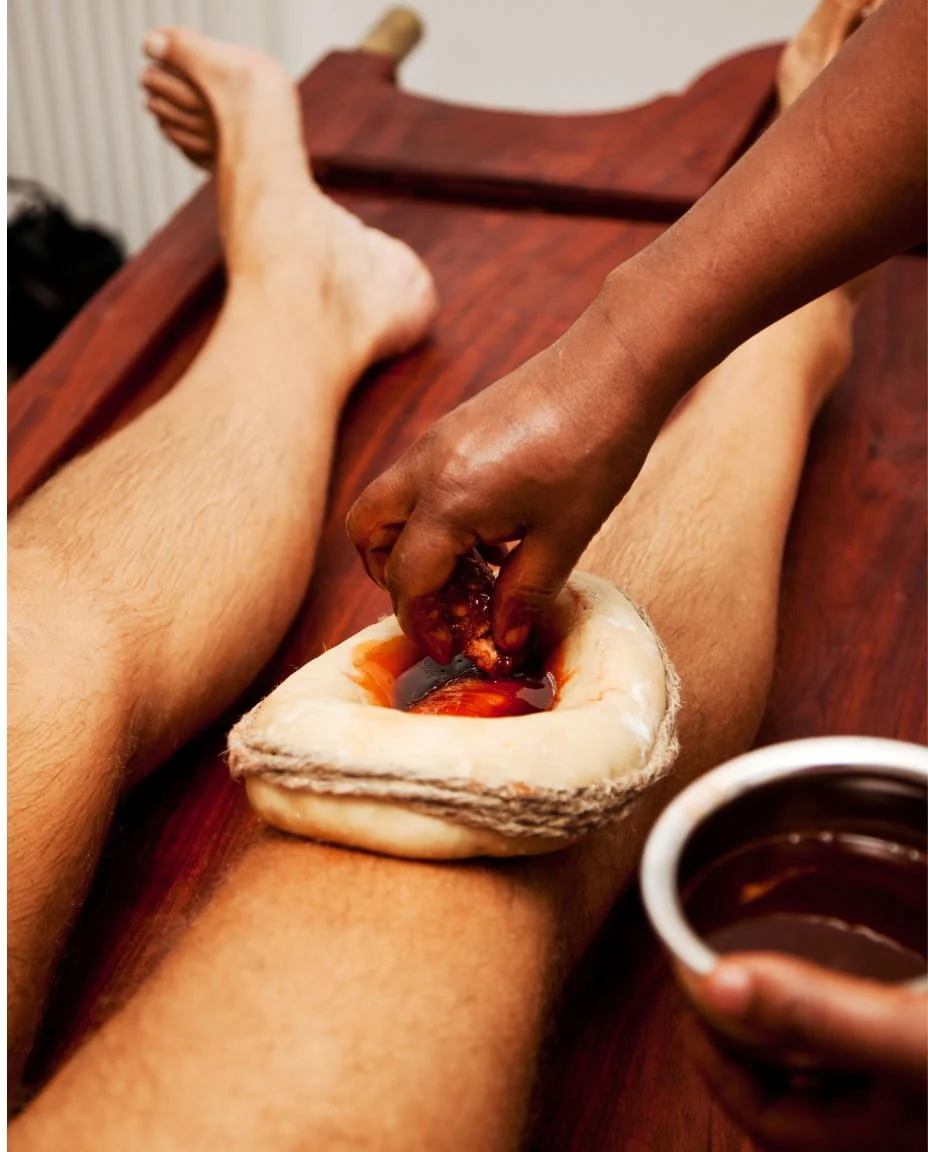
Some protocols include gentle preparatory steps before treatment.
Step 1 — Consultation
Your symptoms, history, and treatment goals are reviewed before any treatment decision is made.
Step 2 — Preparation
The practitioner prepares the selected medicated preparation appropriate to your case.
Step 3 — Positioning
You're positioned appropriately for the procedure, typically reclining, to allow safe and controlled administration.
Step 4 — Local Preparation
Some Ayurvedic protocols may include gentle preparatory steps, such as light head or face massage, before the nasal administration itself — though this isn't necessarily part of every patient's protocol, and your practitioner will explain what applies to your specific plan.
Step 5 — Administration of the Selected Preparation
The chosen preparation is administered through the nasal passages under direct practitioner supervision.
Step 6 — Practitioner Monitoring
Your comfort and response are monitored throughout the procedure.
Step 7 — Post-Treatment Guidance
The practitioner discusses what to expect afterward and any specific aftercare guidance relevant to you.
Exact details — such as the number of drops used, preparation temperature, session duration, or the length of an overall treatment course — are determined individually based on your assessment, rather than following one fixed protocol for every patient.
PATIENT EXPERIENCE
What Does Nasya Feel Like?
Patient experiences during Nasya vary, and it's worth describing this honestly rather than idealizing it. You may notice: • A distinct nasal sensation as the preparation is administered • Mild irritation, particularly at first • A sensation of oil or liquid passing through the nasal passage, sometimes reaching the back of the throat • A need to clear your throat • Temporary nasal discharge following treatment • A feeling of warmth or mild pressure These experiences differ from person to person, and it wouldn't be accurate to describe the treatment as universally pleasant or entirely free of sensation — some of what's described above is a normal, expected part of the process rather than a sign that something has gone wrong.
Does Nasya Hurt?
Administration is meant to be carried out gently and with care, and significant pain is not an expected part of a properly performed Nasya session. That said, some patients may notice temporary discomfort or irritation, particularly in the nasal passages, and individual tolerance varies. The practitioner should actively monitor how you're responding throughout the procedure, and you should feel able to say something if a sensation feels more than mildly uncomfortable. If you experience significant pain or any unexpected symptoms during or after treatment, this should be reported to your practitioner promptly. We wouldn't want to promise you a painless experience, because that's not something that can be guaranteed for every individual.
How Long Does Nasya Take?
There's no single fixed session length that applies to everyone. Treatment duration depends on several factors, including the specific protocol chosen for you, the preparation being used, your individual needs, whether pre-treatment steps are included, and how much post-treatment observation time is built into your session. Your practitioner will give you a realistic sense of timing during your consultation, rather than this page quoting a figure that may not match your actual plan.
Nasya Recovery
Following a Nasya session, several short-term experiences are relatively common and generally expected as part of the process, including: • Increased nasal discharge in the hours following treatment • Mild irritation in the nasal passages • A temporary sensation in the throat • A feeling of nasal clearing • Mild tiredness, depending on the overall treatment and how your body responds These effects are usually short-lived, but if you notice anything unusual or symptoms that persist beyond what you were told to expect, this should be discussed with your practitioner rather than assumed to be normal.
Nasya Aftercare
General aftercare guidance following Nasya typically includes: • Following the specific instructions given by your practitioner • Avoiding self-administering any additional oils or preparations into the nose after your session • Keeping the nasal area comfortable, without excessive touching or irritation • Following any activity guidance discussed with your practitioner • Reporting persistent irritation or any unusual symptoms promptly
Frequently Asked Questions About Nasya Therapy
Answers to common questions about Nasya, suitability, treatment protocol, aftercare, and availability in JVC, Dubai.
Book ConsultationVISIT OUR JVC CLINIC
Nasya Therapy at Vedara Care Polyclinic
9:00 AM - 10:00 PM
NEARBY LANDMARKS
- ✓Walking distance from Circle Mall
- ✓3 min from FIVE Jumeirah Village Hotel
- ✓5 min from JSS Private School
- ✓Free patient parking
DISTANCE FROM DUBAI COMMUNITIES
LOCAL ACCESSIBILITY
Why Choose Nasya Therapy in JVC?
Jumeirah Village Circle has grown into one of Dubai's most established residential communities, with a steady population of residents from neighbouring areas including Al Barsha South, Jumeirah Village Triangle, Dubai Sports City and Motor City who look locally for Ayurvedic therapy options rather than travelling across the city. For a traditional, session-based therapy like Nasya — where a course of sessions rather than a single visit is often involved — having a clinic within the community makes it far more practical to stay consistent with a treatment plan.
Vedara Care Polyclinic, Jumeirah Village Circle, Dubai.
Important Information
Medical Disclaimer
The information provided on this page is for general educational purposes and does not replace individualized medical or Ayurvedic advice. Nasya may not be appropriate for every patient or every nasal, sinus, headache or neck-related concern. A qualified healthcare professional should assess your symptoms and recommend an appropriate treatment plan.
READY TO START?
Discuss Nasya Therapy in JVC With Vedara Care
If you're considering Nasya Therapy in JVC, the Ayurvedic team at Vedara Care Polyclinic — located at Al Barsha South Fourth, Binghatti Azure, Shop -4, Jumeirah Village Circle (JVC), Dubai, UAE — is happy to talk through your symptoms with you. During a consultation, we encourage you to discuss your symptoms, your medical history, current medications, any previous sinus or headache treatment you've tried, and what you're hoping Ayurvedic care can offer, so that together you can work out whether Nasya — or an alternative treatment approach — genuinely fits your situation. We don't guarantee specific outcomes, but we do commit to an honest, individualized assessment before recommending any treatment.
EXPLORE MORE
Related Ayurvedic Services in JVC
Ayurveda Clinic in JVC
Full range of traditional Ayurvedic therapies and consultations in JVC.
Learn moreAyurvedic Treatment in Dubai
Overview of Ayurvedic services offered by Vedara Care Polyclinic across Dubai.
Learn morePanchakarma Treatment in Dubai
Classical Ayurvedic purification framework, of which Nasya can be one component.
Learn moreShirodhara in Dubai
Traditional Ayurvedic forehead oil-stream therapy for head-region concerns.
Learn moreAbhyanga Massage in Dubai
Classical full-body Ayurvedic oil massage, often used alongside head-region therapies.
Learn moreMigraine Ayurveda in Dubai
Ayurvedic management considerations for migraine-related concerns.
Learn morePhysiotherapy in JVC
Structured rehabilitation including neck and posture-related physiotherapy options.
Learn more