+971 55 586 7466
EN|AR
HomeConditionsAyurveda for Skin Problems in Dubai
AYURVEDA FOR SKIN · DHA-LICENSED CLINIC IN JVC, DUBAI

Skin reflects what is happening inside. Treating only the outside is why skin conditions return.

Authentic Ayurvedic treatment for chronic skin conditions in Dubai addresses the systemic patterns — digestive function, hormonal balance, stress patterns, immune regulation, blood quality — that drive recurring skin issues. At our Jumeirah Village Circle (JVC) clinic, structured 4 to 9-month programmes work alongside dermatology (including our own dermatology department) for eczema, psoriasis, chronic acne, rosacea, melasma, urticaria, and other persistent skin conditions. We do not replace topical treatments. We address why they keep being needed.
Ayurvedic doctor examining skin condition during consultation at Vedara Care JVC clinic Dubai

WE LOOK AT MORE THAN YOUR SKIN.

Your skin condition is rarely isolated. Diet, stress, sleep, hormones, gut function — they all show up on your skin. Treatment that ignores them produces temporary results.

We Work With Dermatology
380+ Skin Patients Treated
DHA-Licensed Practitioners
Walking Distance from Circle Mall, JVC

THE QUICK ANSWER

Ayurvedic skin treatment in Dubai, in one paragraph.

Ayurvedic treatment for skin conditions in Dubai is a 4 to 9-month structured medical programme combining classical Panchakarma protocols (typically Virechana for Pitta-driven skin patterns, sometimes Rakta Mokshana for severe inflammatory skin conditions), specific internal medicines (Manjishtadi Kashayam, Mahatiktaka Ghrita, Patolakaturohinyadi Kashayam, Khadirarishta, condition-specific formulations), individualised dietary regulation, and external treatments (medicated oils, Mukha Lepa facial protocols where appropriate). At Vedara Care Polyclinic in Jumeirah Village Circle (JVC), Dubai — next to Circle Mall — protocols are calibrated to your specific skin condition (eczema, psoriasis, chronic acne, rosacea, melasma, urticaria) and dosha pattern, working alongside dermatology including our own DHA-licensed dermatology department. Initial consultations start from AED 450.

Medically reviewed by Dr. Priya Sharma, BAMS, MD (Ayurveda), DHA-Licensed · Last updated June 2026

THE CONCEPTUAL DIFFERENCE

Most chronic skin conditions are systemic problems showing up on the surface.

Patients with chronic skin conditions in Dubai have typically been through a recognizable pattern. A dermatology visit. Topical steroids, topical calcineurin inhibitors, or topical antibiotics. Sometimes systemic medications. The condition improves substantially while on treatment, then returns when treatment stops — or recurs in waves despite ongoing maintenance. Skincare routines escalate. Specialized products are tried. Trigger avoidance becomes a way of life. The skin is managed but not resolved.

Modern dermatology is excellent at what it does — diagnosing skin conditions, providing topical and systemic treatments that suppress the inflammatory or immune processes producing the surface manifestation, and managing acute presentations. What 15-minute dermatology appointments cannot do is address the systemic patterns that drive the recurring inflammation — digestive function, blood quality (Rakta in classical Ayurvedic terms), hormonal balance, stress and cortisol patterns, immune regulation, dietary factors, and the constitutional patterns determining why this person develops this skin condition rather than another.

Classical Ayurveda treats chronic skin disorders (Kushta) as primarily systemic conditions with skin manifestations. The Charaka Samhita devotes substantial attention to Kushta classification, identifying patterns based on dosha involvement (Pitta-dominant inflammatory conditions like eczema and psoriasis; Kapha-dominant cystic and infiltrative conditions; Vata-dominant dry and atrophic conditions), the role of Rakta dhatu (blood tissue) in skin disorders, the importance of Agni (digestive fire) in producing the metabolic byproducts (Ama) that drive inflammation, and the influence of mental and emotional factors on skin presentation.

Authentic Ayurvedic skin treatment at our JVC clinic addresses these systemic patterns through structured 4-9 month programmes. The topical treatments your dermatologist has prescribed continue throughout (we do not ask you to stop them). What we add is the systemic work that reduces the underlying patterns producing recurrence — so the topical treatments become progressively less needed over time, not because we replace them, but because the root patterns improve.

"Topical treatment of chronic skin disease is like mopping the floor while the tap is running. Necessary, sometimes essential — but never enough."
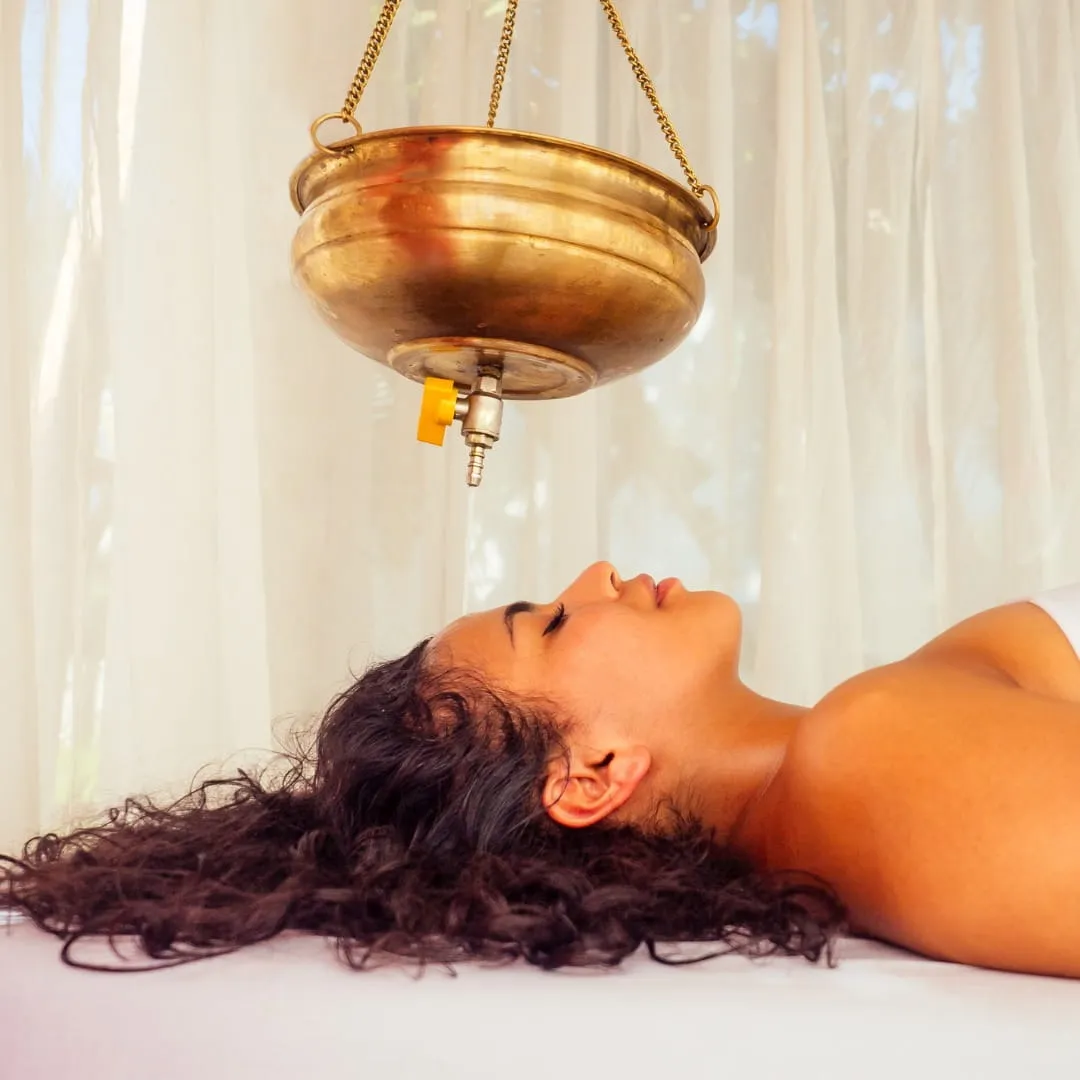
Doctor and patient reviewing systemic health factors affecting skin at Vedara Care JVC
CONDITION-SPECIFIC PROTOCOLS

Ten skin conditions. Different Ayurvedic approach for each.

"Skin problem" describes very different clinical conditions, with very different treatment implications. At our JVC clinic, your specific diagnosis determines the protocol — and accurate dermatological diagnosis is the foundation.

A

Eczema (Atopic Dermatitis)

Vicharchika in classical Sanskrit

Chronic relapsing inflammatory skin condition with intense itching, characteristic distribution (flexural in adults, facial and extensor in infants), often associated with atopic constitution (asthma, allergies, food sensitivities). One of the conditions where Ayurvedic adjunctive treatment has the most established clinical value — addressing the underlying atopic patterns alongside dermatological management.

Ayurvedic emphasis for this type:

Pitta-Kapha pacification, Virechana, Mahatiktaka Ghrita, specific dietary protocols, gut-skin axis work
B

Psoriasis

Eka Kushta, Kitibha in classical Sanskrit

Chronic autoimmune skin disease characterised by erythematous plaques with silvery scales, typical distribution on scalp, elbows, knees, often with nail involvement. Increasingly recognised as systemic inflammatory disease (psoriatic arthritis, cardiovascular implications). Ayurvedic treatment is adjunctive — addressing the systemic inflammatory patterns alongside topical treatments and biologics (Stelara, Cosentyx, Skyrizi, etc.).

Ayurvedic emphasis for this type:

Pitta-Rakta pacification, Panchakarma with Virechana, Manjishtadi Kashayam, dietary regulation, coordination with dermatology and rheumatology
C

Hormonal Acne

Yauvana Pidaka in classical Sanskrit

Acne in adult women (typically 20s-40s) with characteristic jawline and chin distribution, often worse premenstrually, frequently associated with PCOS, hormonal contraception changes, or perimenopause. Distinct from teenage acne. Often resistant to standard acne treatments because hormonal driver is not addressed. One of our most clinically valuable adjunctive programmes.

Ayurvedic emphasis for this type:

Pitta pacification, hormonal-pattern work (often integrated with PCOS programme), dietary regulation, internal blood-cleansing protocols, coordination with dermatology and gynaecology
D

Rosacea

Mukha-dushika and Pitta-prakriti patterns

Chronic inflammatory facial condition with characteristic central facial erythema, papules, sometimes ocular involvement. Often Pitta dominant constitution. Common in fair skinned populations but also presents in Middle Eastern and South Asian skin. Triggered by heat (Dubai climate factor), alcohol, certain foods, stress. Ayurvedic treatment particularly valuable because rosacea is fundamentally Pitta-driven.

Ayurvedic emphasis for this type:

Strong Pitta pacification, cooling protocols, Virechana, dietary regulation for Pitta, trigger management, gentle external treatments
E

Melasma and Hyperpigmentation

Vyanga in classical Sanskrit

Acquired symmetric hyperpigmentation, typically facial, often hormonally influenced (pregnancy melasma, contraceptive related), worsened by UV exposure (significant Dubai factor). Often resistant to topical treatments alone. Ayurvedic approach addresses hormonal patterns, Rakta dhatu, dietary factors, and includes specific external treatments alongside dermatological management.

Ayurvedic emphasis for this type:

Hormonal pattern work, Mukha lepa external treatments, Rakta-purifying internal medicines, UV protection coordination with dermatology
F

Chronic Urticaria (Hives)

Sheetapitta in classical Sanskrit

Recurrent wheals and angioedema persisting beyond 6 weeks, often without identifiable trigger. Significantly impacts quality of life. Conventional treatment with antihistamines and sometimes omalizumab. Ayurvedic treatment addresses the systemic immune patterns alongside antihistamine use.

Ayurvedic emphasis for this type:

Pitta-Kapha pacification, immune-modulating protocols, dietary regulation for histamine, coordination with dermatology for severe cases
G

Vitiligo

Shvitra in classical Sanskrit

Acquired depigmentation in patchy distribution. Autoimmune in origin. Particularly distressing condition affecting quality of life. Conventional treatments include topical immunomodulators, UV therapy, sometimes JAK inhibitors. Ayurvedic treatment can be supportive — sometimes producing repigmentation in some patches — but results are variable and we are explicit about realistic expectations.

Ayurvedic emphasis for this type:

Long-term programmes (often 9-12 months), specific internal medicines, external Bakuchi-based preparations, coordination with dermatology
H

Seborrheic Dermatitis

Darunaka and related patterns

Common condition affecting scalp, face (particularly nasolabial folds, eyebrows), chest. Linked to Malassezia yeast overgrowth and inflammatory response. Often worsened by stress and certain dietary factors. Ayurvedic treatment addresses systemic inflammatory patterns alongside antifungal and anti-inflammatory topical treatments.

Ayurvedic emphasis for this type:

Pitta-Kapha pacification, dietary regulation, gut-skin axis work, specific external treatments
I

Lichen Planus

Charmadala and related patterns

Autoimmune inflammatory condition with characteristic violaceous papules, often itchy distribution on wrists, ankles, sometimes oral mucosa. Conventional treatment with topical and systemic immunomodulators. Ayurvedic adjunctive treatment addresses underlying inflammatory patterns.

Ayurvedic emphasis for this type:

Pitta pacification, immune modulation, careful coordination with dermatology for systemic forms
J

Chronic Post-Inflammatory Skin Issues

Various patterns including residual Pitta-Rakta involvement

Persistent post-inflammatory hyperpigmentation, post-acne scarring, chronic redness after inflammatory conditions resolve. Particularly persistent in skin of colour (significant in Dubai's South Asian and Middle Eastern populations) and worsened by UV exposure. Ayurvedic adjunctive treatment addresses residual inflammation and skin restoration.

Ayurvedic emphasis for this type:

Rakta-purifying protocols, gentle external treatments, dietary support for skin restoration, coordination with dermatology for scar treatment

Most patients arrive at our JVC clinic with a clear dermatological diagnosis. For undiagnosed skin conditions or suspected new dermatological disease, we coordinate with our own dermatology department or your existing dermatologist for accurate diagnosis before designing a treatment plan. Effective Ayurvedic skin treatment requires accurate diagnosis.

BEST RESULTS COMBINE MEDICINE AND AYURVEDA

For skin conditions, the strongest outcomes integrate Ayurveda with dermatology.

Skin conditions involve both surface inflammation (which topical and systemic dermatological treatments address well) and systemic root patterns (which Ayurveda addresses well). Patients who receive both — coordinated between teams — consistently outperform patients who receive either alone.

At Vedara Care, our Ayurvedic doctors and DHA-licensed dermatologists share clinical notes for skin patients. The dermatologist provides accurate diagnosis, manages acute presentations, prescribes topical and systemic treatments as clinically indicated, and monitors disease activity. The Ayurvedic physician addresses systemic patterns through Panchakarma, internal medicines, dietary protocols, and lifestyle modification.

A typical integrated programme looks like: dermatology visit for accurate diagnosis and topical-systemic treatment optimization; then Ayurvedic consultation for systemic root pattern work, with both teams reviewing progress together at key milestones. Topical treatments continue throughout the Ayurvedic programme — we do not ask you to stop them. The goal is reducing the underlying patterns, so topical treatments become progressively less needed over time.
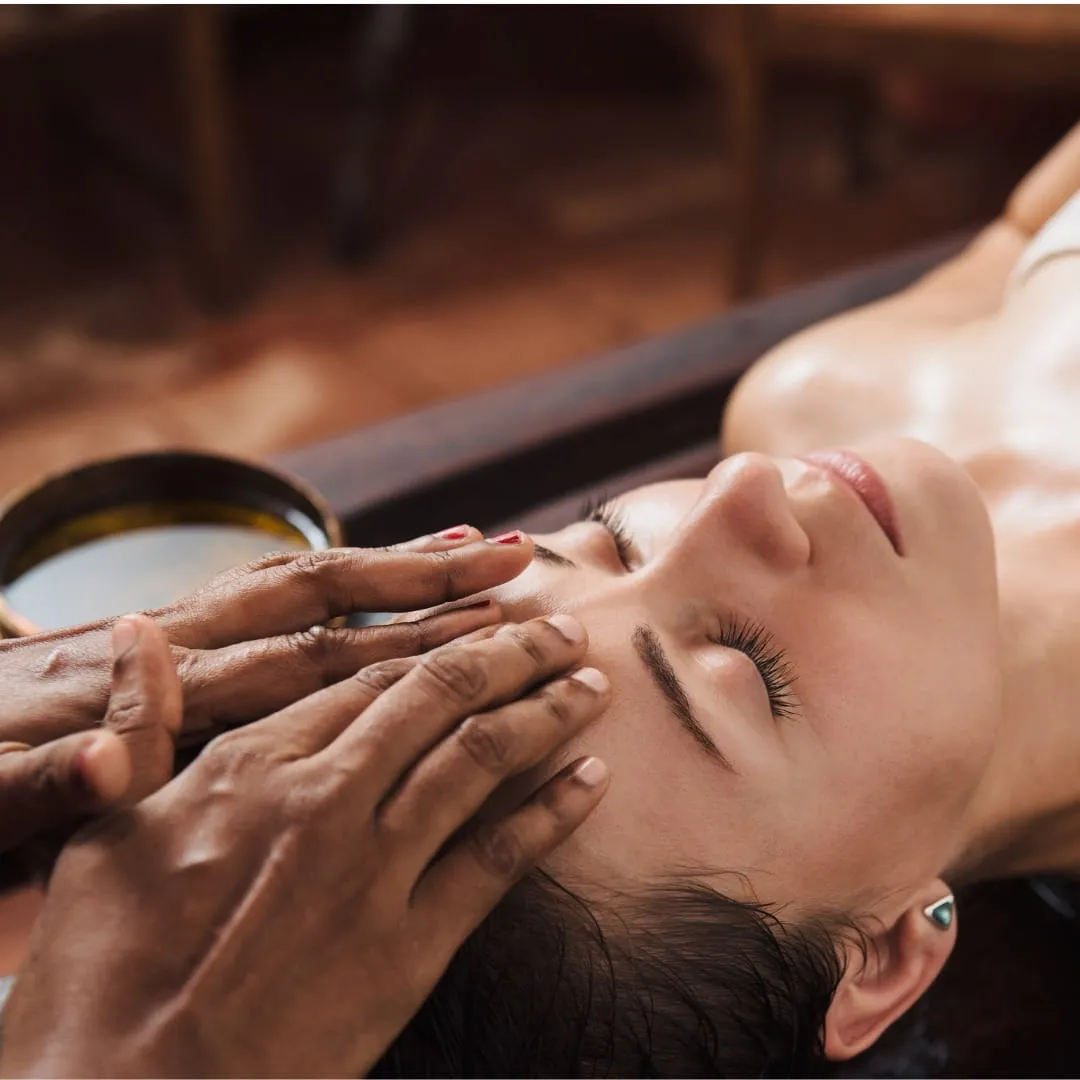
Joint clinical notes between dermatology and Ayurveda team
Coordinated treatment protocols for chronic skin conditions
Shared follow-up reviews at key milestones
Single point of contact for scheduling across both departments
Read about Dermatology in JVC
Ayurvedic doctor and dermatologist collaborating on patient case at Vedara Care JVC
THE TREATMENT APPROACH

Ayurvedic skin treatment has four pillars.

1

Panchakarma Cleansing

For most chronic skin conditions, classical Panchakarma — typically Virechana (medicated purgation) for Pitta-Rakta dominant conditions like eczema, psoriasis, rosacea, acne; sometimes Vamana for Kapha-dominant skin conditions; in select cases Rakta Mokshana (controlled bloodletting therapy) for severe inflammatory skin conditions — addresses systemic inflammation and blood quality issues underlying recurring skin disease. Typically performed once during the programme, in month 2-3, with careful coordination around any systemic medications. Generally contraindicated during severe flares — flare must be stabilised first.
2

Internal Medicines for Skin Restoration

Specific Ayurvedic medicines for chronic skin conditions and dosha pattern. Core formulations include Manjishtadi Kashayam (the classical blood purifying compound), Mahatiktaka Ghrita (for severe inflammatory skin), Patolakaturohinyadi Kashayam, Khadirarishta, Arogyavardhini, condition specific combinations. Doses individualised and adjusted monthly. Selected with attention to interactions with topical and systemic dermatological treatments — particularly important for patients on biologics, oral immunomodulators, or systemic antibiotics.
3

Dietary Regulation — Skin-Specific Protocols

The single most undervalued pillar in conventional dermatological care. Specific dietary protocols designed for your skin condition, dosha pattern, and cultural food preferences. For Pitta-dominant conditions (eczema, psoriasis, rosacea, acne): Pitta-pacifying foods, reduced heating spices, alcohol moderation, specific anti-inflammatory protocols. For Kapha-dominant conditions: different protocols. For specific conditions: particular trigger food consideration (dairy for some acne patterns, gluten consideration for some psoriasis, histamine management for chronic urticaria). Implemented gradually over 4-6 weeks.
4

External Treatments, Lifestyle & Stress Protocols

External medicated oils, Mukha lepa (medicated facial preparations) for facial conditions, specific scalp treatments where appropriate. Lifestyle protocols include sun protection (essential in Dubai's UV environment for melasma, post-inflammatory pigmentation, photosensitive conditions), heat management (rosacea, eczema flares), stress regulation (significant trigger for most skin conditions — sometimes including Shirodhara for patients with prominent stress-skin overlap), sleep optimisation, and the specific Dubai life factors (climate, AC exposure, dietary patterns) affecting your skin.
Single-pillar approaches — 'just take this herbal supplement,' 'just do this elimination diet,' 'just apply this oil' — produce limited results because chronic skin conditions involve multiple layers requiring integrated treatment. The 4-9 month programme works by addressing all four pillars consistently alongside ongoing dermatological care.
WHAT TO EXPECT

What four to nine months of Ayurvedic skin treatment at our JVC clinic looks like.

A representative protocol for moderate chronic eczema. Other skin conditions follow modified versions. Your specific plan is calibrated at consultation.

1
Month 1

Assessment & Foundation

  • 60-minute consultation with BAMS-qualified physician at our JVC clinic
  • Detailed skin history — onset, distribution, severity, triggers, family history of atopy or autoimmunity
  • Review of dermatological history — diagnosis, all treatments tried (topical and systemic), current medications
  • Photography of affected areas with consent (baseline documentation)
  • Coordination with your dermatologist or our dermatology department (with consent)
  • Pulse diagnosis, dosha assessment, condition classification
  • Initial internal medicines protocol begins (compatible with current topical/systemic treatments)
  • Dietary plan introduced gradually
  • Lifestyle and stress baseline established
Expected by end of Month 1:
Clear condition classification, baseline documented, treatment plan signed off, initial small improvements often visible
2
Month 2

Panchakarma & Active Treatment

  • 7-14 day Panchakarma programme (if appropriate — Virechana most common for Pitta-driven conditions)
  • 5-7 day pre-Panchakarma preparation
  • Main Virechana day with skin condition carefully monitored
  • 7 days Paschatkarma recovery with specific dietary protocol
  • Resumed internal medicines post-Panchakarma with adjusted dosing
  • Dietary protocol deepened based on response
  • Topical treatments continued throughout
Expected by end of Month 2:
Substantial reduction in disease activity for most patients; less frequent flares, often visible improvement in chronic patches
3
Month 3

Continued Active Treatment

  • Mid-programme review with photo comparison and dermatology coordination
  • Refined herbal protocol based on response
  • Continued dietary refinement
  • For patients with stress-skin overlap: Shirodhara introduced
  • For specific facial conditions: Mukha lepa external treatments may begin
Expected by end of Month 3:
Meaningful improvement for most patients in chronic conditions; rosacea often shows particularly clear improvement by this point
4
Month 4

Consolidation

  • Continued internal medicines with maintenance adjustments
  • Reduced clinic visits (every 2-3 weeks)
  • Dietary protocol becoming sustainable lifestyle
  • For patients with significant flares, possible second short Panchakarma
  • Coordination with dermatology on potential topical treatment reduction (under their supervision)
Expected by end of Month 4:
For many chronic eczema, acne, and rosacea patients, programme can sometimes conclude here with substantial sustained improvement
5
Month 5-6

Refinement (For Continuing Patients)

  • For psoriasis, severe chronic conditions, vitiligo: continued active treatment
  • Maintenance dose of internal medicines
  • Reduced visits (every 2-3 weeks then monthly)
  • Continued protocol integration
  • Long-term plan discussion
Expected by end of Month 5-6:
Stable improvements consolidated for most patients; behaviour changes feeling natural
6
Month 7-9

Continuation for Complex Conditions

  • For psoriasis, vitiligo, severe atopic eczema, complex multi-condition patterns
  • Continued internal medicines
  • Quarterly dermatology coordination
  • Annual return planning
Expected by end of Month 7-9:
Maximum benefit consolidated, clear long-term maintenance protocol, formal handover to dermatology with documented improvements

This is a representative protocol. Chronic acne and rosacea often respond well in 4-6 months. Eczema typically needs 6 months. Psoriasis and vitiligo benefit from 9-month programmes alongside dermatology. Your specific timeline is documented and reviewed monthly.

REALISTIC EXPECTATIONS

Honest outcome ranges based on skin condition and adherence.

Different skin conditions respond differently to Ayurvedic adjunctive treatment. These ranges are based on our 380+ skin patients at the JVC clinic with documented before-and-after photography and patient-reported outcomes after structured programmes.

ConditionDisease Activity Reduction (6-9 months)Topical Treatment NeedsLong-term Outlook
Eczema (Atopic Dermatitis)50-75% reduction in flare frequency typicalOften reduced topical steroid use under dermatologist supervisionSubstantial long-term improvement with maintenance
Psoriasis40-60% PASI score improvement typical alongside dermatologyVariable — depends on conventional treatmentAdjunctive support; biologics often continued
Hormonal Acne60-80% reduction in active lesions typicalOften reduced topical/systemic acne treatment needsOften substantial long-term improvement
Rosacea50-70% reduction in flushing and papules typicalOften reduced topical treatmentExcellent long-term outcomes for Pitta-pattern patients
Melasma30-50% improvement in pigmentation typicalOften reduced need for cosmetic treatmentsVariable — UV protection essential lifelong
Chronic Urticaria50-70% reduction in episode frequencyOften reduced antihistamine needsGood long-term outcomes for many patients
Seborrheic Dermatitis50-70% reduction in flare frequencyOften reduced topical antifungal needsGood long-term improvement with maintenance
Vitiligo20-40% repigmentation typical in selected casesContinued conventional treatment recommendedVariable — some patches respond, others don't
Lichen Planus40-60% reduction in disease activityVariableDepends on severity and form
Post-Inflammatory Pigmentation30-60% improvement typicalOften reduced need for cosmetic treatmentsExcellent long-term with sustained protocols

These ranges are based on patients completing the full programme with consistent dietary and lifestyle adherence alongside ongoing dermatology care. Patients who do not implement systemic protocols see significantly lower improvements. The single biggest predictor is adherence to all four pillars.

CLINICAL BOUNDARIES

When dermatology comes first — or alongside us.

DERMATOLOGY FIRST

Conditions requiring immediate dermatological care:

  • Suspicious moles or unusual spots (urgent dermatology review)
  • Severe acute drug reactions or systemic disease (emergency)
  • Severe acute acne flares requiring systemic treatment (dermatology-lead, Ayurveda after stabilization)
  • Suspicious skin infections (bacterial, viral, fungal) needing antimicrobial treatment first
  • Severe psoriasis with systemic involvement (psoriatic arthritis — dermatology coordination)
  • Undiagnosed skin conditions without dermatological workup

Final diagnostic decisions at our JVC clinic refer to dermatology — including our own DHA-licensed dermatology department — for diagnostic workup and acute management. We provide structured systemic adjunctive care, never replacing dermatological care.

CO-MANAGEMENT

Conditions where we work alongside dermatology:

  • You have a confirmed dermatological diagnosis.
  • You are on stable topical or systemic dermatological treatment.
  • Your dermatologist has cleared you for adjunctive care.
  • You have completed appropriate workups (biopsies, blood tests if indicated).
  • You want to address systemic patterns alongside topical treatment.
RESULTS

"Adult eczema for fifteen years. Steroid creams forever. Six months at Vedara alongside my dermatologist — the flares have reduced from monthly to occasional. My topical steroid use is half what it was."

Sarah K.

Atopic Dermatitis · 6-Month Programme , JVC District 12 · February 2026

"Hormonal acne since my late 20s, worse after coming off the pill. Nothing topical worked long-term. Five months at Vedara, integrated with their dermatology team — my skin is clear and stable for the first time in a decade."

Priya R.

5-Month Integrated Programme , Al Barsha South · January 2026

"Plaque psoriasis on my elbows, knees, and scalp for years. On Stelara — managed but never gone. Vedara's nine-month programme alongside my dermatologist and biologic — my plaques have shrunk substantially. My dermatologist is impressed."

Rohan G.

Plaque Psoriasis · 9-Month Adjunctive Programme , Dubai Marina · March 2026

5,000+

Patients Treated

74%

Improvement Reported

62%

Reduced Topical Needs

TRANSPARENT PRICING

What Ayurvedic skin treatment at our JVC clinic costs.

Indicator pricing for our three most common skin programmes. Final pricing depends on condition, severity, and protocols confirmed at consultation.

Skin Initial Assessment

AED 450
60 minutes at our JVC clinic
  • Consultation with BAMS physician
  • Detailed skin history & assessment
  • Review of dermatological history
  • Photography for baseline
  • Pulse & dosha assessment
  • Coordination plan with dermatology
  • Written treatment plan
  • Full programme pricing
Best for:

First step for every new patient — required before any treatment programme

Book Assessment
Most Common

Standard 6-Month Skin Programme

AED 12,500
6 months — 10-15 visits to JVC
  • All Initial Assessment components
  • One Panchakarma programme (7-14 days)
  • 6 months internal medicines
  • Comprehensive dietary protocol
  • External treatments as appropriate
  • Monthly doctor review
  • Coordinated dermatology reviews
  • 12-month follow-up
Best for:

Eczema, hormonal acne, rosacea, chronic urticaria, melasma, dermatitis

Book Assessment

Comprehensive 9-Month Skin Programme

AED 18,000
9 months — 15-20 visits
  • All Standard Programme components
  • Extended internal medicines
  • Possible second Panchakarma
  • Extended external treatments
  • Continued dermatology coordination
  • Detailed photo documentation
  • 12-month follow-up programme
Best for:

Psoriasis, vitiligo, severe chronic eczema, complex multi-condition presentations

Book Assessment

Insurance direct-billing available with some major insurers — coverage for Ayurvedic skin treatment varies by plan. Skin conditions are recognized medical conditions supporting coverage in many plans. WhatsApp us your insurance card before booking.

SKIN QUESTIONS

What patients ask before starting Ayurvedic skin treatment.

For hair-specific issues, see our hair loss pages. For PCOS-related acne, see PCOS page. For skin and gut connection, see IBS page.

Read about Panchakarma
Read about Dermatology in JVC

Ask the Clinical Team

For most chronic skin conditions, yes — substantially, when treatment is a structured 4-9 month medical programme alongside dermatological care, not herbal supplements alone. Across our 380+ skin patients at the JVC clinic, chronic eczema patients typically see 50-75% reduction in flare frequency over 6 months. Hormonal acne patients typically see 60-80% lesion reduction. Rosacea responds particularly well. Psoriasis and vitiligo show meaningful improvement but are more variable. The single biggest predictor of outcome is consistent dietary and lifestyle adherence.

For most chronic skin conditions: no, not in the sense of permanent resolution. Eczema, psoriasis, rosacea, vitiligo, chronic urticaria are typically lifelong conditions requiring ongoing management. What sustained Ayurvedic treatment can produce: substantial reduction in disease activity, longer remission periods, reduced flare severity, decreased need for topical treatments, and improved quality of life. Some conditions (hormonal acne, post-inflammatory issues) sometimes resolve more completely. We will not promise cure for conditions that are not curable.

No. We do not ask you to stop topical treatments your dermatologist has prescribed. They continue throughout the Ayurvedic programme. As the underlying systemic patterns improve, your dermatologist may consider reducing topical treatment frequency under their supervision — but that decision is always theirs based on disease activity. We complement topical treatment; we do not replace it.

Yes. Many of our skin patients are on biologics — Dupixent (dupilumab) for eczema, Stelara/Cosentyx/Skyrizi for psoriasis, JAK inhibitors. Ayurvedic treatment is compatible with all of these. We do not adjust biologic regimens — that is your dermatologist's decision. Ayurvedic adjunctive treatment specifically addresses what biologics cannot — the dietary, lifestyle, and systemic patterns that influence the broader inflammatory environment.

Most Ayurvedic medicines used for skin at our JVC clinic are compatible with common dermatological treatments. Specific attention is paid to interactions with systemic immunomodulators (methotrexate, cyclosporine), retinoids (isotretinoin, acitretin), and certain antifungals. Your full medication list is reviewed at consultation. We err strongly on the side of caution and communicate with your dermatologist when needed.

At Vedara Care, initial assessment starts from AED 450. A standard 6-month skin programme starts from AED 12,500. A comprehensive 9-month programme starts from AED 18,000. Across Dubai, comprehensive Ayurvedic skin programmes typically range from AED 8,000 to AED 25,000. Compared to ongoing costs of specialised dermatological skincare, frequent dermatology visits, and ongoing biologics (when applicable), the investment is often comparable or less.

Yes. Vedara Care has a DHA-licensed dermatology department at our JVC clinic. For patients without an existing dermatologist who need formal dermatological diagnosis or coordinated care, we can refer internally. Many patients benefit from our integrated Ayurveda-dermatology approach with both teams collaborating on their case. For patients with existing dermatologists they prefer to continue with, we coordinate externally.

For stable chronic skin conditions: yes, with appropriate timing and modifications. Panchakarma is typically performed when skin is in a relatively stable phase, not during severe acute flares. For psoriasis with systemic involvement (psoriatic arthritis), patients on biologics, or severe eczema: careful coordination with dermatology is essential. Some patients have modified Panchakarma; some have full classical protocols. Your specific situation is assessed at consultation.

The dietary protocol is condition-specific, dosha-specific, and culturally adapted. General principles for inflammatory skin conditions: Pitta-pacifying foods, reduced heating spices, alcohol moderation, identification of individual triggers (sometimes dairy for acne, gluten consideration for psoriasis, histamine management for urticaria). For Kapha-dominant conditions: different protocols. Implementation is gradual over 4-6 weeks. We do not prescribe restrictive elimination diets unless your specific condition warrants it.

Yes, significantly. Dubai's UV intensity, heat, AC exposure, and pool/sea exposure all affect skin conditions. Our protocols include specific Dubai-climate guidance: UV protection (essential for melasma, pigmentation, photosensitive conditions, post-treatment phases), heat management for Pitta-dominant conditions like rosacea, AC dryness counterbalance for eczema, and pool chlorine considerations. Climate is genuinely a Dubai-specific factor we address.

Modified Ayurvedic protocols are available during pregnancy. Active Panchakarma is not performed. We focus on pregnancy-safe internal medicines, external treatments where appropriate, and dietary regulation. For pregnancy-related skin changes (melasma, pregnancy acne, pregnancy eczema), pregnancy-safe protocols are designed with obstetric coordination. Postpartum skin issues are often best addressed as part of the integrated postnatal programme.

Paediatric eczema is common — affecting up to 20% of children in Dubai's expat population. For adolescents (typically 12+) with parental consultation and often alongside paediatric dermatology, modified Ayurvedic programmes are available — gentler protocols, age-appropriate doses, strong emphasis on family-coordinated dietary approaches and identifying triggers. For younger children, the focus is on dietary and environmental modifications rather than directed treatment programmes.

Active acne treatment is well-suited to Ayurvedic adjunctive care. Acne scarring (atrophic scars, ice-pick scars, rolling scars) is primarily a dermatological treatment area — chemical peels, microneedling, laser resurfacing, fractional treatments. Ayurvedic adjunctive treatment can support skin restoration alongside these treatments and address post-inflammatory pigmentation, but is not the primary treatment for established scarring.

Melasma is one of the more challenging conditions because UV exposure is a major driver and Dubai's UV intensity is severe. Ayurvedic treatment addresses hormonal patterns, Rakta dhatu factors, and includes specific Mukha lepa external treatments. However, lifelong UV protection (broad-spectrum SPF 50+, hat, hours of UV avoidance) is essential — both during treatment and after. Without sun protection, no melasma treatment (Ayurvedic or otherwise) produces sustained results.

Our clinic is at Building 38, District 12, Jumeirah Village Circle (JVC), Dubai — next to Circle Mall, three minutes from FIVE Jumeirah Village Hotel, and five minutes from JSS Private School. Free patient parking is available. Patients travel to us from across Dubai including JVC, JVT, Al Barsha South, Dubai Sports City, Motor City, Arjan, Dubai Hills, Marina, Downtown, Palm Jumeirah, and Mirdif.

Yes. We work with several Dubai dermatology practices for joint patients, including dermatologists at major Dubai hospitals and specialised clinics. With your consent, we coordinate with your existing dermatologist throughout the programme. For patients without dermatologists, our DHA-licensed dermatology department at the JVC clinic offers internal referral options.

Yes. Many female patients prefer female doctors for skin consultations — particularly for hormonal acne, facial conditions like rosacea and melasma, intimate skin conditions, or any consultation requiring detailed body examination. We have female BAMS-qualified physicians available at the JVC clinic. Request a female doctor when booking.

Skin conditions are recognised medical conditions for insurance purposes, which often supports coverage. Some plans cover Ayurvedic treatment for skin conditions, particularly when there is documented dermatological diagnosis and previous treatment trials. We are direct-billing partners with seven major insurers — Daman, AXA, Allianz, Oman Insurance, Now Health, Bupa, MetLife. WhatsApp us your insurance card photo before booking.

Substantially different. Spa 'Ayurvedic facials' are cosmetic treatments — pleasant but limited in clinical impact for chronic skin conditions. Authentic Ayurvedic skin treatment at our JVC clinic is a medical programme led by BAMS-qualified physicians, including systemic internal medicines, Panchakarma, dietary regulation, and external treatments selected for your specific medical condition. It is not a beauty service. It is medical treatment for skin disease.

Always with a thorough assessment. Tap 'Book a Skin Consultation' on this page, WhatsApp us at +971 55 586 7466, or call +971 55 586 7466. Please bring (or send before consultation): recent dermatologist notes if available, any biopsy or pathology reports, current medication list (topical and systemic), and photos of affected areas (we will also take baseline photos with consent). The 60-minute consultation at our JVC clinic includes comprehensive history, examination, classification, and a written treatment plan with realistic expectations.

READY?

Treating your skin condition systemically — not just topically.

If you have been managing a chronic skin condition with cycles of topical treatments and flares, the next useful step is different. A 60-minute consultation at our JVC clinic identifies the systemic patterns driving recurrence — digestive, hormonal, stress, dietary, constitutional — and designs a 4-9 month programme tailored to your specific condition. We work alongside your dermatologist (including our own dermatology team if you prefer). We do not replace topical treatment. We address why it keeps being needed.

Initial consultation from AED 450 · Walking distance from Circle Mall, JVC · Integrated with dermatology · Female doctors available · Insurance direct-billing