Sports injury physiotherapy in JVC. Get back to your sport — properly
DPT-qualified sports physiotherapists at our Jumeirah Village Circle (JVC) clinic, walking distance from Circle Mall. Specialised treatment for padel injuries, running injuries, gym training injuries, ACL rehabilitation, and acute sports trauma — with structured return-to-sport protocols that prevent re-injury. Same-day appointments for acute injuries. Insurance direct-billing with seven major insurers.
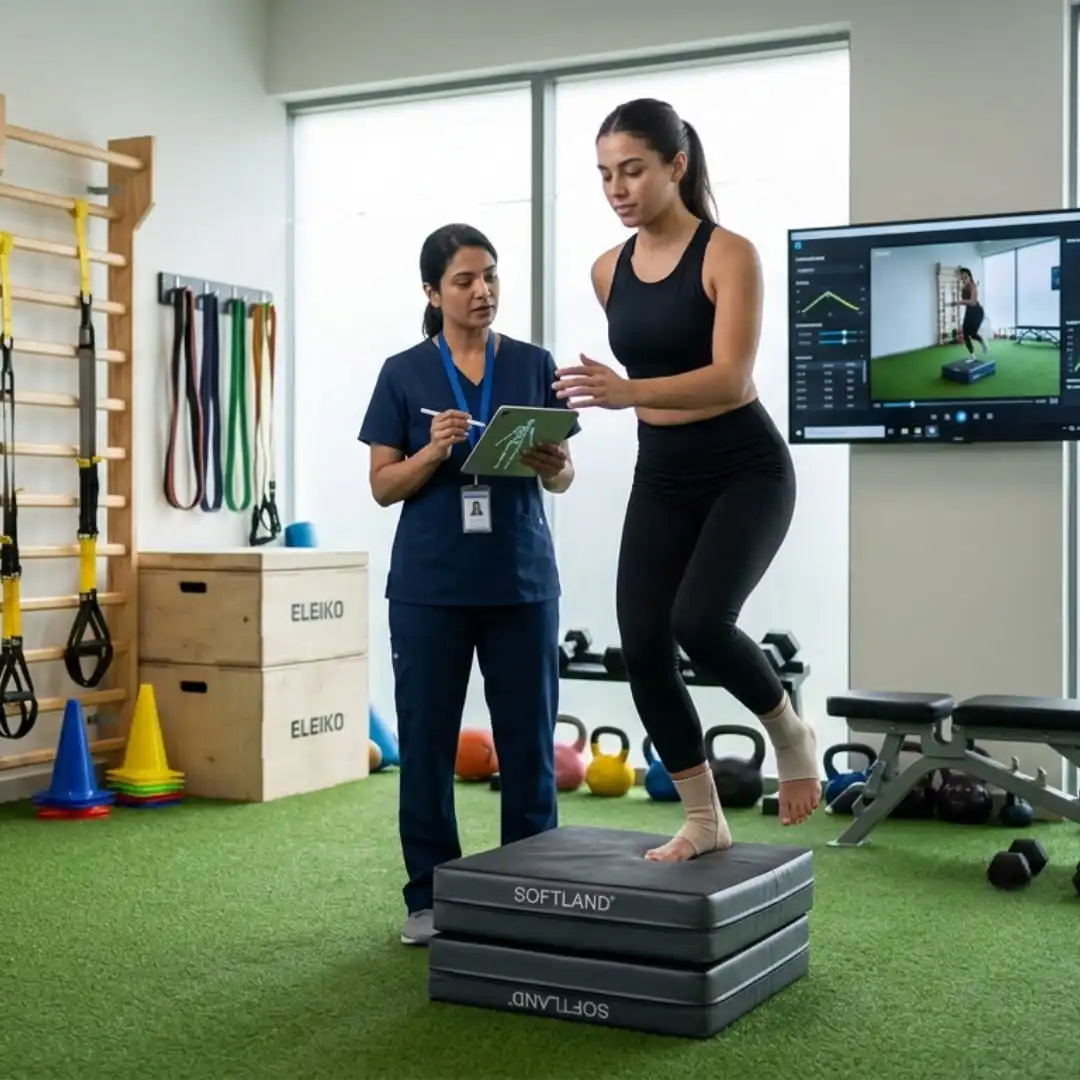
PADEL · RUNNING · GYM · ACL · MORE
Specialised protocols for Dubai's most common sports injuries. From acute injury management to full return-to-sport. Same-day appointments often available.
THE QUICK ANSWER
Sports injury physiotherapy at our JVC clinic, in one paragraph.
Sports injury physiotherapy at Vedara Care Polyclinic in Jumeirah Village Circle (JVC), Dubai — walking distance from Circle Mall — is specialised treatment for active patients delivered by DPT-qualified physiotherapists with sports medicine certifications. We treat acute sports injuries (ankle sprains, hamstring strains, ACL injuries, rotator cuff injuries, meniscus tears), sport-specific injury patterns (padel elbow, runner's knee, gym overuse, tennis elbow, golf-related injuries), and provide post-surgical rehabilitation (ACL reconstruction, meniscus repair, rotator cuff repair). Treatment combines hands-on manual therapy, sport-specific exercise progression, biomechanical analysis, dry needling where appropriate, modalities (shockwave therapy for tendinopathies, IFC, ultrasound), and structured return-to-sport protocols designed to prevent re-injury. Single sessions from AED 350; sport-specific rehabilitation packages from AED 2,400. Patients travel to our JVC clinic from across Dubai including Sports City, Motor City, JVT, Al Barsha South, Marina, and Downtown. Insurance direct-billing with Daman, AXA, Allianz, Oman Insurance, Now Health, Bupa, and MetLife.
Medically reviewed by Dr. Sara Al-Mansoori, DPT, Sports Medicine Certified, DHA-Licensed 2509266 · Last updated June 2026
By Sport
Specific sport-injury protocols at our JVC clinic.
Different sports produce different injury patterns. The same diagnosis means different things across sports — and requires different rehabilitation protocols. Our sports physiotherapists tailor treatment to your specific sport and movement demands.
Padel
Common injuries:
- Padel elbow (lateral epicondylitis)
- Rotator cuff impingement
- Lower back strain
- Wrist tendinopathies
- Ankle sprains
- Knee meniscus injuries
Typical recovery: 3–8 weeks for most injuries; 8–16 weeks for meniscus
Running
Common injuries:
- Runner's knee (patellofemoral pain)
- IT band syndrome
- Shin splints (medial tibial stress syndrome)
- Plantar fasciitis
- Achilles tendinopathy
- Stress fractures
- Hamstring strains
Typical recovery: 4–12 weeks depending on severity; stress fractures longer
Gym Training
Common injuries:
- Lower back strain
- Rotator cuff impingement
- Knee tendinopathies
- Hip flexor strains
- Wrist injuries
- Acute muscle strains
Typical recovery: 2–8 weeks for most overuse injuries
Football & Futsal
Common injuries:
- Hamstring strains
- ACL injuries
- Meniscus tears
- Ankle sprains
- Groin injuries
- Quadriceps strains
Typical recovery: 2–6 weeks for soft tissue; 6–12 months for ACL
Tennis Elbow / Golfer's Elbow
Common injuries:
- Tennis elbow (lateral epicondylitis)
- Rotator cuff injuries
- Lower back strain
- Wrist tendinopathies
- Ankle sprains
Typical recovery: 4–12 weeks depending on injury
Golf
Common injuries:
- Golfer's elbow (medial epicondylitis)
- Lower back strain
- Rotator cuff injuries
- Wrist injuries
- Hip mobility restrictions
Typical recovery: 4–12 weeks
Cycling
Common injuries:
- Knee pain (patellofemoral)
- Lower back pain
- Neck and shoulder tension
- IT band syndrome
- Saddle-related injuries
- Crash trauma (clavicle, wrist)
Typical recovery: Varies enormously by injury type
Recreational Sports
Common injuries:
- Ankle sprains
- Knee injuries
- Shoulder injuries (volleyball, swimming)
- Wrist injuries (climbing)
- Acute trauma
- Overuse patterns
Typical recovery: Varies by injury
If your sport is not listed, our sports physiotherapists treat athletes across all recreational and amateur sports. The specific sport matters because biomechanical demands differ — but the principles of sports physiotherapy apply across all athletic populations.
By Injury Type
Specific injury types we treat at our JVC clinic.
Padel Elbow / Tennis Elbow
Pain on the outer elbow, often from racquet sports. Manual therapy, dry needling, eccentric loading protocols.
Learn more about tennis elbow →Golfer's Elbow
Pain on the inner elbow. Similar treatment approach to lateral epicondylitis with sport-specific modifications.
Learn more about elbow recovery →Rotator Cuff Injuries
Shoulder pain particularly with overhead movement. Sport-specific in padel, tennis, swimming, gym training.
Learn more about shoulder physiotherapy →ACL Injuries & Reconstruction Recovery
Major knee ligament injury common in football and pivoting sports. Surgical or conservative pathway; 6–12 month rehab.
Meniscus Injuries
Cartilage injuries in the knee. Surgical or conservative management. Common across cutting sports and gym training.
Hamstring Strains
Common in running, football, sprinting. Different rehabilitation by grade and location of injury.
Ankle Sprains
The most common acute sports injury. Proper rehabilitation prevents the chronic instability that often follows poorly managed sprains.
Runner's Knee
Anterior knee pain in runners. Often biomechanical — addressed through specific exercise prescription and gait analysis.
Learn more about knee physiotherapy →IT Band Syndrome
Lateral knee pain in runners and cyclists. Soft tissue work combined with hip strengthening protocols.
Achilles Tendinopathy
Common in runners and active patients. Eccentric loading protocols are evidence-based first-line treatment.
Shin Splints & Stress Fractures
Common in runners. Differential diagnosis from stress fractures is important. Load management protocols.
Lower Back Strains
Common across nearly all sports. Specific protocols depending on sport-specific demands and injury mechanism.
Learn more about back physiotherapy →Did not find your injury? Contact us — we treat the full range of sports injuries →
The Approach
How sports injury physiotherapy actually works at our JVC clinic.
Sports injury physiotherapy is meaningfully different from general musculoskeletal physiotherapy. The patient is typically younger, more active, more motivated, more time-pressured (they want to return to sport), and more medically literate. The treatment must reflect these differences.
Phase 1 — Acute Assessment and Pain Management
Same-day or next-day assessment for acute injuries. Detailed history including injury mechanism, sport-specific demands, and competitive timeline. Physical examination with sport-specific tests. Imaging review if relevant. Initial treatment focused on pain reduction, swelling management, and tissue protection. Activity modification guidance — what you can and cannot do during the early phase.
Phase 2 — Active Recovery and Tissue Restoration
Manual therapy targeted at the affected tissues — joint mobilisation, soft tissue work, dry needling for trigger points and muscle tension. Modalities as appropriate (shockwave therapy for chronic tendinopathies, IFC for pain management, ultrasound for specific applications). Early-stage exercise rehabilitation beginning with isometric loading, progressing to controlled dynamic loading as tissues tolerate.
Phase 3 — Sport-Specific Progression
Where sports physiotherapy diverges most from general physiotherapy. Exercise prescription progresses through general strengthening to sport-specific movement patterns. For padel players: lateral movement, racquet swing biomechanics, change-of-direction protocols. For runners: running gait analysis, return-to-running protocols, surface and volume progression. For football players: cutting, change of direction, jumping, sport-specific agility. Each sport has its own progression sequence.
Phase 4 — Return-to-Sport Testing and Clearance
Before clearing patients to return to sport, we apply objective return-to-sport criteria — strength benchmarks (typically 90% of unaffected side), functional performance tests (hop tests, change-of-direction tests, sport-specific drills), and time-from-injury minimums based on tissue healing biology. Premature return to sport is the leading cause of re-injury. Patients who follow proper return-to-sport protocols have significantly lower re-injury rates than those who self-manage their return.
Phase 5 — Prevention and Performance
For active patients, prevention matters as much as treatment. After injury resolution, structured prevention programmes address the underlying factors that contributed to the injury — strength asymmetries, mobility limitations, movement pattern issues, training load management. For padel players this might mean rotator cuff prevention; for runners, hip strength and gait optimisation; for gym athletes, mobility work and form refinement.
"Return to sport is not just an absence of pain — it is meeting objective criteria for strength, function, and tissue healing. Anyone who clears you back to sport without testing is gambling with your career or recreation."
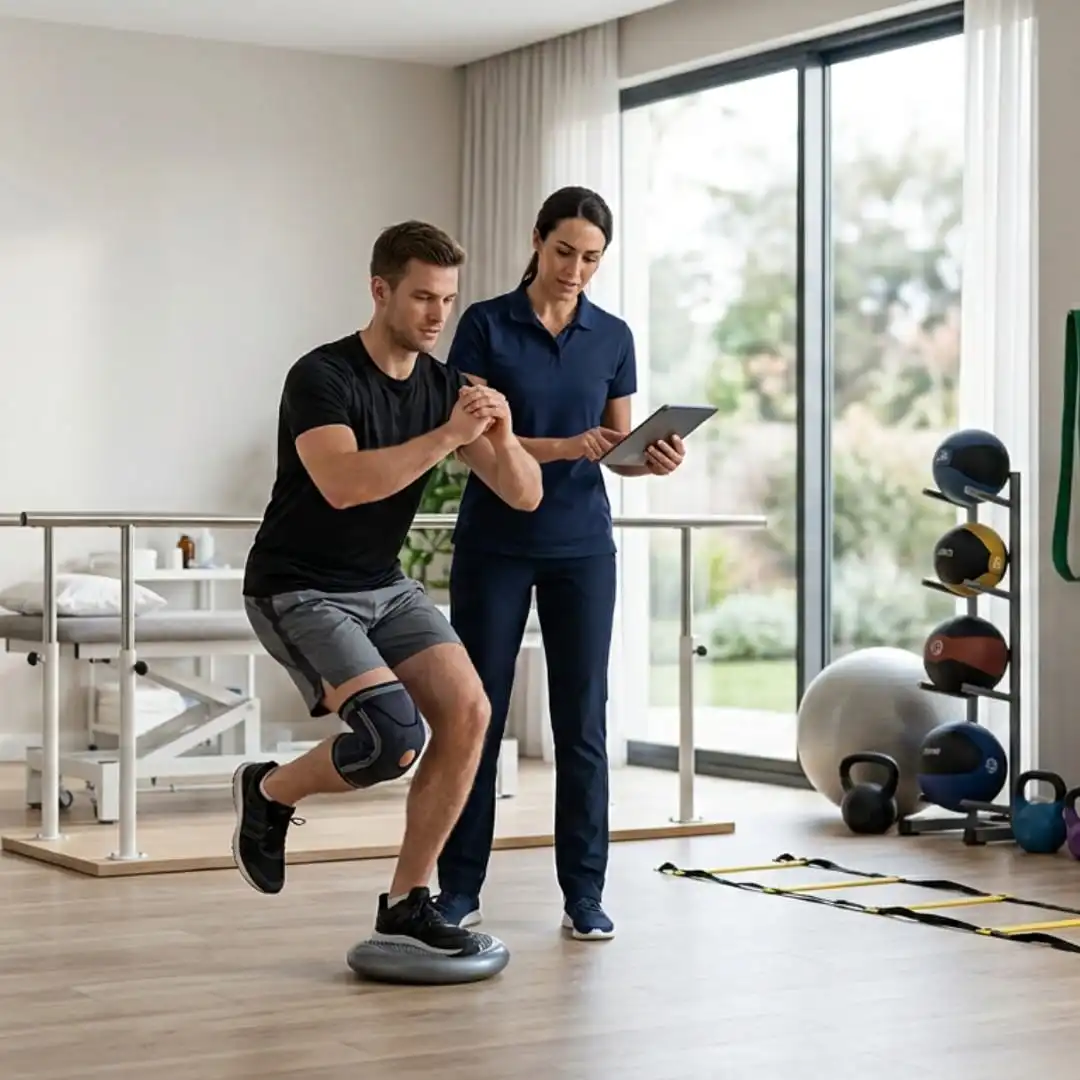
5-PHASE PROTOCOL
Every patient follows our structured 5-phase return-to-sport framework — from acute assessment through to objective clearance and prevention programming.
Techniques & Modalities
Evidence-based sports physiotherapy techniques.
01
Manual Therapy
Skilled hands-on treatment — joint mobilisation, soft tissue work, manual stretching, myofascial release, and manipulation where appropriate. The foundational sports physiotherapy technique. Particularly valuable for acute injury management, restricted joint mobility, and chronic soft tissue patterns.
02
Dry Needling
Fine needles inserted into trigger points and tight muscle bands to release tension and reduce pain. Particularly effective for chronic muscle patterns, certain sport-related pain syndromes, and persistent post-injury muscle tension. Performed by certified physiotherapists.
03
Shockwave Therapy
Focused or radial shockwave therapy for chronic tendinopathies — plantar fasciitis, Achilles tendinopathy, patellar tendinopathy, lateral epicondylitis, rotator cuff calcific tendinopathy. Evidence-based first-line treatment for chronic tendon conditions that have not responded to other approaches.
04
Biomechanical Analysis & Gait Assessment
Detailed analysis of movement patterns specific to your sport. Running gait analysis, sport-specific movement screening, single-leg and bilateral functional testing. Identifies the movement patterns contributing to injury or limiting performance.
05
Sport-Specific Exercise Prescription
Progressive exercise programmes tailored to your sport. Not generic 'physio exercises' but specific protocols for your sport's demands. Documented in writing with video guidance for home performance.
06
Return-to-Sport Testing
Objective testing before clearing return to sport — strength testing (isokinetic or hand-held dynamometry), functional hop tests, change-of-direction tests, sport-specific drills. Evidence-based criteria for return-to-sport clearance.
Acute Injury Care
Same-day appointments for acute sports injuries.
If you have an acute sports injury — ankle sprain, hamstring strain, knee injury, shoulder dislocation, or other recent trauma — appropriate early management makes a substantial difference to recovery time and re-injury risk. Same-day or next-day appointments are typically available for acute injuries at our JVC clinic.
For acute sports injuries, the first 48–72 hours involve managing the inflammatory response (no longer pure 'rest, ice, compression, elevation' — current evidence supports more active early management), preventing the protective patterns that lead to chronic dysfunction, accurate diagnosis (some injuries that look minor are actually significant; some that look severe are actually manageable), and beginning the rehabilitation that will determine your recovery trajectory.
Common acute presentations we handle same-day include: ankle sprains and inversion injuries, acute hamstring strains, knee injuries with effusion or instability, shoulder dislocations and subluxations, acute muscle tears, sports-related back injuries, and acute neck injuries from contact sports or falls. For injuries with red flag features — significant trauma, suspected fracture, neurological symptoms, severe deformity — A&E evaluation comes first, then physiotherapy follow-up.
How to access same-day: WhatsApp +971 55 573 6312 is the fastest route — our team typically confirms availability within 15 minutes during business hours. Saturdays and evenings are also available for working patients with acute injuries.
Acute Injury Checklist
Within first 48 hours:
- Protect the injured area
- Optimal loading (not absolute rest in most cases)
- Manage swelling
- Avoid heat, alcohol, NSAIDs in first 24–48 hours
- Get assessed within 48–72 hours
Red flags requiring A&E first:
- Suspected fracture (severe pain, deformity)
- Inability to weight-bear at all
- Significant joint deformity
- Numbness or severe weakness
- Head injury with concussion symptoms
What return-to-sport looks like by injury type.
Based on our 900+ sports injury patients at the JVC clinic with documented return-to-sport outcomes.
| Injury | Typical Return-to-Sport | Re-Injury Rate (with proper protocol) | Re-Injury Rate (without proper protocol) |
|---|---|---|---|
| Ankle sprain (Grade 2) | 4–6 weeks | <10% within 12 months | 30–40% within 12 months |
| Hamstring strain (Grade 2) | 4-8 weeks | <15% within 12 months | 30–50% within 12 months |
| Padel elbow (chronic) | 6–12 weeks | <20% within 12 months | 40–60% within 12 months |
| ACL reconstruction | 9–12 months | <8% within 24 months | 20–25% within 24 months |
| Rotator cuff injury (non-surgical) | 8–16 weeks | <15% within 12 months | 30–40% within 12 months |
| Runner's knee (patellofemoral) | 6–12 weeks | <15% within 12 months | 40–50% within 12 months |
| IT band syndrome | 6–10 weeks | <10% within 12 months | 35–50% within 12 months |
| Achilles tendinopathy | 12–24 weeks | <15% within 12 months | 35–50% within 12 months |
| Meniscus injury (non-surgical) | 6–12 weeks | <20% within 12 months | 40–50% within 12 months |
| Acute back injury (mechanical) | 4–8 weeks | <20% within 12 months | 35–50% within 12 months |
The single largest factor in re-injury prevention is following the full rehabilitation programme — including the return-to-sport criteria testing — rather than self-discharging once acute pain resolves. Patients who complete proper rehabilitation have re-injury rates substantially lower than those who do not.
Sports physiotherapy specialists at our JVC clinic.
Dr. Sarah Mitchell, DPT
Lead sports physiotherapist with 9 years of experience treating elite and recreational athletes across padel, running, and gym populations.
Dr. Rajan Mehta, DPT
Specialist in post-surgical rehabilitation and knee injuries, with a particular focus on ACL reconstruction return-to-sport protocols.
Dr. Priya Nair, DPT
Expert in running biomechanics and gait analysis. Previously physiotherapist for the Dubai Marathon medical team.
Dr. Carlos Fernandez, DPT
CrossFit Level 2 certified physiotherapist specialising in gym-related injuries and sports performance optimisation.
Transparent Pricing
What sports injury physiotherapy at our JVC clinic costs.
Direct Insurance Billing
Insurance direct-billing available with seven major insurers. Sports injuries with medical justification are typically covered. WhatsApp your insurance card to +971 55 573 6312 before booking for specific coverage confirmation.
Real return-to-sport outcomes.
"Tore my ACL in a Sports City football match. Vedara's team got me back to competitive football in 11 months — strength-tested, functionally cleared, properly rehabbed. Three years later, still playing, no re-injury."
James M.
ACL Reconstruction Recovery · 11-Month Rehab
Sports City resident · February 2026
"Padel elbow for six months. Tried rest, anti-inflammatories, basic physio. Vedara identified specific shoulder mobility issues driving the elbow pattern. Eight weeks of targeted treatment plus dry needling — back on the padel court, no recurrence."
Priya R.
Padel Elbow (Chronic) · 8-Week Programme
Motor City resident · January 2026
"Marathon training. Right knee pain at week 14. Vedara's running gait analysis identified the issue, modified my training plan, and I finished Dubai Marathon in 3:42 — three weeks behind schedule but in one piece. Their understanding of running biomechanics is unusual in Dubai."
Rohan D.
Runner's Knee (Patellofemoral) · 6-Week Treatment
Dubai Marina resident · March 2026
4.9
stars on Google
180+
sports physiotherapy review
97%
of patients returned to their pre-injury sport level
What sports patients ask before booking.
For general physiotherapy questions, see our main physiotherapy page.
Ask a QuestionVISIT US
Where sports physiotherapy happens at Vedara Care JVC.
+971 55 573 6312
LANDMARKS & ACCESS
Operating Hours
Our JVC clinic has dedicated sports physiotherapy treatment rooms, a full rehabilitation gym for sport-specific exercise progression, modern modality equipment including focused shockwave therapy, and an outdoor space for return-to-sport testing.
Book a Sports AssessmentReady to Return to Your Sport?
Acute injury or chronic pattern — start with a proper assessment.
Whether you have an acute sports injury that needs same-day attention, a chronic pattern that has not responded to general physiotherapy, or you want to optimise performance and prevent the injuries common to your sport — the first useful step is a 60-minute sports physiotherapy assessment at our JVC clinic. We provide a specific sports physiotherapy diagnosis, sport-specific treatment plan with realistic timeline, and where appropriate, your first treatment intervention the same session. Same-day appointments often available for acute injuries.
Initial assessment from AED 350 · DHA-licensed JVC clinic · Insurance direct-billing with 7 major insurers · Same-day appointments often available · Home services across Dubai
Explore Further
Related services and conditions
Shoulder Pain Physiotherapy
Comprehensive shoulder pain treatment for rotator cuff, impingement, and other shoulder conditions — our dedicated shoulder care page.
Learn morePhysiotherapy in Jvc
Our complete physiotherapy department — all seven specialisations, team, conditions treated, integrated care options.
Learn moreCupping Therapy
Can be used as an adjunct treatment for sports injuries and muscle tension.
Learn moreBack Pain Treatment
Integrated physiotherapy + Ayurveda for chronic back pain — including sports-related chronic back conditions.
Learn moreArthritis Treatment
For joint conditions including post-injury arthritis and sports-related joint conditions.
Learn moreCost of Treatment Guide
Transparent pricing across all our services with Dubai market context.
Learn more