Skin Tag Removal in JVC | Dermatologist-Led Treatment
Skin tags are small, harmless growths commonly found on the neck, underarms, eyelids, and other areas where skin or clothing rubs together. They are usually removed for comfort or cosmetic reasons, especially when they catch on jewellery, clothing, or during shaving. However, not every growth that looks like a skin tag is actually one, so proper assessment is important before removal. At Vedara Care Polyclinic in JVC, a dermatologist examines the growth, considering its size, shape, location, and history before recommending the most suitable removal method. Treatment is personalised, as the approach may differ for skin tags on the neck, eyelid, or skin folds.
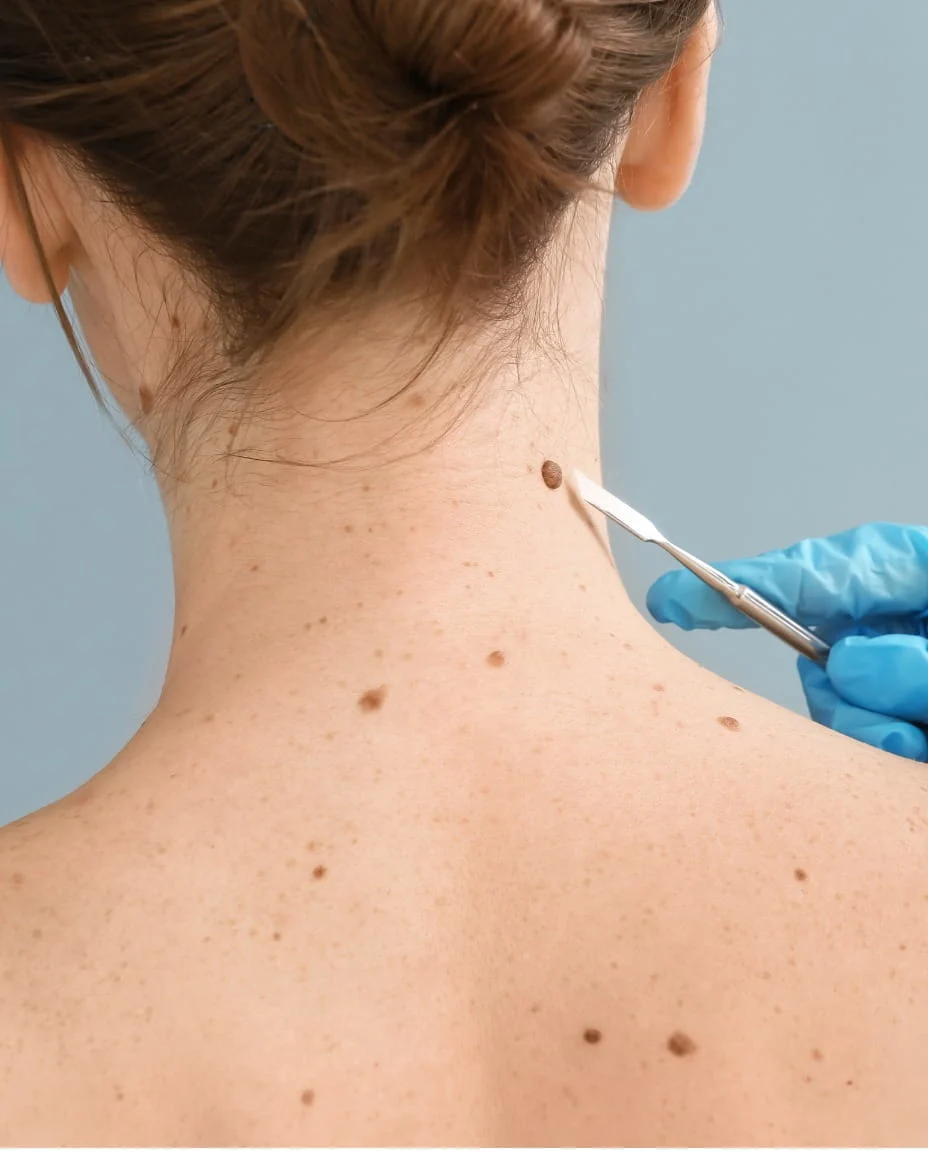
Skin Tag Assessment
Proper identification and assessment by a dermatologist before removal is considered.
THE QUICK ANSWER
Skin Tag Removal at Vedara Care
Skin tag removal is a straightforward dermatology procedure that involves detaching or destroying a small, benign skin growth using a technique suited to its size and location — but the process should always begin with an assessment, not the removal itself. Skin tags commonly appear on the neck, underarms, eyelids, and in skin folds such as the groin or under the breasts. Depending on what the dermatologist finds, removal may involve snip excision, electrocautery, cryotherapy, or another appropriate technique. Different lesions call for different approaches, which is one of several reasons patients shouldn't cut, tie off, or burn a skin tag at home. Occasionally, a growth that looks like a typical skin tag turns out, on closer examination, to be something else entirely — which is exactly why identification comes before treatment.
What Is a Skin Tag?
A skin tag — medically known as an acrochordon — is a small, soft growth of skin that usually hangs slightly off the surface, often attached by a narrow stalk.
Most are flesh-coloured, though some appear slightly darker or more pigmented than the surrounding skin. They’re generally painless, soft to the touch, and tend to develop gradually rather than appear overnight.
Skin tags are typically found in areas where skin folds against itself or rubs repeatedly against clothing or jewellery — the neck, underarms, and eyelids are common examples. While the vast majority of skin tags are entirely benign, correctly identifying a growth as a genuine skin tag — rather than a different type of skin lesion — is an important first step before any removal is considered.
Skin tags are common benign growths.
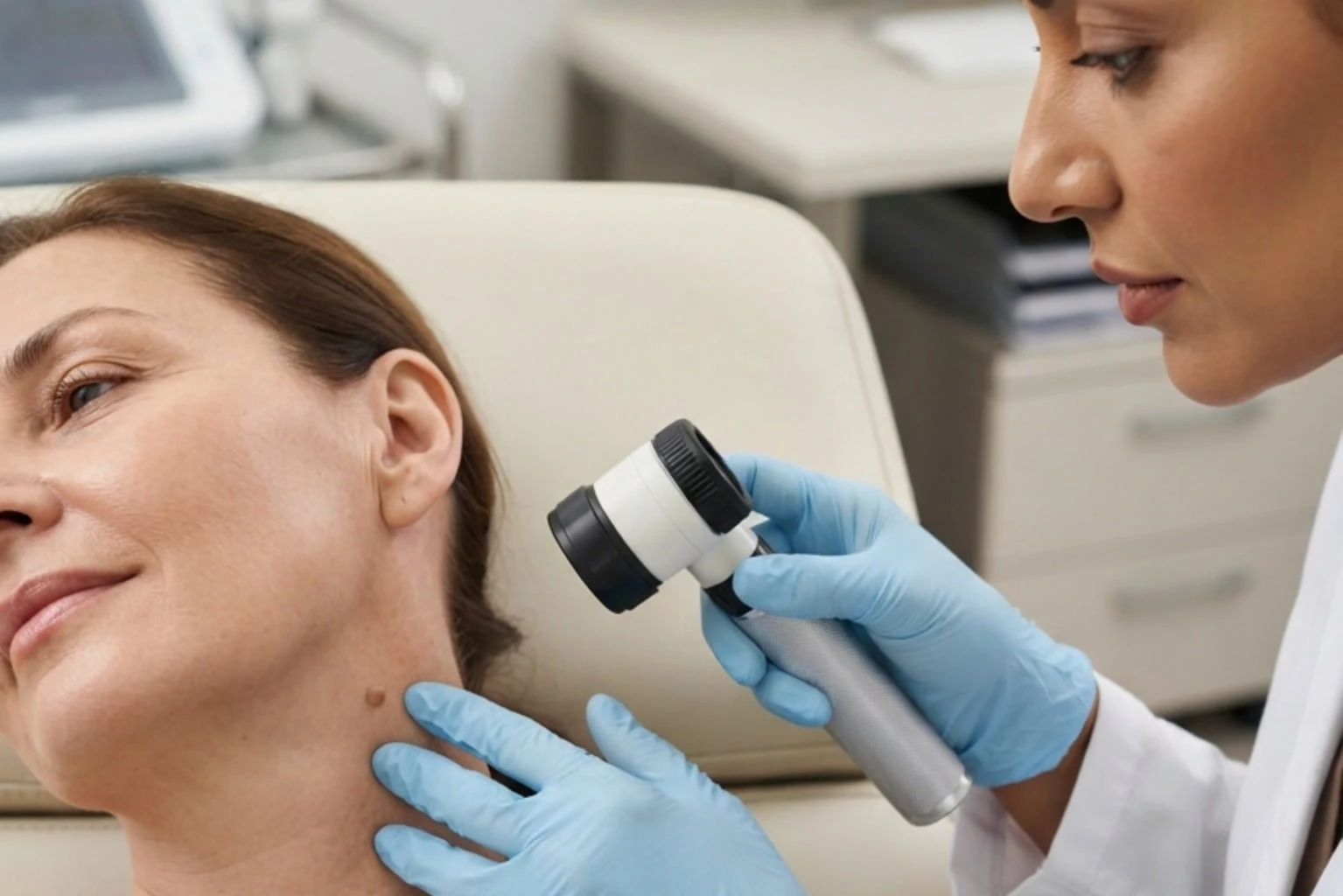
Where Do Skin Tags Commonly Develop?
Skin tags can appear anywhere, but they are most often found in areas of friction:
01 — Neck
The neck is one of the most frequent sites, largely due to friction from collars, necklaces, and scarves rubbing against the skin repeatedly throughout the day.
02 — Underarms
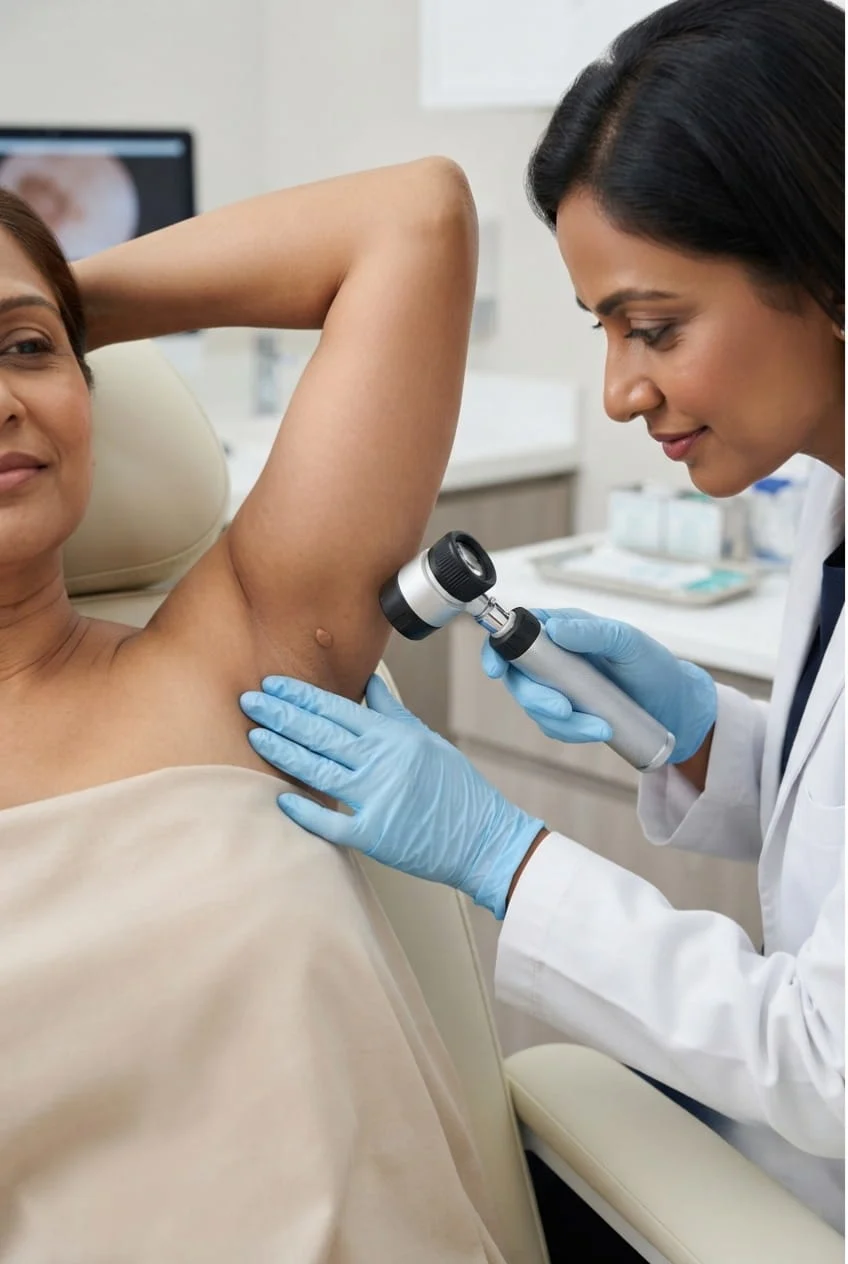
Skin-on-skin contact, sweat, and friction from clothing or deodorant application make the underarm area another common location.
03 — Eyelids and Around the Eyes
Skin tags can develop on or near the eyelid margin. This area calls for particular care during both assessment and treatment, given the delicate skin and proximity to the eye.
04 — Groin and Skin Folds
Areas where skin folds against itself, especially in warmer, moisture-prone regions, are prone to friction-related skin tags.
05 — Under the Breasts
Similar to other skin folds, this area experiences regular skin-on-skin contact, which can contribute to skin tag formation over time.
06 — Waist and Areas of Clothing Friction
Waistbands, belts, and tight clothing seams can create repeated rubbing that some patients associate with skin tag development in that area.
07 — Other Body Areas
Skin tags can, less commonly, appear elsewhere on the body, including the torso or limbs, though these areas see them less frequently than the sites above.
Skin tags often develop in areas of friction like the neck and underarms.
WHY REMOVE?
Why Do Patients Consider Skin Tag Removal?
Most patients seeking skin tag removal in JVC aren't doing so for medical necessity — they're doing it because the growth bothers them in some practical or cosmetic way.
- ✓Cosmetic concerns, particularly for visible skin tags on the neck or face
- ✓Clothing rubbing against the tag and causing irritation
- ✓Nicking the skin tag while shaving
- ✓Jewellery — necklaces, earrings — catching on the growth
- ✓Bleeding after repeated accidental trauma
- ✓General discomfort when the tag sits in a skin fold
- ✓Simple personal preference
When a growth has been confirmed as a straightforward, benign skin tag, removal is often an elective decision made for comfort or appearance rather than medical urgency.
DIAGNOSIS
Skin Tag or Something Else?
This is one of the more important questions to ask before booking any removal, and it's a fair one. Several other skin lesions can resemble a skin tag at a glance, including:
- !Warts
- !Seborrheic keratoses
- !Moles
- !Benign fibrous lesions
- !Other types of skin growths
A dermatologist examining a suspected skin tag will typically look closely at its shape, colour, surface texture, how it's attached to the skin, how long it's been present, and whether it has changed over time or caused any symptoms. This isn't about turning a simple removal into an ordeal — it's a quick, routine part of responsible care that helps make sure the right growth is being treated with the right method.
METHODS
Which Skin Tag Removal Method May Be Appropriate?
There's no single 'correct' way to remove a skin tag — the right technique depends on the size of the growth, its location, how many tags are being treated, how it's attached to the skin, the patient's skin type, and what the assessment finds. Cosmetic considerations, particularly for visible areas like the face or neck, also factor into the decision.
Snip Excision
Small skin tags can often be removed using a sterile snip excision technique. Depending on the specific lesion, local anaesthetic may be considered to keep the patient comfortable.
It's typically a quick procedure, and some minor bleeding immediately afterward is normal. Straightforward aftercare usually follows.
Electrocautery / Electrosurgery
This approach uses controlled heat or electrical energy to remove or destroy the skin tag, and may be considered for certain lesions depending on the assessment.
Potential benefits can include precision and reduced bleeding during the procedure, though temporary redness or, less commonly, pigmentation changes at the treated site are possible afterward.
Cryotherapy
Cryotherapy uses a freezing treatment to destroy the tissue of the skin tag, causing it to eventually fall away.
It may be considered for certain lesions depending on size and location. Temporary blistering or other short-term skin changes at the treatment site are possible with this approach.
Other Techniques
[VERIFIED SKIN TAG REMOVAL METHODS AVAILABLE AT VEDARA CARE]
The technique ultimately recommended will depend on what your dermatologist finds during assessment — no method is presented here as suitable for every patient or every lesion.
What Happens During Skin Tag Removal at a Dermatology Clinic?
A typical visit involves the following steps:
1. Assessment
The dermatologist examines the growth (or growths), asks about its history and any symptoms, and confirms it's suitable for removal.
2. Treatment Selection
Based on the assessment, a removal technique is recommended — taking into account the lesion's size, location, and the patient's skin type and preferences.
3. Removal
The chosen technique is carried out under appropriate clinical conditions, with local anaesthesia used where relevant.
4. Aftercare
The patient is given specific guidance for the treated area, along with information on what's normal to expect during healing and when to get back in touch if something seems off.
5. Healing & Monitoring
The treated area is monitored as it heals. Mild redness, tenderness, or temporary sensitivity may occur, depending on the removal method and location.
6. Follow-Up
A follow-up may be recommended when needed to check healing, discuss the final outcome, and address any concerns or additional treatment requirements.

Does Skin Tag Removal Hurt?
Sensation during skin tag removal varies depending on the technique used and the specific lesion. Local anaesthetic may be used where appropriate to minimize discomfort.
Some procedures involve a brief moment of discomfort, others may feel more like pressure or mild warmth than pain. Procedure time itself is generally short, though it depends on how many skin tags are being treated and their size.
We won't claim the experience is completely painless — that varies by patient and by method, and your dermatologist can talk you through what to expect for your specific case.
What Is Recovery Like After Skin Tag Removal?
Immediately after treatment: The treated area may look slightly red or feel tender. Minor bleeding is possible depending on the method used.
First 24-48 hours: A small scab may begin to form. Mild swelling or sensitivity in the area is common during this window.
First week: The area generally continues to settle, with redness gradually fading and any scab beginning to flake away naturally on its own.
Following weeks: Temporary changes in pigmentation at the treated site can occur in some patients and typically settle over subsequent weeks, though this varies by individual and by treatment method.
Recovery timelines depend heavily on which technique was used and which part of the body was treated — a small snip excision on the neck heals differently than a treated area near a skin fold.
Will Skin Tag Removal Leave a Scar?
This is a fair and common question, and an honest answer matters more than a reassuring one. Small skin tag removals often heal with minimal visible marking in many patients, but any procedure that involves the skin carries some potential for scarring — there's no way around that.
Healing varies considerably from person to person. Larger lesions tend to carry a higher chance of a more noticeable mark, location on the body plays a role, and skin type can influence whether any pigmentation changes appear at the site afterward.
We won't promise scar-free removal, invisible results, or 'perfect skin' — those aren't honest claims for any skin procedure, however minor.
Frequently Asked Questions
Answers to common questions about skin tag removal, recovery, safety and cost in JVC, Dubai.
Book ConsultationGET IN TOUCH
Start With a Dermatologist-Led Skin Tag Assessment
NEARBY LANDMARKS
- ✓Binghatti Azure building, Al Barsha South Fourth
- ✓Near JVC Circle roundabout
DISTANCE FROM DUBAI COMMUNITIES
Important Information
Medical Disclaimer
The information provided on this page is for general educational purposes and does not replace individualized medical advice. A qualified healthcare professional should assess your medical history, symptoms and treatment goals before recommending an appropriate therapy.
READY TO START?
Start With a Dermatologist-Led Skin Tag Assessment
The most useful first step toward dealing with a skin tag isn't picking a removal method — it's having the growth properly looked at. Appearance, location, size, number of lesions, any symptoms, your skin type, and relevant medical history all factor into identifying the growth correctly and selecting a suitable treatment option, with realistic expectations set around recovery, scarring, and results from the outset.
EXPLORE MORE
Related Dermatology Services and Resources
Dermatology in JVC
Comprehensive dermatology services and assessments.
Learn moreMole Removal
Assessment and removal of moles.
Learn morePigmentation Treatment
Treatments for uneven skin tone and pigmentation.
Learn moreScar Treatment
Professional scar management and treatment.
Learn moreSkin Rejuvenation
Rejuvenating skin treatments.
Learn more