Melasma treatment in JVC, Dubai. Specialist care for chronic facial pigmentation across all skin types.
Specialist melasma treatment at our Jumeirah Village Circle (JVC) clinic, walking distance from Circle Mall — serving patients from across Dubai. DHA-licensed consultant dermatologists treating all melasma presentations: pregnancy-induced, hormonal, sun-aggravated, and mixed melasma with dermal components. Particular expertise across all Fitzpatrick skin types, especially the darker skin types (III–VI) that predominate in Dubai's diverse population. Multi-modal evidence-based approach with honest, realistic expectations.
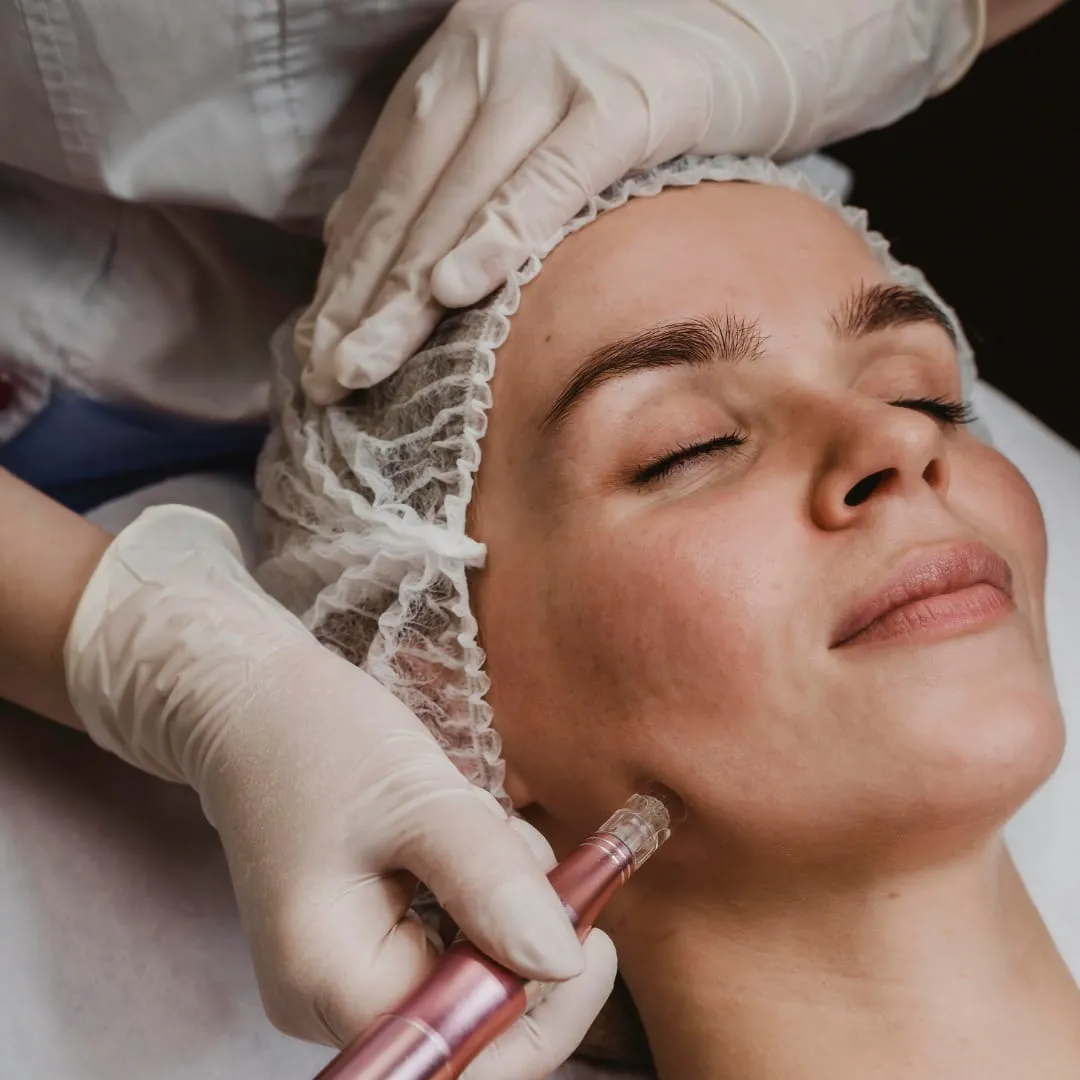
MELASMA REQUIRES EXPERTISE.
Wrong treatment can substantially worsen melasma — particularly in darker skin types. Specialist expertise in treatment selection is essential; many clinics lack it.
THE QUICK ANSWER
Melasma treatment at Vedara Care, in one paragraph.
Melasma treatment at Vedara Care Polyclinic in Jumeirah Village Circle (JVC), Dubai — walking distance from Circle Mall — is specialist pigmentation care delivered by DHA-licensed consultant dermatologists with substantial expertise across all Fitzpatrick skin types (I–VI). Melasma is chronic facial pigmentation typically involving cheeks, forehead, upper lip, and jaw — triggered by hormonal factors (pregnancy, oral contraceptives, perimenopause), aggravated by UV exposure (typically intense in Dubai), and influenced by genetic and ethnic factors. We treat all presentations: pregnancy-induced melasma (chloasma), oral contraceptive-associated, perimenopausal, sun-aggravated, and mixed melasma with dermal components. Multi-modal evidence-based treatment includes topical agents (hydroquinone for limited courses, tranexamic acid, cysteamine, retinoids, azelaic acid), chemical peels calibrated to skin type, specific laser treatments selected carefully (wrong laser can worsen melasma), microneedling with specific protocols, and rigorous sun protection — the single most important factor. Realistic expectations: substantial improvement achievable for most patients within 4–6 months; complete cure rarely permanent. Patients travel to our JVC clinic from across Dubai for specialist melasma care.
Medically reviewed by Lead Consultant Dermatologist, MD, DHA-licensed 2509266 · Last updated June 2026
Why melasma develops, why it persists, and why expert treatment matters.
Melasma is more complex than general pigmentation. Understanding what makes melasma different guides effective treatment selection and realistic expectations.
Melasma is a chronic acquired pigmentation disorder characterised by symmetrical brown or grey-brown patches typically on cheeks, forehead, upper lip, chin, and bridge of nose. It differs from general post-inflammatory hyperpigmentation, age spots, or sun damage in specific ways that affect both treatment selection and outcomes.
The biology of melasma
Melasma involves multiple skin layers and processes: increased melanocyte activity, increased melanosome production and transfer to surrounding skin cells, sometimes deeper pigment deposition in the dermis, abnormal blood vessel patterns contributing to redness, and inflammatory components. This multi-factorial biology is why single-modality treatment often fails.
The three depth categories
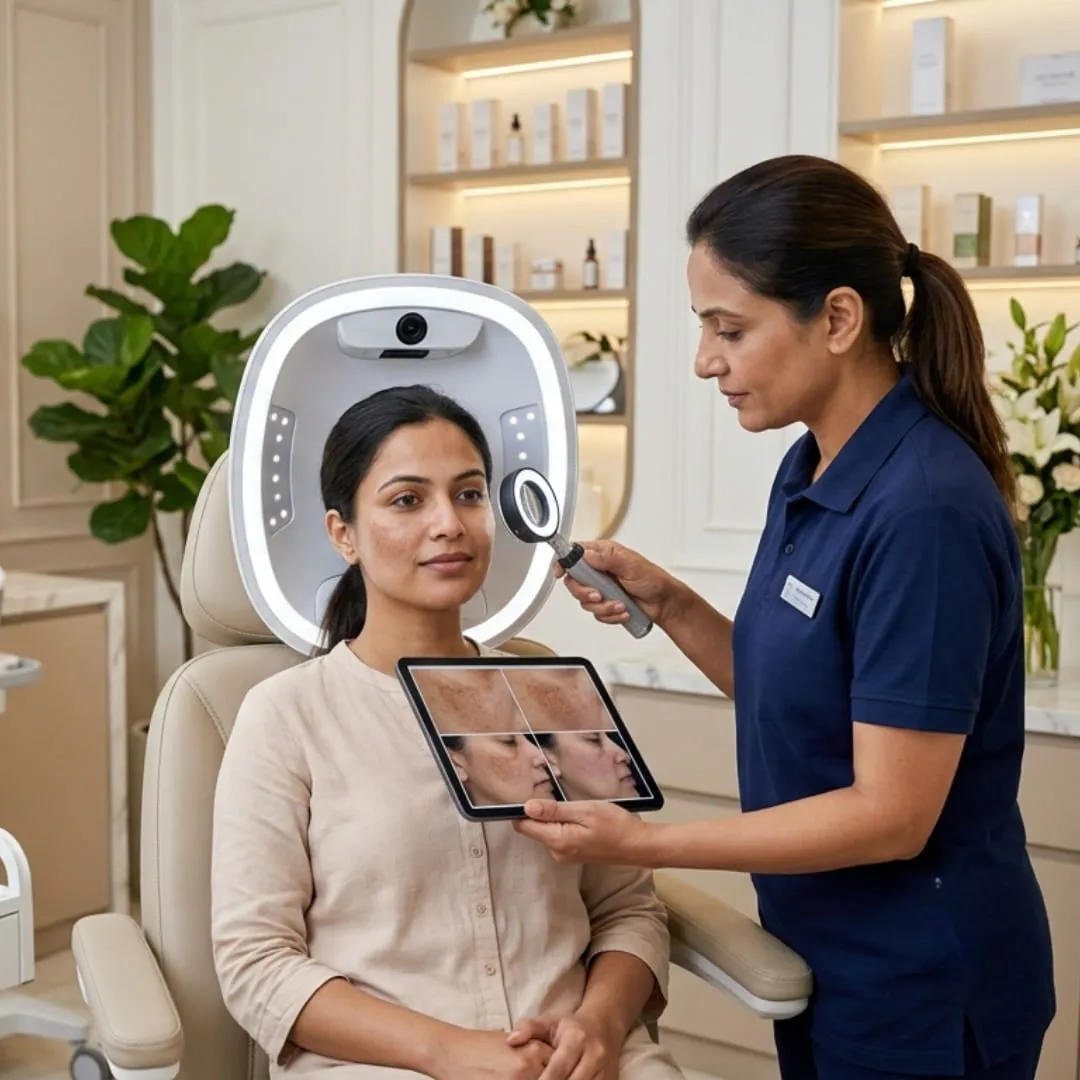
Epidermal melasma — pigment in the upper skin layer, appears more brown, often responds well to topical treatments, light enhances visibility under Wood’s lamp. Dermal melasma — pigment in the deeper skin layer, appears more grey or blue-grey, more challenging to treat, does not enhance under Wood’s lamp. Mixed melasma — most common pattern, requires combination treatment. Specialist examination identifies which type you have.
Triggers and aggravating factors
UV exposure — the most important factor; even brief sun exposure can substantially worsen melasma. Hormonal factors — pregnancy, oral contraceptives, hormone replacement therapy, perimenopause. Genetic predisposition — strong family pattern. Heat exposure — recently recognised; high temperatures aggravate melasma independent of UV. Skin irritation — aggressive treatments, harsh products can worsen melasma. Certain medications. Endocrine factors — thyroid abnormalities, PCOS may contribute.
Why melasma is chronic rather than curable
Melasma typically cannot be permanently cured but is highly manageable. The melanocytes producing excess pigment have an inherent dysregulation that can be controlled but not permanently corrected. Without sustained management — particularly sun protection — melasma typically recurs. Substantial improvement is achievable; complete permanent cure is unusual; long-term management is typically required.
Why melasma is particularly common in Dubai
Several factors converge in Dubai: intense UV exposure year-round; diverse ethnic population with Fitzpatrick III–VI predominating; substantial birth rate producing pregnancy-induced melasma; hormonal contraceptive use common; outdoor culture, swimming, beach activities increasing UV beyond daily exposure. Understanding these Dubai-specific factors guides effective treatment planning.
Why wrong treatment can worsen melasma
Certain treatments commonly used at non-specialist clinics can substantially worsen melasma. Wrong laser selection — many lasers can stimulate further melanocyte activity producing rebound hyperpigmentation. Aggressive chemical peels in darker skin types can produce post-inflammatory hyperpigmentation worse than original melasma. Harsh skincare products can worsen melasma through inflammation. Specialist expertise matters substantially.
"Melasma is the condition where the difference between specialist and generic treatment is most dramatic. The wrong treatment makes it worse; the right treatment, applied consistently with sun protection, produces transformative improvement."
MELASMA EXPERTISE
400+
Melasma patients treated
12+
Years pigmentation expertise
All
Fitzpatrick skin types
3
DHA-licensed specialists
The melasma presentations we treat at our JVC clinic.
Different melasma triggers and patterns require different treatment approaches. Accurate identification guides effective treatment.
Pregnancy-Induced Melasma (Chloasma)
TYPICAL PRESENTATION:
- Symmetrical brown patches on cheeks, forehead, upper lip during pregnancy
Oral Contraceptive-Associated Melasma
TYPICAL PRESENTATION:
- Melasma developing weeks to months after starting hormonal contraceptive
Perimenopausal Melasma
TYPICAL PRESENTATION:
- New onset facial pigmentation in perimenopausal woman, often progressive
Sun-Aggravated Melasma
TYPICAL PRESENTATION:
- Melasma worsening after extended UV exposure or in patients with inadequate sun protection
Epidermal Melasma
TYPICAL PRESENTATION:
- Brown patches with relatively defined borders, responding to topical treatment
Dermal Melasma
TYPICAL PRESENTATION:
- Grey-brown patches with diffuse borders, often persistent despite topical treatment
Mixed Melasma
TYPICAL PRESENTATION:
- Mixed brown and grey-brown patches with variable depths
Melasma in Darker Skin Types (Fitzpatrick IV–VI)
TYPICAL PRESENTATION:
- Darker skin (Fitzpatrick IV–VI) with melasma; substantial Dubai demographic
The evidence-based treatments we use for melasma.
Multi-modal treatment typically produces better outcomes than single approaches. Selection depends on melasma type, depth, skin type, and treatment history. Effective melasma treatment combines multiple modalities addressing different aspects of melasma biology. Selection prioritises safety in your specific skin type.
Foundation — sun protection
The single most important factor in melasma treatment. Comprehensive sun protection requires: broad-spectrum sunscreen SPF 50+ with tinted iron oxides (blocking visible light not blocked by conventional sunscreens), daily application regardless of indoor or outdoor activities, reapplication every 2–3 hours during sun exposure, protective clothing and hats, and avoidance of peak sunlight (10 AM – 4 PM). Without rigorous sun protection, every other treatment will fail.
Topical treatments
The cornerstone of melasma treatment. Multiple agents target different aspects of pigmentation: Hydroquinone — gold standard for limited courses (3–6 months); Tranexamic acid — increasingly important, inhibits pigment formation through a different mechanism; Cysteamine — newer agent with growing evidence, alternative for hydroquinone-intolerant patients; Retinoids (tretinoin, adapalene) — enhance other treatment penetration and increase cellular turnover; Azelaic acid — anti-inflammatory and anti-pigmentation; safer in darker skin types; Kojic acid — adjunctive pigmentation suppression; Vitamin C — antioxidant and adjunctive pigmentation treatment.
Oral tranexamic acid
Increasingly important addition to melasma treatment for appropriate patients. Oral tranexamic acid demonstrates substantial efficacy for melasma. Typical dosing 250 mg twice daily. Requires medical evaluation — contraindications include thromboembolic risk factors. Most patients tolerate well. Combined with topical treatment produces substantially better outcomes than topical alone in many cases. Treatment typically 3–6 months with possible maintenance approach.
Chemical peels
Calibrated to skin type and melasma severity. Superficial peels (glycolic acid, lactic acid, mandelic acid, salicylic acid) — safest for darker skin types; gentle skin renewal; minimal downtime. Medium-depth peels (TCA-based, Jessner's peel) — selectively in lighter skin types. Specialised melasma peels — combinations targeting pigmentation specifically. Peel selection must match skin type — wrong peel choice in darker skin produces hyperpigmentation worse than original melasma.
Laser treatments — used selectively
Lasers are controversial for melasma — many lasers can worsen melasma through inflammation or rebound pigmentation. We use appropriate lasers selectively: Q-switched Nd:YAG (1064 nm) — relatively safe for melasma in appropriate patients with specific protocols; Pico-second lasers — newer technology with growing evidence for melasma. We DO NOT use ablative lasers, intense pulsed light (IPL) in many melasma cases, or lasers designed for other pigmentation that worsen melasma.
Microneedling
Microneedling with appropriate topical agents enhances penetration of pigment-targeting treatments. Conservative application with gentle protocols — not aggressive microneedling that can produce inflammation. Combined with topical tranexamic acid — increasingly recognised approach for melasma. Suitable for various skin types with appropriate adjustment.
Investigation and management of contributors
Comprehensive workup identifies underlying contributors when appropriate: thyroid evaluation (thyroid disorders sometimes associated with melasma), hormonal evaluation if perimenopausal or PCOS suspected, review of medications that may aggravate melasma, contraceptive evaluation if hormonal contraceptive contributing. Addressing underlying factors alongside direct treatment often produces better outcomes than treatment alone.
YOUR TREATMENT PLAN
Foundation for every patient:
- Oral tranexamic acid for appropriate patients
- Chemical peels matched to skin type
- Selective laser treatment for appropriate cases
- Microneedling with specific protocols
- Underlying contributor workup
- Aggressive treatment intensity
- Quick fix promises
- Treatments inappropriate for skin type
- Inconsistent sun protection
How long does melasma treatment take?
Melasma treatment requires patience. Honest realistic expectations help you commit to sustained treatment.
Foundation & Initial Response
MONTHS 1–2
Treatment begins with implementation and topical regimen initiation. Patients sometimes experience subtle improvement within the first 8–12 weeks, but visible improvement typically may not yet be apparent, especially in darker skin types or patients with combined topical and procedural treatment.
Visible Improvement
MONTHS 3–4
Steady improvement throughout this phase for most patients, with overall facial appearance more even. Pigmentation changes noted at month 3 may not have confirmed at month 4. Treatment plan may be adjusted based on response.
Substantial Improvement
MONTHS 5–6
Most melasma substantially improved by this phase. Patients makeup application has become easier. Treatment intensity may be reduced for maintenance while continuing results. Adherence to consistent sun protection at this timepoint is critical.
Maintenance Phase
MONTH 6 ONWARDS
Long-term management prevents recurrence. Typically includes: topical retinoid, vitamin C, gentle chemical peels periodically, meticulous daily sun exposure protection. Treatment intensity may be reduced for maintenance. Most patients require ongoing maintenance.
These timelines describe typical patterns with structured treatment. Individual variation occurs based on melasma severity, skin type, treatment adherence, and sun exposure patterns. The single most important factor is consistent sun protection (number one factor), treatment adherence over months, and sustained maintenance approach.
Real melasma improvements.
"“Pregnancy-induced melasma five years ago that persisted postpartum. Multiple previous treatments at different Dubai clinics — some helping slightly, some making it worse. The consultation was different: detailed Wood's lamp examination identifying melasma type, comprehensive treatment plan calibrated to my Fitzpatrick V skin type, emphasis on sun protection I had not realised was inadequate. Six months later: substantial improvement, even skin tone, finally feeling confident without heavy concealer. The skin type-specific approach made the difference.”"
FEMALE PATIENT, 36, FITZPATRICK V
Post-Pregnancy Melasma · 6-Month Programme · Dubai Marina · February 2026
"“Perimenopausal melasma developing in my late 40s — never had melasma before. Vedara identified hormonal contributors I had not connected; recommended workup including thyroid evaluation that revealed mild thyroid dysfunction my GP had missed. Coordinated treatment with endocrinologist alongside comprehensive melasma treatment with oral tranexamic acid, topical regimen, and selective laser treatment. Substantial improvement at 6 months. The comprehensive approach addressing multiple contributors made the difference.”"
FEMALE PATIENT, 51, FITZPATRICK III
Perimenopausal Melasma · 8-Month Programme · Downtown Dubai · January 2026
"“Sun-aggravated melasma after summer holiday overseas — substantially worse than previous years. The consultation included serious discussion about sun protection I had not taken seriously before. Treatment plan: gentle topical treatment, monthly superficial peels, and strict sun protection that became non-negotiable. Substantial improvement at 4 months. Most important change was understanding sun protection as foundational rather than optional. Continuing maintenance regimen — melasma has not recurred in 18 months.”"
FEMALE PATIENT, 42, FITZPATRICK IV
Sun-Aggravated Melasma · 6-Month Treatment · Ongoing Maintenance · Palm Jumeirah · March 2026
4.9 stars
on Google
400+
melasma patients treated
All Fitzpatrick
skin types expertise
Multi-modal
evidence-based treatment
Consultant dermatologists for melasma treatment at our JVC clinic.
Melasma treatment is delivered by our consultant dermatologists — DHA-licensed specialists with substantial expertise in pigmentation disorders and treatment across all Fitzpatrick skin types. Female dermatologists available. Multiple languages including Arabic, English, Hindi, Urdu.

Dr. Layla Al-Rashid, MD
Specialist in melasma and pigmentation disorders across all Fitzpatrick skin types with 12+ years clinical experience.

Dr. Priya Sharma, MD
Extensive expertise in melasma treatment for darker skin types and hormonal pigmentation presentations.

Dr. Omar Hassan, MD
Specialist in laser-based melasma treatment and complex dermal pigmentation with conservative, evidence-based protocols.
What melasma treatment at our JVC clinic costs.
Initial melasma consultation with Wood's lamp examination (60–75 minutes)
AED 650
Follow-up consultation
AED 350
Comprehensive treatment monitoring (with photography)
AED 450
Hormonal evaluation workup
From AED 550
Personalised topical regimen prescription
From AED 350
Oral tranexamic acid treatment (3 months)
From AED 850
Chemical peel — superficial (for melasma)
From AED 950
Q-switched laser treatment (for melasma)
From AED 1,850
Microneedling with topical agents
From AED 1,200
Comprehensive 6-month melasma programme
From AED 8,500
Maintenance treatment (6 months)
From AED 3,500
Premium broad-spectrum sunscreen SPF 50+ (patient product)
From AED 180
What patients ask about melasma treatment.
For broader dermatology questions, see our dermatology clinic page
Ask Our Team on WhatsAppVISIT US
Where melasma treatment happens at Vedara Care JVC.
NEARBY LANDMARKS
- ✓Walking distance from Circle Mall
- ✓3 minutes from FIVE Jumeirah Village Hotel
- ✓5 minutes from JSS Private School
- ✓Free patient parking
- ✓Easy access from Sheikh Mohammed Bin Zayed Road and Al Khail Road
- ✓Serves JVC, JVT, Al Barsha South, Sports City, Motor City
DISTANCE FROM DUBAI COMMUNITIES
READY TO ADDRESS YOUR MELASMA?
Take the first step toward clearer, more even skin.
Whether you have pregnancy-induced melasma, perimenopausal melasma, sun-aggravated melasma, or melasma with unclear triggers — comprehensive specialist consultation is the right starting point. We provide thorough examination identifying your specific melasma type and depth, evidence-based treatment plan calibrated to your skin type, realistic timeline expectations, and ongoing support throughout treatment. Same-week appointments typically available at our JVC clinic.
Initial consultation from AED [X] · Walking distance from Circle Mall, JVC · DHA-licensed consultant dermatologists · 400+ melasma patients treated · All Fitzpatrick skin types · Female and male dermatologists · Multiple languages
EXPLORE FURTHER
Related dermatology services
Dermatology Clinic in JVC →
Our complete dermatology department — full medical and aesthetic services, specialist team, comprehensive information for JVC and Dubai.
Learn moreSkin Concern Navigation →
For patients with skin concerns beyond melasma — our guidance hub for various skin conditions routing to appropriate care.
Learn moreAcne Treatment in JVC →
For patients with both acne and post-inflammatory hyperpigmentation often related to melasma — specialist acne treatment in JVC.
Learn moreBest Dermatologist Evidence →
Credibility evidence for patients evaluating dermatology providers in JVC and Dubai — accreditations, qualifications, patient outcomes.
Learn more