RF Microneedling in JVC | Vedara Care Polyclinic
Skin concerns such as acne scars, enlarged pores, uneven texture, and mild skin laxity may not always improve with facials or surface-level treatments. RF Microneedling in JVC combines controlled microneedling with radiofrequency energy to target the skin at different depths and support collagen production. This combination makes it different from traditional microneedling, which relies mainly on the skin’s natural response to controlled micro-injuries. At Vedara Care Polyclinic in Jumeirah Village Circle (JVC), Dubai, RF microneedling is considered after assessing your skin condition and treatment goals. This guide explains how it works, who may benefit, what recovery involves, and what results to realistically expect.
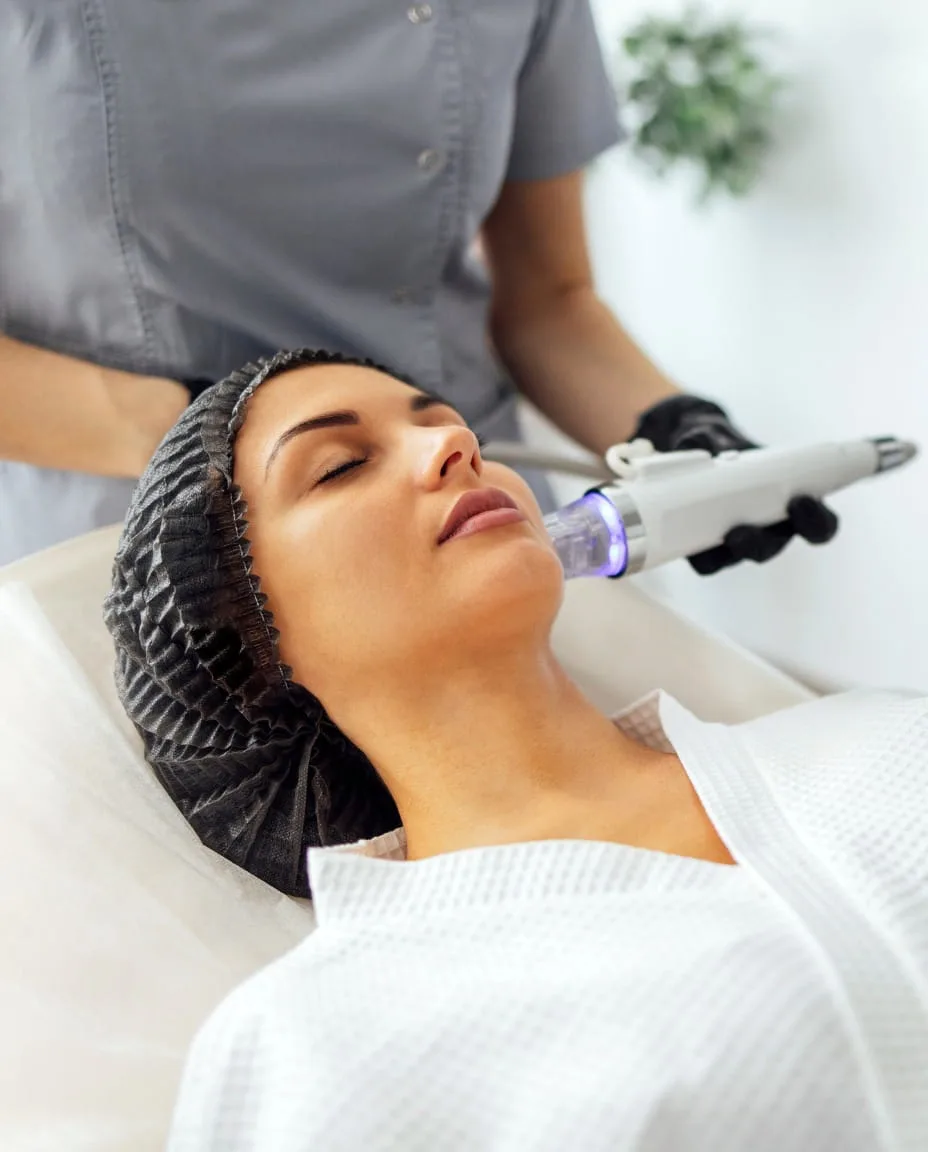
RF Remodelling
Combines fine needles with radiofrequency energy to stimulate collagen remodeling beneath the surface.
THE QUICK ANSWER
RF Microneedling in JVC at Vedara Care, in one paragraph
RF Microneedling in JVC at Vedara Care Polyclinic in Jumeirah Village Circle (JVC), Dubai, combines microneedling with radiofrequency energy to support collagen production and improve selected skin concerns. It may be considered for acne scars, uneven texture, enlarged pores, and mild skin laxity when conventional skincare or surface treatments have not provided the desired improvement. Before treatment, your skin is assessed to determine whether RF microneedling is appropriate for your concerns and goals. Temporary redness, sensitivity, or swelling may occur after treatment, while results develop gradually as the skin’s natural repair process progresses.
Why RF Microneedling Is Different: The Two-Part Technology
The microneedling component
Fine needles are passed into the skin at a controlled depth, creating a grid of tiny, precise injuries. The skin interprets this as damage and responds with its own repair process — increased cell turnover and new collagen production in the weeks that follow. This is the same principle that makes traditional microneedling effective on its own.
The radiofrequency component
As the needles enter the skin, radiofrequency energy is released through them (or, on some devices, from an adjacent electrode), delivering controlled heat within the targeted skin layers. The exact depth and pattern of that heat depend on the specific device and protocol used, and settings are adjusted according to the concern being treated and the practitioner's assessment of the skin — so we won't quote a fixed depth figure here.
How they work together
Used together, the needling and the thermal energy prompt two distinct but complementary responses: mechanical injury from the needles, and a thermal stimulus that can encourage additional collagen remodelling in the surrounding tissue. That is the reasoning behind combining the two mechanisms rather than relying on needling alone, though how meaningfully it translates into visible improvement varies from patient to patient and concern to concern.
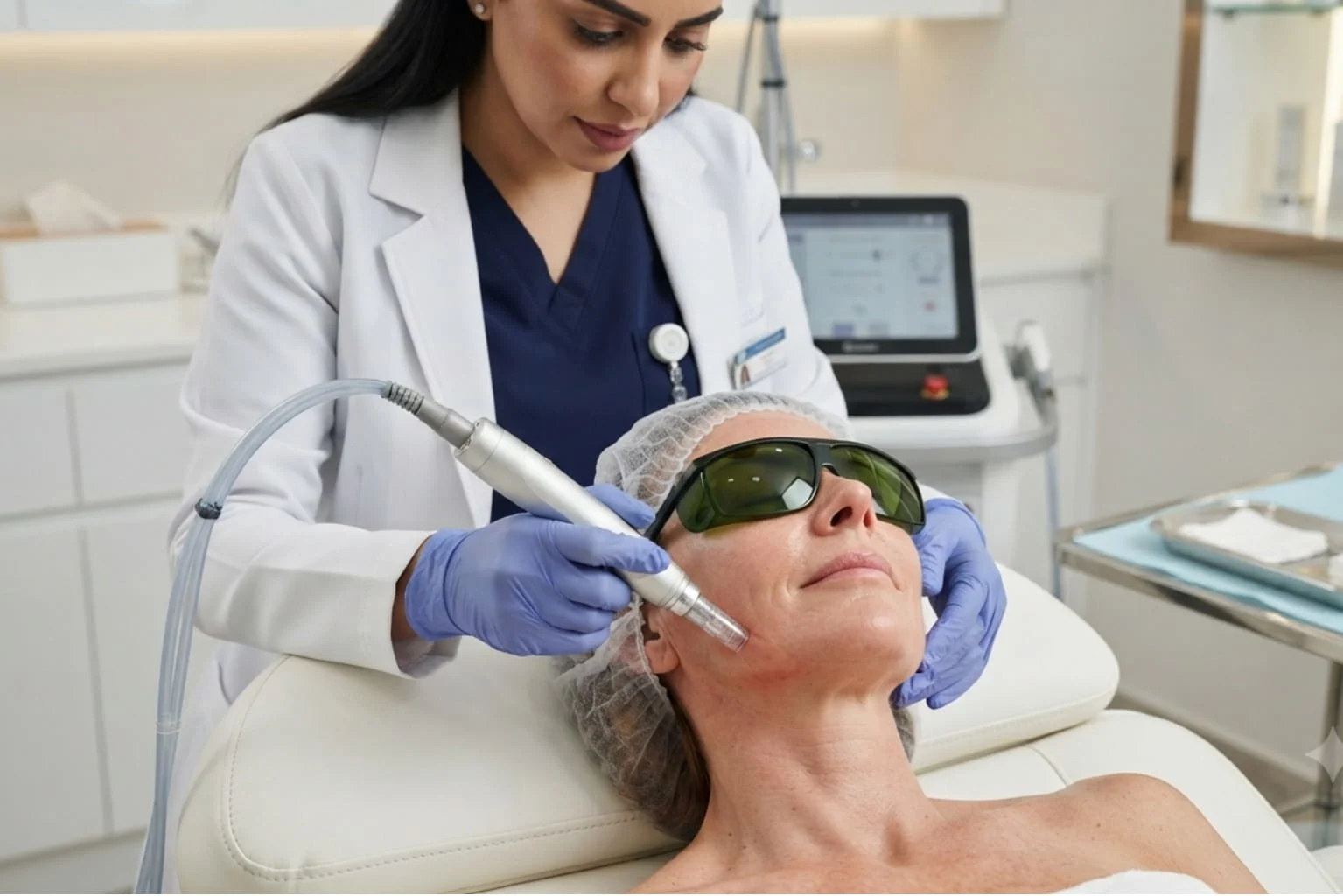
RF ENERGY ACTION
What Does RF Energy Actually Do?
In plain terms, radiofrequency energy generates controlled heat within the skin. That heat is a stimulus — it doesn't cut, remove, or dissolve tissue. The skin responds to it in the same broad way it responds to many controlled injuries: by triggering repair processes that include collagen remodelling over the following weeks and months.
The change is gradual, not immediate. Any visible tightening or texture change follows the skin's own remodelling timeline, not the treatment session itself.
Settings matter. Energy level, needle depth, and number of passes are adjusted to the treatment area and the patient's skin — higher intensity is not automatically a better or safer choice.
Energy settings are a clinical decision that should follow an in-person skin assessment, not a fixed protocol applied to every patient.
Some marketing describes radiofrequency treatments in dramatic terms, such as claiming the energy “melts fat.” Unless a specific device is clinically indicated and cleared for fat reduction, that claim does not apply to standard RF microneedling used for texture, scarring, and mild laxity, and Vedara Care does not present it that way.
Which Skin Concerns May Be Addressed?
None of these outcomes is guaranteed — how much a given concern improves depends on its severity, the individual’s skin, and the treatment plan agreed during consultation.
RF Microneedling for Acne Scars
Acne scarring isn't a single pattern, and that matters when discussing whether RF microneedling is a reasonable option. Atrophic scars — the shallow depressions left behind by inflammatory acne — are the type most commonly discussed in relation to this treatment. Within that category, rolling scars, which have sloped edges and a wave-like texture, tend to respond to the combination of mechanical remodelling and thermal stimulation more readily than other patterns. Boxcar scars, with sharper, more defined edges, may show some improvement in overall texture but often need to be assessed for whether an additional technique, such as subcision, would be more appropriate. Deeper or tethered scars, where scar tissue is fixed to underlying structures, frequently need a different or combined approach altogether, since needling and heat alone may not adequately address the tethering. This is why a professional assessment of scar type and depth is a meaningful part of the conversation before RF microneedling is recommended — and why outcomes are described as the appearance of scarring “may improve,” never as scars being removed permanently.
Who May Consider RF Microneedling?
Suitability isn't decided by the concern alone — it depends on: current skin condition, including active breakouts; the specific treatment goal; medical history; previous cosmetic or dermatological procedures; and how the skin has healed after previous treatments. Treatment goals often overlap heavily between male and female patients — texture, acne scarring, fine lines, and firmness come up for both. A couple of considerations are more specific to men, such as how treated skin interacts with regular shaving in the days following a session, which is usually covered during aftercare guidance. Beyond that, the assessment process is the same regardless of gender, and it starts with the individual's skin rather than assumptions about who typically seeks this treatment.
Who May Consider RF Microneedling
TYPICAL SIGNS:
- Skin texture
- Appearance of acne scarring
- Fine lines
- Enlarged-looking pores
- Mild skin firmness
Who May Need to Postpone or Avoid Treatment
TYPICAL SIGNS:
- Active skin infection in or near the treatment area
- Open wounds or broken skin
- Significant active inflammation
- Severe active acne in the area being treated
- A compromised skin barrier
- Certain dermatological conditions that affect healing or increase sensitivity
- Recent aggressive procedures (certain peels, lasers, or other resurfacing treatments) in the same area
- Medications or health conditions known to affect wound healing
Sensitive Skin and Different Skin Types
Sensitivity is a real factor in how RF microneedling is planned, not an afterthought. Skin that reacts easily to products or treatments generally calls for a more conservative approach to needle depth and energy settings, closer monitoring during the session, and a more cautious aftercare plan. Higher intensity is not automatically a better outcome — for sensitive skin in particular, it can increase the risk of prolonged redness or irritation without improving results.
Oily & Combination Skin
Dry Skin
Acne-Prone Skin
Sensitive Skin
What Happens During an RF Microneedling Appointment?
Consultation and assessment
Your skin is assessed, your goals and history are discussed, and the practitioner determines whether RF microneedling is a reasonable option for your concern.
Skin preparation
The treatment area is cleansed, and, depending on the treatment plan, a topical numbing approach may be discussed with you.
Treatment planning
Needle depth and energy settings are set based on your skin and the areas being treated, rather than a single fixed protocol used for everyone.
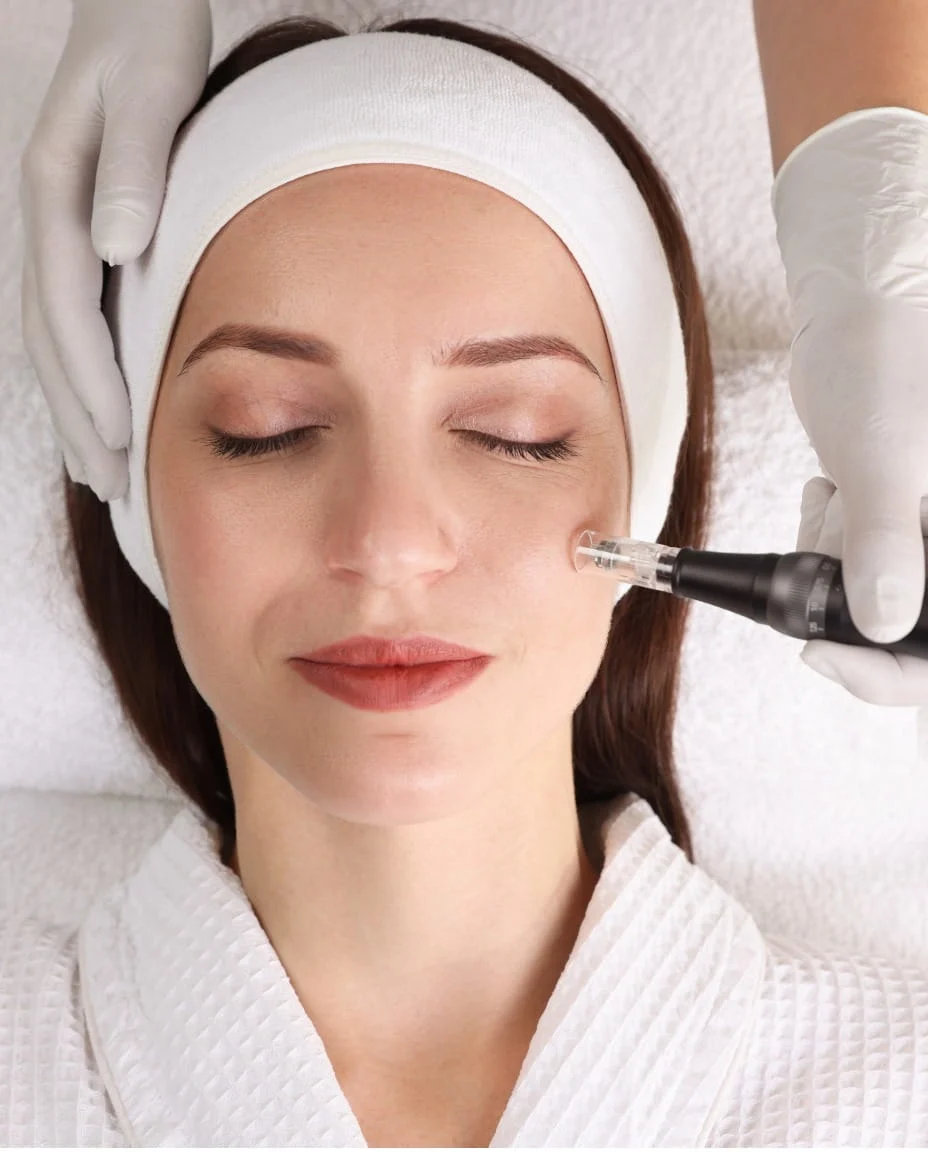
The RF microneedling procedure
The device is passed methodically across the treatment area, delivering the needling and radiofrequency combination to the planned depth and pattern.
Immediate post-treatment care
The skin is calmed and, where appropriate, a soothing product or sun protection is applied before you leave.
Leaving the clinic
You're given aftercare guidance covering the following days, and any follow-up session is discussed as part of your overall plan.
Exact appointment length and the specific numbing approach used depend on the treatment plan agreed with your practitioner, so we won't quote a fixed duration here.
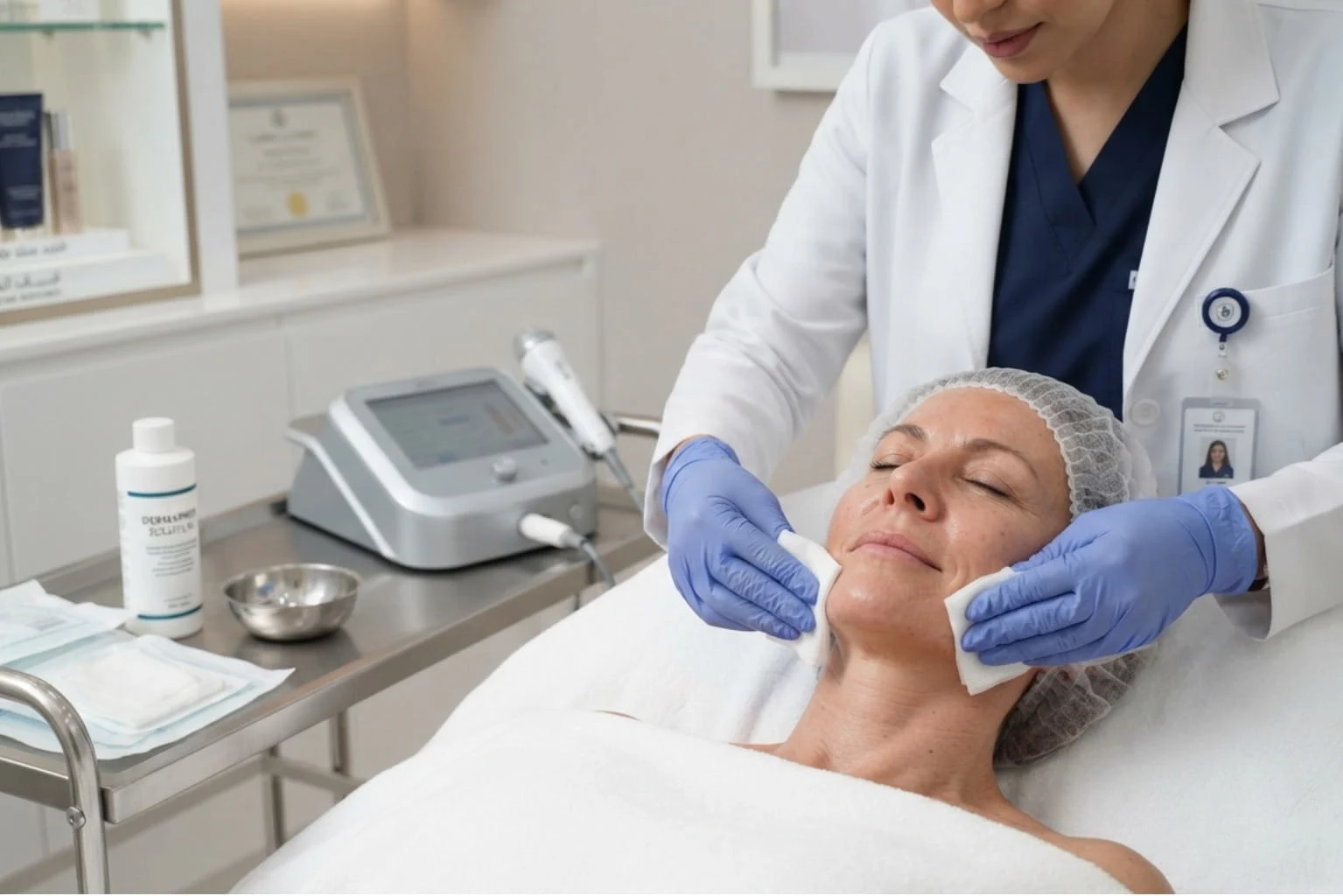
What Does RF Microneedling Feel Like?
Sensations reported during RF microneedling commonly include pressure, prickling, warmth from the radiofrequency energy, and tingling. Comfort varies significantly between patients and between treatment areas — thinner skin, such as around the eyes, tends to be more sensitive than areas like the cheeks.
It would be inaccurate to promise a completely painless experience, and whether numbing cream is used, and which product, is a decision made during your specific treatment plan rather than a fixed part of every appointment.
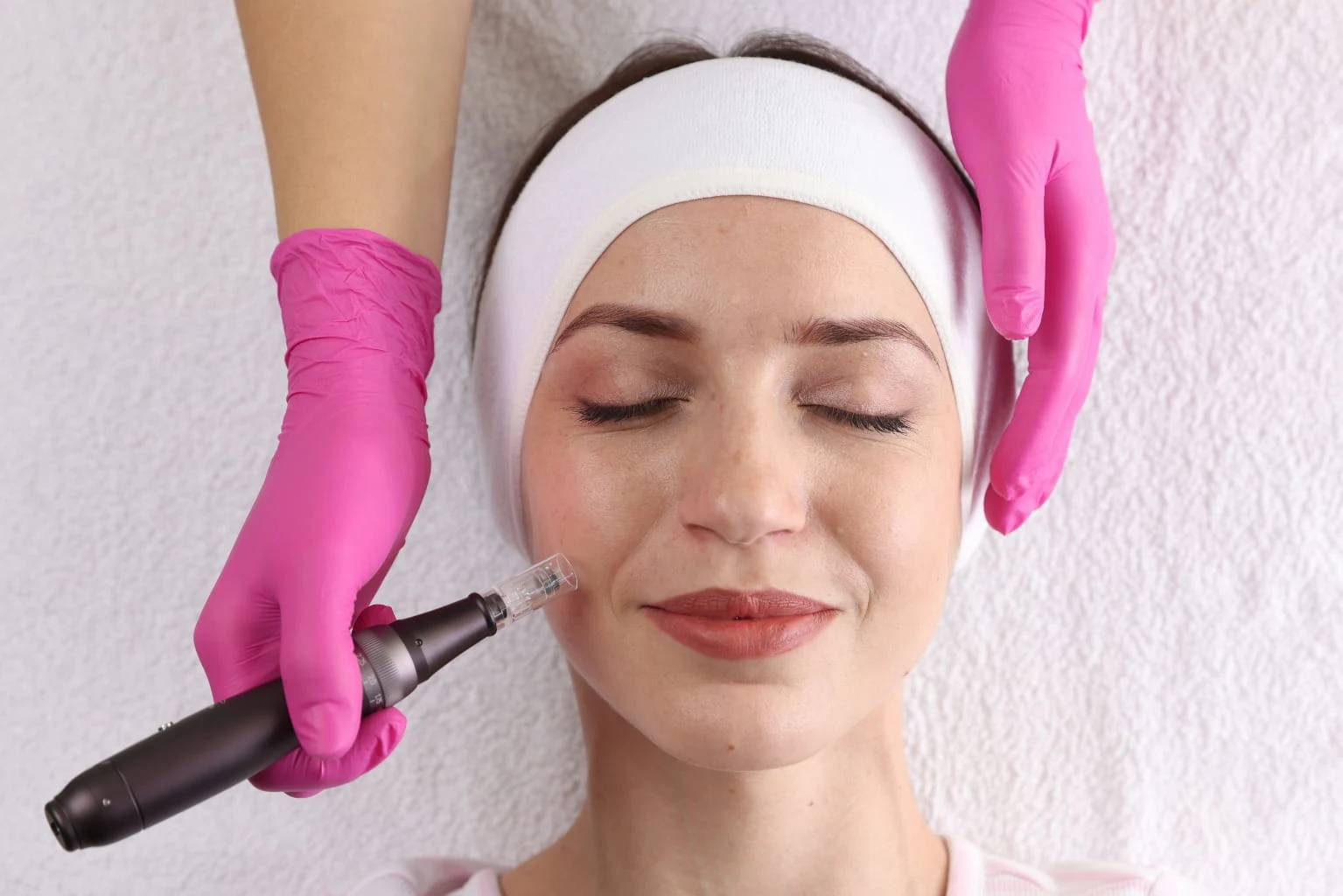
RECOVERY & AFTERCARE
RF Microneedling Recovery Guide
Some downtime is typical, though how much varies by patient, treatment intensity, and area. Commonly reported effects in the days after treatment include redness, warmth, mild swelling, sensitivity, tightness, and dryness. It would not be accurate to describe RF microneedling as a “zero downtime” treatment — most patients notice some visible effect for at least a day or two.
Immediately after treatment
redness and warmth are common and usually most noticeable in the first few hours.
Early recovery (first few days)
mild swelling, tightness, or dryness may continue to settle.
Returning to normal skincare
most patients are guided back to their regular routine gradually, following their practitioner's specific instructions rather than a fixed timetable.
Gradual result-development period
visible effects build over subsequent weeks as the skin's remodelling process continues, a stage that lasts considerably longer than the initial downtime.
AFTERCARE GUIDANCE
RF Microneedling Aftercare
General guidance in the days following treatment typically includes: keeping the skincare routine gentle, moisturizing where appropriate, prioritizing sun protection, avoiding unnecessary irritation, holding off on aggressive exfoliation, following your provider's specific instructions, and not picking or scratching at the treated skin. We won't prescribe specific medications or products here — your practitioner will confirm what's appropriate for your skin as part of your aftercare plan.
What to Avoid After RF Microneedling
Exact timeframes for each of these depend on your specific treatment protocol and should be confirmed with your practitioner rather than assumed from a general guide.
RESULTS TIMELINE
Patience and progressive results
When Will RF Microneedling Results Appear?
It's worth separating the initial post-treatment appearance from the actual result. Redness and swelling in the first days are not an indication of the final outcome — the skin's remodelling process, which is what actually produces visible change, unfolds gradually over the following weeks and months. Improvement is typically described as developing progressively rather than appearing on a fixed date, and individual response varies. Depending on the concern, more than one session may be recommended to build on that response.
How Long Do RF Microneedling Results Last?
There's no single answer, because longevity depends on a combination of factors: ongoing skin ageing, lifestyle, sun exposure habits, the underlying skin condition being treated, the specific goal, any maintenance sessions, and individual response to treatment. We won't quote a specific number of months here, since it genuinely varies from patient to patient.
How Many RF Microneedling Sessions May Be Needed?
This isn't a fixed number. It depends on the severity of the concern (deeper acne scarring generally needs a longer course than mild texture concerns), the degree of skin laxity being addressed, how the skin responds to earlier sessions, the specific device protocol being followed, and what the patient is trying to achieve. A treatment plan — and the likely number of sessions within it — is something your practitioner proposes after assessing your skin.
RF Microneedling Results — Realistic Expectations
RF microneedling may improve the appearance of texture, some types of acne scarring, mild laxity, and fine lines. It does not guarantee a specific degree of improvement, does not permanently eliminate scarring, and will not achieve results comparable to surgical procedures. Individual variation is real — two patients with what looks like a similar concern can have meaningfully different outcomes based on their skin's response.
CLINICAL STANDARDS
RF Microneedling Before and After
If you're looking at before-and-after images, from any clinic, it's worth checking for basic consistency: the same lighting, the same camera angle, a similar facial expression, and a stated interval between the two images. Authentic, unedited photographs with those details in place are far more informative than dramatic images without that context. Any genuine photographs shared by Vedara Care would only be used with the patient's permission and an accurate description of the treatment and timeframe involved — fabricated or stock “results” imagery is not used.
TREATMENT COMPARISON
RF Microneedling vs Ordinary Microneedling
It's tempting to think of RF microneedling as simply a stronger version of traditional microneedling. That isn't quite accurate, and the difference matters when deciding which treatment fits a particular concern.
| Factor | Traditional Microneedling | RF Microneedling |
|---|---|---|
| Primary mechanism | Needle-induced micro-injury | Needle-induced micro-injury + radiofrequency heat |
| Main treatment goal | Texture, mild scarring, product absorption | Texture, scarring, and skin firmness |
| Tightening focus | Limited, indirect | A more direct goal, though still gradual |
| Typical recovery | Redness for 24–48 hours in many cases | Can involve slightly more warmth, depending on settings |
| Session planning | A series is often discussed | A series is often discussed, spaced for tissue response |
Neither option is universally “better.” A practitioner’s recommendation usually comes down to whether the primary concern is closer to texture and mild scarring alone (where standard microneedling may be sufficient) or texture plus a firmness component (where the added radiofrequency element is more often discussed).
RF Microneedling vs Other Options
Choosing between skin treatments usually comes down to which concern is the priority. The comparison below is a starting point, not a recommendation — the right choice depends on your specific skin and goals, best discussed during consultation.
| Treatment | Main Approach | Common Goals | Surface Exfoliation | Skin Remodelling | Tightening Focus |
|---|---|---|---|---|---|
RF Microneedling | Needling + RF energy | Texture, scars, firmness | Limited | Yes | Yes |
Traditional Microneedling | Controlled needling | Texture, scars | Limited | Yes | Less focused |
Chemical Peel | Chemical exfoliation | Surface texture, pigmentation | Yes | Varies | Not primary |
Laser Resurfacing | Laser energy | Texture, pigmentation, resurfacing | Device-dependent | Yes | Device-dependent |
Hydrating / refresh facials | Cleansing, exfoliation, hydration | Surface refresh, hydration | Yes | Not primary | Not primary |
RF Microneedling
Main Approach
Needling + RF energy
Common Goals
Texture, scars, firmness
Surface Exfoliation
Limited
Skin Remodelling
Yes
Tightening Focus
Yes
Traditional Microneedling
Main Approach
Controlled needling
Common Goals
Texture, scars
Surface Exfoliation
Limited
Skin Remodelling
Yes
Tightening Focus
Less focused
Chemical Peel
Main Approach
Chemical exfoliation
Common Goals
Surface texture, pigmentation
Surface Exfoliation
Yes
Skin Remodelling
Varies
Tightening Focus
Not primary
Laser Resurfacing
Main Approach
Laser energy
Common Goals
Texture, pigmentation, resurfacing
Surface Exfoliation
Device-dependent
Skin Remodelling
Yes
Tightening Focus
Device-dependent
Hydrating / refresh facials
Main Approach
Cleansing, exfoliation, hydration
Common Goals
Surface refresh, hydration
Surface Exfoliation
Yes
Skin Remodelling
Not primary
Tightening Focus
Not primary
HOW IT COMPARES
Microneedling, set beside the alternatives
Facials focused on cleansing, exfoliation, and hydration serve a different purpose than RF microneedling. They're generally aimed at a surface-level refresh and are not designed to remodel deeper tissue or address structural concerns like acne scarring or laxity. If your primary goal is an immediate glow with no downtime, a hydrating facial may be a more relevant conversation. If the concern is more structural, RF microneedling addresses a different layer of the problem.
How to Choose a Microneedling Clinic in JVC
Worth checking before booking anywhere
A few practical points are worth checking before booking anywhere:
- Qualified professionals performing or supervising the treatment
- Appropriate, well-maintained equipment
- Clear hygiene and infection-control practices
- An individual skin assessment before any treatment is agreed
- A clear explanation of how the treatment works, in plain language
- Realistic expectations set from the outset, without guaranteed-results language
- An honest discussion of risks and possible side effects
- Written or verbal aftercare instructions you can actually follow
- Transparent pricing with no pressure to commit to large packages upfront
- Genuine, verifiable patient information rather than generic stock content
Red Flags
Be cautious of any provider, in JVC or elsewhere, who:
- ●Promises guaranteed results
- ●Claims permanent removal of acne scarring
- ●Advertises the treatment as “zero risk”
- ●Skips a proper consultation before booking you in
- ●Can't or won't tell you who is performing the treatment
- ●Shows unclear or questionable hygiene standards
- ●Uses before-and-after photographs that look edited, inconsistent, or unverifiable
- ●Pressures you into buying large treatment packages on the spot
- ●Doesn't discuss risks at all
- ●Sends you home with no aftercare guidance
Before Booking Microneedling
Questions to Ask Before Booking
It's worth going into a consultation with a short list of your own questions:
VISIT OUR JVC CLINIC
Where RF Microneedling happens at Vedara Care JVC.
9:00 AM - 10:00 PM
NEARBY LANDMARKS
- ✓Walking distance from Circle Mall
- ✓3 min from FIVE Jumeirah Village Hotel
- ✓5 min from JSS Private School
- ✓Free patient parking
DISTANCE FROM DUBAI COMMUNITIES
Why Consider RF Microneedling in JVC?
For residents and professionals based in Jumeirah Village Circle, and in neighbouring communities such as Al Barsha South, Jumeirah Village Triangle, Dubai Sports City, and Motor City, having a dermatology-focused clinic within the local area removes one of the practical barriers to a treatment that works best as a course rather than a single visit. RF microneedling typically involves more than one session, and a nearby clinic makes that kind of ongoing plan easier to keep up with. We won't quote specific travel times, since these vary by traffic and starting point, but JVC's position relative to these surrounding communities is part of why patients from the wider area come to Vedara Care Polyclinic for dermatology consultations.

Everything patients ask before their first visit.
Short, honest answers from our clinical team. Cannot find what you are looking for? WhatsApp us, usually answered in under 15 minutes.
Ask a QuestionImportant Information
Medical Disclaimer
This page is provided for general educational purposes and does not constitute medical advice. Suitability for RF microneedling varies from person to person, and results vary between individuals and are not guaranteed. A professional in-person assessment is recommended before undergoing any cosmetic or dermatological procedure. RF microneedling does not replace appropriate medical care for underlying skin conditions, and any individual treatment plan should be determined by a qualified healthcare professional following a proper consultation.
READY TO START?
Book a RF Microneedling Consultation in JVC
If you're weighing up RF microneedling against other options, or simply want to understand whether it's a reasonable fit for your skin, a consultation at Vedara Care Polyclinic is the place to start. Bring your specific concern, any previous treatments you've had, notes on skin sensitivity, and what you're realistically hoping to achieve, and the conversation can go from there. We won't promise a specific outcome in advance; what we can offer is an honest assessment of whether RF microneedling is worth considering for your situation, what recovery would likely involve, and what a realistic treatment plan would look like.Vedara Care Polyclinic Al Barsha South Fourth, Binghatti Azure, Shop -4, Jumeirah Village Circle (JVC), Dubai, UAE
EXPLORE MORE
Related Dermatology Services
Chemical Peel in Dubai
A professional peel that may be considered for selected pigmentation, uneven tone, and surface-texture concerns.
Learn moreSkin Rejuvenation in JVC
Personalised treatments focused on improving overall skin texture, tone, hydration, and appearance.
Learn moreMicroneedling in JVC
A minimally invasive treatment that uses controlled micro-injuries to support the skin’s natural repair and collagen response.
Learn moreLED Light Therapy in JVC
A gentle light-based treatment that may be incorporated into selected skin-rejuvenation plans.
Learn moreOxygen Facial in JVC
A refreshing facial option designed to support hydration and a healthier-looking complexion.
Learn moreDermatology Clinic in JVC
Discuss your skin concerns with our dermatology team for a professional assessment and personalized treatment recommendations. personalized
Learn more