Shoulder pain physiotherapy in Dubai. Comprehensive care across all shoulder conditions.
Specialist shoulder physiotherapy at our Jumeirah Village Circle (JVC) clinic, walking distance from Circle Mall. DPT-qualified physiotherapists treating the full range of shoulder conditions — rotator cuff problems, shoulder impingement, AC joint pain, biceps tendinopathy, shoulder instability, post-surgical shoulder recovery, and more. Most shoulder pain responds excellently to evidence-based physiotherapy without requiring surgery.

BROAD SHOULDER CONDITIONS COVERED
This page covers the full range of shoulder pain conditions. For frozen shoulder specifically, see our dedicated frozen shoulder page —
THE QUICK ANSWER
Shoulder pain physiotherapy at Vedara Care, in one paragraph.
Shoulder pain physiotherapy at Vedara Care Polyclinic in Jumeirah Village Circle (JVC), Dubai — walking distance from Circle Mall — is evidence-based comprehensive treatment delivered by DPT-qualified specialists across the full range of shoulder conditions. The shoulder is the most mobile joint in the body, making it vulnerable to a wide range of problems requiring different specific treatment approaches: rotator cuff conditions (tears, tendinopathies, strains — the most common shoulder presentation), shoulder impingement syndrome (subacromial impingement, internal impingement), AC joint pain (acromioclavicular joint problems), biceps tendinopathy (long head of biceps tendon issues), shoulder instability (dislocations, hyperlaxity, post-traumatic instability), shoulder bursitis, calcific tendinopathy, post-surgical shoulder recovery (rotator cuff repair, labral repair, shoulder replacement), and frozen shoulder (adhesive capsulitis — see our dedicated frozen shoulder page for phase-based deep-dive). Our approach starts with accurate diagnosis (the foundation of effective treatment), then applies condition-specific evidence-based protocols. Most shoulder pain responds excellently to physiotherapy without requiring surgery. Initial assessment from AED 350; structured programmes from AED 2,400. Patients travel to our JVC clinic from across Dubai. Insurance direct-billing with seven major insurers.
Medically reviewed by Dr. Sarah Al-Hassan, DPT, DHA-Licensed · Last updated June 2026
Why the shoulder is so vulnerable — and why diagnosis matters.
The shoulder is the most mobile joint in the human body. This extraordinary range of motion — overhead reach, behind-back positioning, rotation, lifting, throwing — depends on a complex integration of four bones, multiple muscles, ligaments, tendons, bursae, and the joint capsule working together precisely. The mobility that makes the shoulder so functional also makes it vulnerable to a wide range of problems.
The same symptoms, different conditions
"Pain when lifting my arm overhead" could indicate rotator cuff tendinopathy, subacromial impingement, AC joint pathology, frozen shoulder, or a rotator cuff tear. "Pain that disrupts sleep" is classic for both rotator cuff tears and frozen shoulder. "Pain with reaching across my body" might be AC joint, rotator cuff, or pectoralis tightness. Accurate diagnosis through comprehensive clinical assessment is foundational — "generic shoulder exercises" rarely resolve shoulder pain because the underlying causes vary enormously.
The Dubai shoulder pain demographics
Several factors make shoulder pain particularly relevant in Dubai's population: The desk-working majority develops postural shoulder problems — rounded shoulders, forward head posture affecting shoulder mechanics, sustained mouse use producing shoulder girdle strain. The active fitness population produces specific patterns — padel-related shoulder injuries (overhead serving, rapid lateral movements), gym training issues (bench press, overhead press, pull-up patterns), and running-related shoulder tension. The substantial diabetic population has increased prevalence of frozen shoulder and rotator cuff tendinopathy.
Why imaging often misleads
Shoulder MRI findings frequently mislead patients. Research shows that rotator cuff tears appear on MRI in 30-50% of pain-free adults over 60, AC joint changes appear in most adults over 40, and labral findings are common in people without symptoms. Conversely, patients with significant pain often have minimal imaging findings. The imaging shows structural anatomy at a moment in time; symptoms reflect the dynamic interaction of structure, inflammation, muscle balance, movement patterns, and nervous system sensitivity.
Why most shoulder pain responds to physiotherapy
The vast majority of shoulder pain conditions that respond to appropriate physiotherapy — movement patterns, muscle imbalances, postural factors, tearing load issues, joint mobility restrictions, soft tissue restrictions. Even conditions with clear structural components (rotator cuff tears, labral pathology, calcific deposits) typically have substantial dynamic factors that can be addressed. Surgery, when needed, addresses specific structural problems — but the dynamic factors still need physiotherapy regardless.
The role of accurate diagnosis
Treatment for rotator cuff tendinopathy differs substantially from treatment for impingement, which differs from treatment for AC joint problems, which differs from treatment for frozen shoulder, which differs from treatment for instability. Pattern recognition through comprehensive assessment determines effective treatment. Patients who have had inadequate generic "shoulder pain physiotherapy" often arrive at specialist care having reinvested previous diagnosis — explaining why their previous treatment did not work.
"Shoulder pain is one of the most under-diagnosed presentations in physiotherapy. The right treatment for one condition can be wrong treatment for another that looks similar."
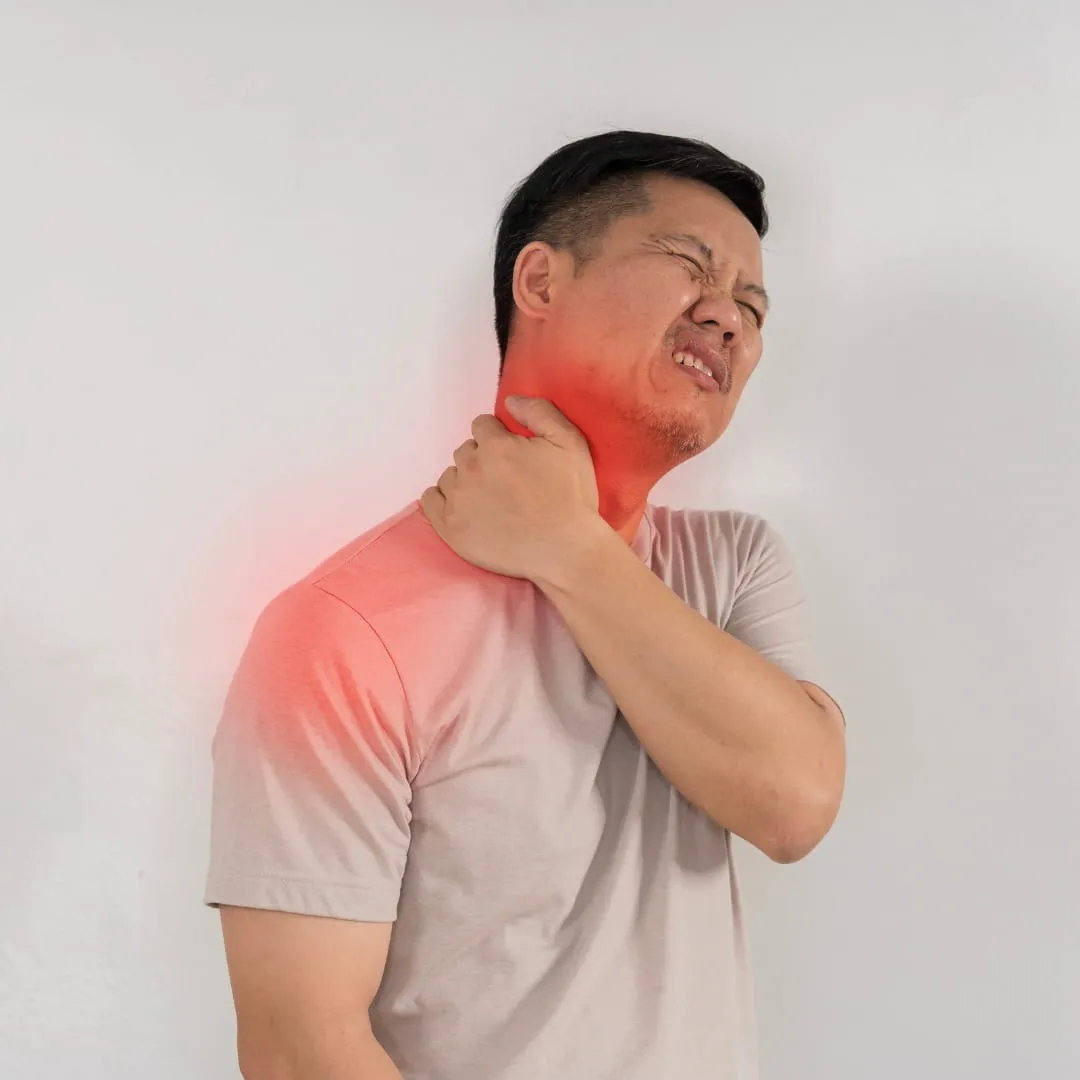
The shoulder's extraordinary mobility — the widest range of motion of any joint — is precisely what makes it vulnerable. Four bones, dozens of muscles, tendons, bursae, and the joint capsule must all work in precise coordination.
The shoulder conditions we treat at our JVC clinic.
Accurate diagnosis is the foundation of effective treatment. Find your specific condition pattern below — each requires its own approach.
Rotator Cuff Tendinopathy
TYPICAL SIGNS:
- Pain with overhead reach, pain at night, gradual onset, sometimes weakness
Rotator Cuff Tears (Partial and Full-Thickness)
TYPICAL SIGNS:
- Weakness with specific movements, pain, sometimes positive special tests
Shoulder Impingement Syndrome
TYPICAL SIGNS:
- Pain with overhead movement, painful arc, sometimes worse with sustained activity
AC Joint (Acromioclavicular) Pain
TYPICAL SIGNS:
- Pain at the top of the shoulder, pain reaching across body, often tender to touch
Biceps Tendinopathy
TYPICAL SIGNS:
- Anterior shoulder pain, pain with lifting, sometimes pain sleeping on side
Shoulder Instability
TYPICAL SIGNS:
- History of dislocation, feeling of looseness, apprehension with certain positions
Shoulder Bursitis
TYPICAL SIGNS:
- Pain with overhead movement, often more diffuse than tendinopathy, may improve with activity
Calcific Tendinopathy
TYPICAL SIGNS:
- Sometimes sudden severe pain, often visible on X-ray, variable presentation
Post-Surgical Shoulder Recovery
TYPICAL SIGNS:
- Post-surgical patient, often coordinated with Dubai or international surgeons
Frozen Shoulder (Adhesive Capsulitis)
TYPICAL SIGNS:
- See dedicated frozen shoulder page for full details →
SHOULDER PAIN BY ACTIVITY
Common shoulder pain patterns in Dubai's population.
Different activities produce different shoulder pain patterns. Understanding the activity-specific pattern guides effective treatment.
Office Work & Desk-Based Roles
- Rotator cuff strain from sustained mouse use
- Postural shoulder pain (rounded shoulders, forward head)
- Upper trapezius and levator scapulae tension referring to shoulder
- Scapular dyskinesia — often combined with neck pain
Typical recovery:
6–12 weeks with appropriate treatment and ergonomic adjustment
Gym Training (CrossFit, F45, Weightlifting)
- Rotator cuff tendinopathy from overhead pressing
- AC joint pain from bench press and push-ups
- Biceps tendinopathy
- Shoulder impingement from technique issues
Typical recovery:
6–12 weeks with technique correction and treatment
Padel
- Rotator cuff issues from overhead serving
- Biceps tendinopathy from racquet impact patterns
- Shoulder impingement from sustained overhead positioning
- Sometimes labral irritation
Typical recovery:
6–12 weeks for most padel-related shoulder issues
Swimming
- Rotator cuff tendinopathy ("swimmer's shoulder")
- Shoulder impingement from repetitive overhead strokes
- Scapular dyskinesia
- Highly responsive to stroke-specific assessment
Typical recovery:
8–12 weeks with stroke modification and treatment
Tennis & Racquet Sports
- Rotator cuff tendinopathy from serving
- Internal impingement
- Biceps tendinopathy
- Sometimes labral involvement in serious players
Typical recovery:
8–12 weeks with technique evaluation
Other Activities
- Yoga (overhead poses producing impingement)
- Golf (rotator cuff and AC joint)
- Cycling (postural shoulder pain)
- Post-injury after falls or recreational sports
Typical recovery:
Varies by activity and injury pattern
For comprehensive sports injury treatment, see our sports physiotherapy page →
How we actually treat shoulder pain at our JVC clinic.
Effective shoulder pain treatment starts with accurate diagnosis — identifying which specific shoulder condition you have. Generic "shoulder exercises" produce mediocre outcomes because different shoulder conditions require different specific approaches. Our methodology applies pattern-specific evidence-based treatment.
Comprehensive initial assessment
The first session is comprehensive — typically 60 minutes including detailed history of your symptoms, postural assessment, cervical spine screening (neck often contributes to shoulder symptoms), comprehensive shoulder range of motion testing (active and passive), strength assessment, specific orthopaedic tests for shoulder conditions (Neer's, Hawkins-Kennedy, empty can, drop arm, AC joint tests, biceps tests, instability tests), scapular control assessment, and review of any imaging. The assessment identifies your specific shoulder condition and the contributing factors driving it.
Manual therapy when indicated
Hands-on manual therapy — joint mobilisation of the glenohumeral joint, scapulothoracic joint, AC joint, sternoclavicular joint as appropriate, soft tissue work for muscle tension patterns, manual stretching for capsular restrictions — provides effective symptom relief and addresses restricted areas. Particularly valuable for chronic patients and patients with associated muscle tension.
Condition-specific exercise prescription
The most evidence-supported intervention for shoulder pain is structured exercise — but specific exercise matched to your condition. Rotator cuff tendinopathy responds to progressive loading with eccentric components. Impingement responds to addressing scapular control and posterior capsule mobility. Instability requires comprehensive strengthening. Frozen shoulder requires phase-specific protocols. Each condition has its own evidence-based approach.
Scapular control and movement re-education
Most chronic shoulder conditions involve scapular dyskinesia — abnormal movement of the shoulder blade affecting overall mechanics. Specific scapular re-education exercises and motor control training address this underlying contributor. Often produces substantial shoulder symptom improvement when addressed properly.
Dry needling for chronic muscle patterns
For chronic muscle tension patterns contributing to shoulder pain — particularly upper trapezius tension, levator scapulae trigger points, posterior shoulder muscle patterns, biceps tension — dry needling is effective. The fine needle technique releases trigger points and reduces protective muscle guarding. Often produces immediate symptom changes.
Shockwave therapy for chronic tendinopathies
For chronic rotator cuff tendinopathy and calcific tendinopathy that has not responded to other approaches, shockwave therapy is evidence-based. Typically 3-6 sessions weekly. Can break down calcium deposits in calcific tendinopathy. Combined with manual therapy and exercise rather than used in isolation.
Workplace and activity modification
For many shoulder conditions, sustained patterns of daily life contribute to the problem — workstation setup, sleep positioning, gym training technique, sport-specific patterns. We provide specific guidance on optimising these factors. Many patients find that activity modification alone produces meaningful improvement.
"The shoulder treatment that works for rotator cuff tendinopathy can fail for impingement, which differs from instability, which differs from frozen shoulder. Pattern-specific treatment is the difference between adequate and excellent outcomes."
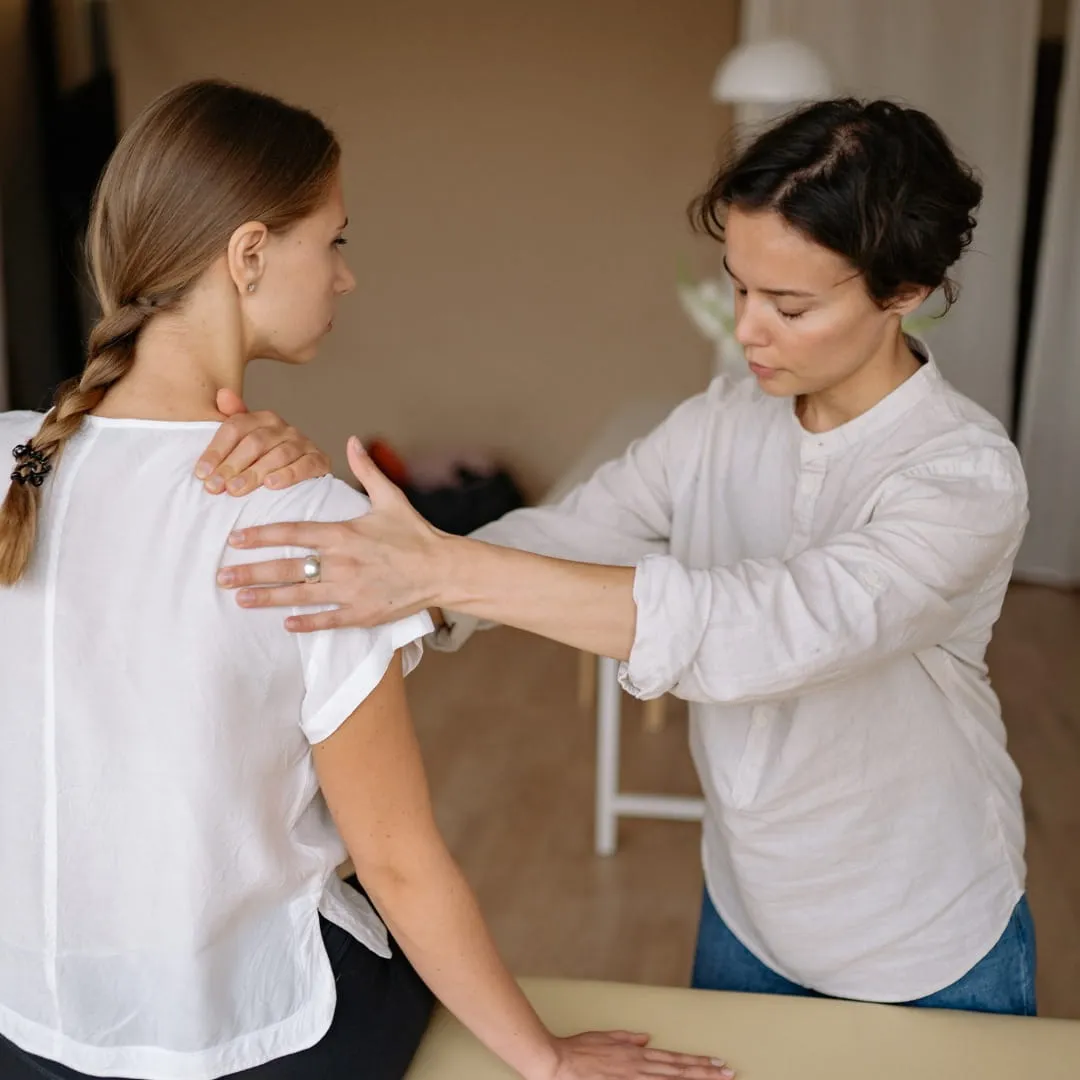
When shoulder surgery may be appropriate — and when it is often premature.
Most shoulder pain responds to conservative care. Understanding when surgery is genuinely appropriate helps you have informed discussions with your healthcare team.
Conservative physiotherapy is the appropriate first-line treatment for nearly all shoulder conditions. However, some specific situations genuinely benefit from surgical intervention. Understanding the distinction helps prevent both unnecessary surgery and inappropriate delay of needed surgery.
Surgery is appropriate for:
- •Significant traumatic rotator cuff tears in active patients — particularly large or massive tears in patients under 65 with significant function loss
- •Recurrent shoulder dislocations — particularly in young active patients with structural damage
- •Failed conservative care for rotator cuff — typically after 3-6 months of appropriate conservative treatment
- •Lateral tears causing mechanical symptoms — catching, locking, inability to move shoulder
- •AC joint dislocations — Grade IV-VI typically benefit from surgical stabilization
- •Shoulder arthritis with severe symptoms — when conservative care no longer maintains acceptable function
Surgery is often premature when:
- •Initial response to physiotherapy has not been tested — many patients are offered surgery before adequate conservative trial
- •Imaging findings do not match clinical presentation — MRI showing a tear does not automatically mean surgery is needed
- •Degenerative rotator cuff tears in older patients — conservative care often produces excellent outcomes
- •Frozen shoulder — virtually never requires surgery as first-line treatment
- •Surgery based on imaging alone — without comprehensive clinical assessment
The pre-surgical physiotherapy advantage
Even patients who do need surgery often have better outcomes when they have good physiotherapy before the procedure. "Prehabilitation" maintains range of motion, builds strength in surrounding muscles, addresses contributing factors, and prepares the patient for post-surgical rehabilitation. Patients who arrive at surgery in better physical condition recover faster and achieve better long-term outcomes.
We recommend surgery when:
- Conservative care has had adequate trial
- Imaging supports specific surgical indication
- Patient activity goals require it
- Specific injury patterns warrant it
We do NOT recommend:
- Surgery before conservative trial
- Surgery based on imaging alone
- Surgery without clear indication
Surgical coordination:
We have established relationships with shoulder surgeons in Dubai. When surgery is appropriate, we can recommend surgeons and coordinate pre- and post-surgical physiotherapy.
KEY STAT
89%
of our shoulder patients achieve substantial improvement within 12 weeks without requiring surgery.
Real shoulder pain recoveries.
Three different conditions, three different treatment approaches, three successful outcomes.
"Rotator cuff tear identified on MRI after months of pain. Orthopaedic surgeon recommended surgery. Vedara's assessment suggested conservative trial first. We saw the tear pattern and size. Sixteen weeks of structured rehabilitation combining manual therapy and progressive loading. Successfully returned to gym training without pain. The honest discussion about when surgery is and is not needed was invaluable."
Rajan M.
Rotator Cuff Tear · 16-Week Conservative Programme · Dubai Hills resident · February 2026
"Shoulder impingement from gym training, bench press and overhead press both painful. Vedara identified the underlying scapular control issues and posterior capsular tightness driving the impingement. Twelve weeks of structured treatment combining manual therapy, scapular re-education, and exercise modification. Returned to full training pain-free. The pattern-specific approach made the difference."
Sarah K.
Shoulder Impingement · 12-Week Programme · Sports City resident · January 2026
"Tried random shoulder physiotherapy for eight months. Multiple previous physiotherapy attempts with generic shoulder exercises. Vedara identified specific rotator cuff tendinopathy combined with biceps involvement. Progressive loading protocol over fourteen weeks. Returned to competitive padel. The accurate diagnosis after months of generic treatment was the key."
James M.
Rotator Cuff Tendinopathy · 14-Week Programme · JVC resident · March 2026
4.9
stars on Google
380+
shoulder patients treated
93%
achieve substantial improvement within 12 weeks
Physiotherapy specialists for shoulder pain at our JVC clinic.

Dr. Sarah Al-Hassan, DPT
Lead physiotherapist with 12 years specialist shoulder experience.

Dr. James Chen, DPT
Post-surgical rehabilitation specialist, trained internationally.

Dr. Priya Nair, DPT
Sports physiotherapy specialist with expertise in padel and overhead sports.

Dr. Omar Al-Rashidi, DPT
Specialist in post-traumatic shoulder conditions and shoulder instability.
TRANSPARENT PRICING
What shoulder pain physiotherapy at our JVC clinic costs.
Insurance direct-billing with seven major insurers. Shoulder pain physiotherapy is well-covered by Dubai insurance plans with medical justification. Extended programmes may require pre-authorisation, which we handle on your behalf. WhatsApp your insurance card to +971 00 000 0000 before booking for specific coverage confirmation.
What shoulder pain patients ask before booking.
Short, honest answers from our clinical team. Cannot find what you are looking for? WhatsApp us, usually answered in under 15 minutes.
Ask a QuestionWhere shoulder pain physiotherapy happens at Vedara Care JVC.
Jumeraih Village Circle (JVC) Dubai
Nearby Landmarks
Our JVC clinic has dedicated physiotherapy treatment rooms, manual therapy plinths, a full rehabilitation gym with shoulder-specific equipment, dry needling and shockwave therapy equipment, and accessibility for patients with limited shoulder mobility. Patients travel from JVT, Al Barsha South, Sports City, Motor City, Arjan, Dubai Hills, Marina, Downtown, Palm Jumeirah, Mirdif, and across Dubai.
Book Shoulder Pain AssessmentREADY TO ADDRESS YOUR SHOULDER PAIN?
Most shoulder pain responds to the right specific treatment.
Whether you have acute shoulder injury, chronic ongoing pain, suspected rotator cuff issues, impingement, AC joint problems, or any other shoulder condition — the first useful step is a comprehensive shoulder assessment at our JVC clinic. We provide accurate condition-specific diagnosis, evidence-based treatment plan matched to your specific shoulder condition, realistic timeline expectations, and honest discussion about treatment options including when surgery is and is not appropriate. Same-week appointments typically available.
Initial assessment from AED 350 · Walking distance from Circle Mall, JVC · 380+ shoulder patients treated · Most patients avoid surgery with appropriate care · Insurance direct-billing
EXPLORE FURTHER
Related services and conditions
Frozen Shoulder Specific Page
For frozen shoulder (adhesive capsulitis) specifically — detailed phase-based content covering freezing, frozen, and thawing phases. Particularly relevant for diabetic patients.
Learn moreSports Injury Physiotherapy
For sports-related shoulder injuries — padel, swimming, tennis, gym training. Sport-specific protocols and return-to-sport progressions.
Learn morePost-Surgery Rehabilitation
For patients post-shoulder surgery — rotator cuff repair, labral repair, shoulder replacement. Coordinated with operating surgeon.
Learn moreNeck Pain Physiotherapy
Related condition — many shoulder pain patients have associated neck involvement. Evidence-based cervical spine treatment.
Learn more