Post-stroke rehabilitation in Dubai. Evidence-based recovery. Honest about timelines. Family-centred.
Specialist post-stroke physiotherapy at our Jumeirah Village Circle (JVC) clinic, and across Dubai through our home physiotherapy service. Delivered by DPT-qualified physiotherapists with specific neurorehabilitation training using evidence-based protocols — constraint-induced movement therapy, mirror therapy, functional electrical stimulation, task-specific training, gait training, spasticity management coordination with your treating neurologist, balance retraining for falls prevention. We help you recover what matters to you: honest expectations and sustained partnerships. We start where you are, at home or in our clinic.
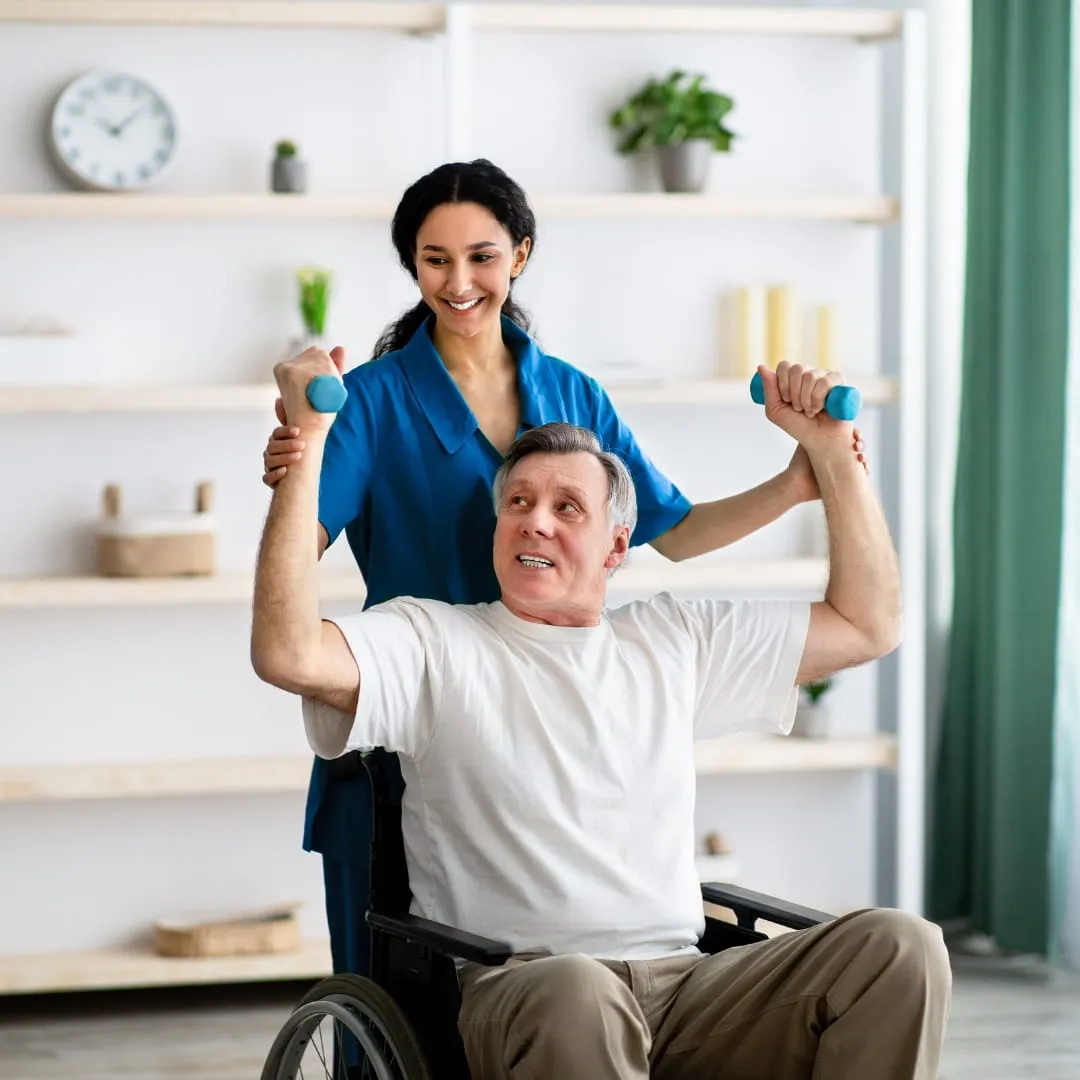
MOST RECOVERY HAPPENS IN
the first 6 months. We start within days of hospital discharge, if needed. We’ll meet you wherever you are in your recovery journey.
THE QUICK ANSWER
Post-stroke rehabilitation at Vedara Care, in one paragraph.
Post-stroke rehabilitation at Vedara Care Polyclinic in Jumeirah Village Circle (JVC), Dubai — walking distance from Circle Mall — and across Dubai through our home physiotherapy service is evidence-based specialist neurorehabilitation delivered by DPT-qualified physiotherapists with specific stroke rehabilitation training. We treat ischaemic stroke recovery, haemorrhagic stroke recovery, transient ischaemic attack (TIA) recovery, brainstem stroke recovery, and cerebellar stroke recovery. Our approach uses current evidence-based protocols: constraint-induced movement therapy (CIMT) for upper limb hemiparesis, mirror therapy for motor recovery, functional electrical stimulation (FES) for foot drop and upper limb function, task-specific training for daily activities, body weight supported gait training, spasticity management coordination with your treating neurologist, balance retraining for falls prevention, and family caregiver education throughout. Care is delivered at our JVC clinic, at your home across Dubai, or in combination as recovery progresses. Initial assessment from AED [X]; structured programmes from AED [X]. Insurance direct-billing with seven major insurers.
Medically reviewed by [Lead Neurological Physiotherapist Name], DPT, DHA-Licensed · Last updated June 2026
What stroke recovery actually involves — and what you can realistically expect.
Stroke recovery is one of the most variable processes in medicine. Some patients recover almost completely; others have persistent impairments. Understanding what drives variability helps you make informed decisions about care.
A stroke is a sudden interruption of blood supply to part of the brain — either a blockage (ischaemic stroke, about 85% of cases) or bleeding (haemorrhagic stroke, about 15% of cases). The brain tissue affected is damaged, and the impairments that result depend on which area of the brain was affected and how severely.
How recovery happens
Stroke recovery occurs through several mechanisms. Some recovery comes from the brain tissue around the damaged area regaining function as inflammation reduces. Some recovery comes from neuroplasticity — the brain's ability to rewire, with other brain areas taking over functions previously performed by the damaged tissue. This neuroplastic recovery is the focus of modern rehabilitation: specific, intensive training of affected functions drives neuroplastic change.
The time-dependent recovery window
Most recovery happens in the first 6 months post-stroke, with the steepest improvement typically in the first 3 months. This is the period when neuroplastic capacity is greatest and when intensive rehabilitation produces the largest gains. Recovery continues beyond 6 months for many patients — particularly with appropriate intervention — but at a slower rate.
What determines individual recovery
Several factors affect individual recovery: stroke severity, stroke location, patient age, overall health, rehabilitation intensity and quality, and family support and home engagement. Younger patients typically recover more, though substantial recovery is possible at any age. Appropriate intensive evidence-based rehabilitation consistently improves outcomes.
Realistic expectations matter
The most common pattern: most patients have some level of recovery, though it varies enormously between individuals. Some patients recover no complexity that they had before; others have persistent impairments but are able to function very well with adapted approaches. Honest, realistic expectations help families and patients commit to the sustained rehabilitation effort recovery requires.
The role of physiotherapy in modern stroke care
Modern stroke rehabilitation has evolved substantially over the past two decades. Evidence-based approaches focus on driving neuroplastic recovery — intensive repetition of specific tasks, constraint of unaffected limbs to force use of affected limbs, mirror therapy, functional electrical stimulation, and high-intensity gait training. These approaches produce better outcomes than older methods.
"The brain that had a stroke is also the brain that recovers from a stroke. Modern rehabilitation focuses on engaging the brain's remarkable capacity to reorganize and adapt."
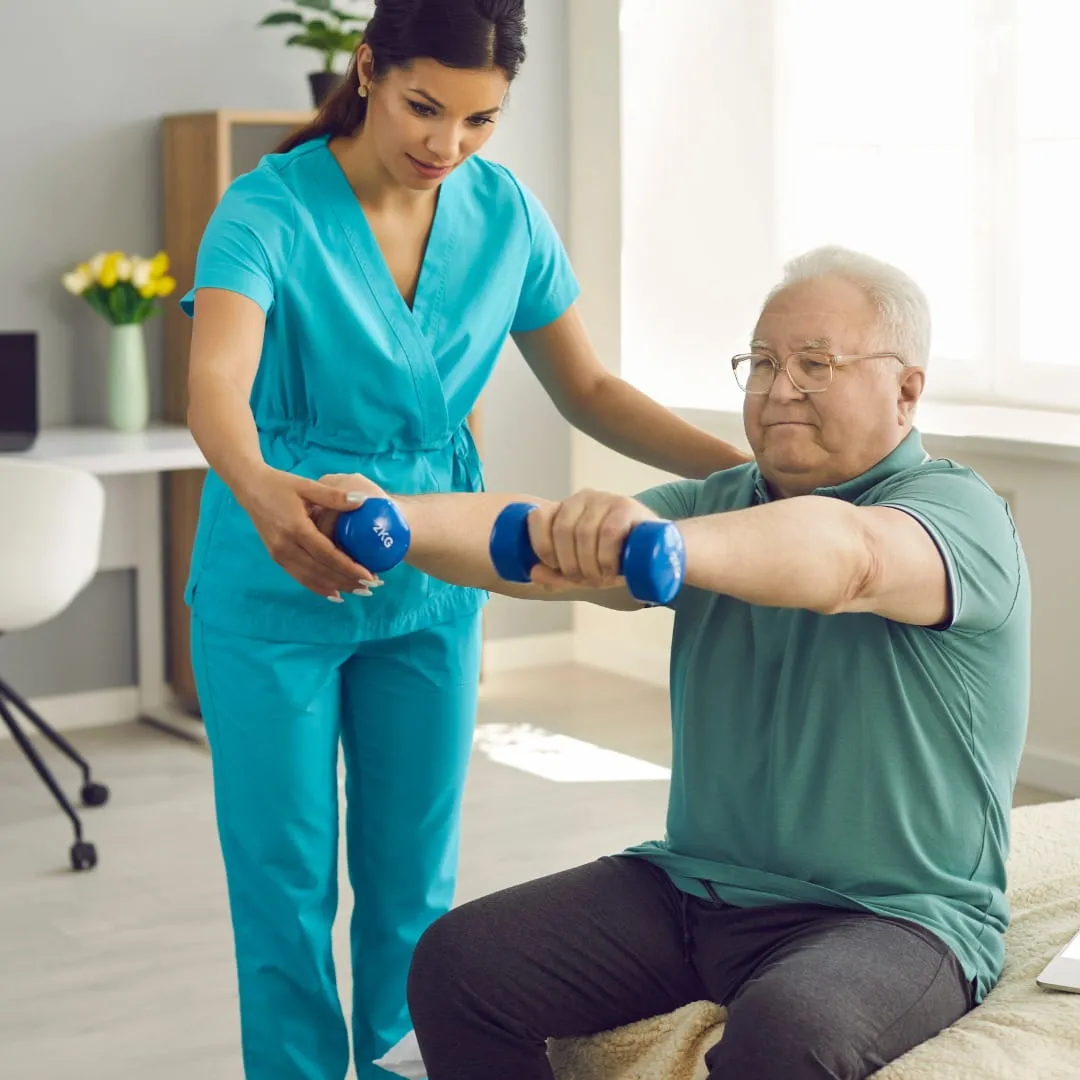
Types of stroke and how rehabilitation differs.
Different stroke types and locations produce different impairment patterns. Treatment approaches adapt to your specific stroke.
Ischaemic Stroke
TYPICAL IMPAIRMENT PATTERNS:
- Middle cerebral artery produces hemiparesis, language impairment, sensory loss; anterior cerebral artery produces leg-dominant weakness; posterior cerebral artery produces visual and cognitive impairments
Haemorrhagic Stroke
TYPICAL IMPAIRMENT PATTERNS:
- Often more severe initial deficits; recovery can include more dramatic initial improvement followed by similar long-term progression
Brainstem Stroke
TYPICAL IMPAIRMENT PATTERNS:
- Bilateral weakness, dysarthria (difficulty speaking), double vision, severe ataxia, cranial nerve involvement
Cerebellar Stroke
TYPICAL IMPAIRMENT PATTERNS:
- Ataxia, balance impairment, falls risk, sometimes tremor and dysarthria
Lacunar Stroke
TYPICAL IMPAIRMENT PATTERNS:
- Pure motor weakness, isolated sensory loss, or specific combined syndrome patterns
TIA (Transient Ischaemic Attack)
TYPICAL IMPAIRMENT PATTERNS:
- Stroke-like symptoms that resolve; substantial risk of subsequent stroke; intensive medical management plus rehabilitation prevention
The phases of stroke recovery — what to expect and when.
Stroke recovery follows phases with predictable characteristics, even when individual outcomes vary. Understanding the process helps families plan appropriately.
Acute Phase (Hospital)
Days 0-14 post-stroke
TYPICAL CHARACTERISTICS
- —Hospital admission for medical management
- —Medical stabilisation, imaging, medication management
- —Initial impairment severity becomes clearer
- —Some early spontaneous recovery may begin
REHABILITATION FOCUS
- —Hospital-based rehabilitation begins as medically appropriate
- —Initial assessment of impairments
- —Early mobilisation if appropriate
- —Positioning to prevent contractures
- —Initial swallowing assessment
FAMILY CONSIDERATIONS
- —Hospital teams handle this phase typically
- —Family role is presence, support, and gathering information
- —Plan for discharge — what care will be needed?
- —We can consult during hospital phase if engaged early
Early Recovery Phase
MONTHS 1-3 POST-STROKE
TYPICAL CHARACTERISTICS
- —Patient returning home or to rehabilitation setting
- —Rapid recovery typically occurring
- —Substantial therapy time needed daily
- —Patient often fatigues easily
- —Family adjusting to new caregiving demands
REHABILITATION FOCUS
- —Intensive daily rehabilitation (typically 3-5 sessions weekly minimum)
- —Constraint-induced movement therapy if appropriate
- —Task-specific training of daily activities
- —Gait training and balance retraining
- —Upper limb rehabilitation with mirror therapy, FES as appropriate
- —Spasticity management coordination
FAMILY CONSIDERATIONS
- —This is the highest-intensity rehabilitation phase
- —Home environment may need modifications
- —Caregiver education and training crucial
- —We coordinate appropriate care setting based on patient mobility
Continued Recovery Phase
MONTHS 3-6 POST-STROKE
TYPICAL CHARACTERISTICS
- —Recovery continuing but rate typically slowing
- —Functional independence increasing for many patients
- —Patient typically more capable of attending clinic visits
- —Specific persistent impairments becoming clearer
REHABILITATION FOCUS
- —Continued intensive intervention with progressive demands
- —Higher-level functional training
- —Community mobility and return-to-activity work
- —Vocational rehabilitation considerations
- —Driving assessment if appropriate
FAMILY CONSIDERATIONS
- —Often a transition from intensive home care to more clinic-based care
- —Family caregiver fatigue often peaks — important to address
- —Long-term planning becomes more relevant
- —Insurance coverage may shift as recovery phases change
Chronic Phase
6+ MONTHS POST-STROKE
TYPICAL CHARACTERISTICS
- —Major recovery has occurred; remaining impairments often stable
- —Patient typically functionally adapted
- —New opportunities to address persistent impairments with intensive intervention
- —Recurrence prevention important
REHABILITATION FOCUS
- —Targeted intensive intervention for specific persistent impairments
- —Constraint-induced movement therapy for upper limb (very effective in chronic phase)
- —Ongoing fitness and conditioning
- —Vocational and recreational engagement support
- —Annual review and assessment
FAMILY CONSIDERATIONS
- —'Chronic' does not mean 'no further recovery'
- —Periodic intensive interventions can produce meaningful improvement years post-stroke
- —Family roles often stabilise around new normal
- —Support systems for long-term care
Recovery does not stop at 6 months — modern evidence shows substantial improvement is possible years after stroke with appropriate intervention. The phases describe typical patterns; your individual journey may differ.
How we deliver evidence-based stroke rehabilitation at Vedara.
Modern stroke rehabilitation has evolved substantially over the past two decades. The brain's capacity for neuroplasticity applies to recovery in important ways. Our approach systematically applies these evidence-based methods.
Comprehensive Initial Assessment
The first session is comprehensive — typically 90 minutes for stroke patients given the complexity. Detailed medical history, detailed neurological imaging, assessment of motor function using standardised measures (Fugl-Meyer Assessment, Motricity Index, sensory assessment, balance assessment, functional assessment (Barthel Index, Modified Rankin Scale), assessment of spasticity, assessment of swallowing if indicated, and discussion of goals. The assessment identifies your specific pattern and the priorities for your situation.
Constraint-Induced Movement Therapy (CIMT)
CIMT is one of the most evidence-supported therapies for upper limb hemiparesis post-stroke. The approach constrains the unaffected arm and involves intensive training practice with the affected arm. CIMT is particularly effective for patients with some preserved function (some active wrist and finger extension). Research shows CIMT produces clinically meaningful upper limb improvement that conventional rehab often misses.
Mirror Therapy
Mirror therapy uses a mirror to provide visual feedback that the affected limb is moving normally — a powerful neuroplastic stimulus. The patient exercises the unaffected arm while looking in the mirror, making it appear as though the affected arm is moving normally. This approach is particularly effective for early stroke hemiparesis, and for patients with phantom limb sensations. It can even improve motor recovery.
Functional Electrical Stimulation (FES)
FES uses electrical stimulation to produce muscle contractions in paralysed or weakened muscles. Two main applications: (1) Foot drop FES — stimulating the peroneal nerve during walking to produce dorsiflexion, dramatically improving gait pattern; (2) Upper limb FES — stimulating extensors to enable hand opening, combined with task-specific training. Modern wearable FES devices allow community use beyond clinic sessions.
Task-Specific Training
The fundamental principle of modern stroke rehabilitation: train the specific tasks you want to recover. Task-specific training involves repeated practice of meaningful functional activities — getting up from a chair, reaching for a cup, walking a specific distance, dressing, climbing stairs. High repetition matters — research shows hundreds of repetitions per session produce better outcomes than the dozens typical of generic therapy.
High-Intensity Gait Training
Modern gait rehabilitation emphasises high intensity — training cardiovascular fitness alongside walking quality. Patients walk for substantial duration at challenging intensity, often with body weight support if needed initially. This contrasts with older approaches focused on perfecting walking pattern at low intensity. Evidence supports the high-intensity approach for producing meaningful walking improvements.
Spasticity Management Coordination
Spasticity is common post-stroke and affects movement patterns. Management involves a coordinated approach: positioning and stretching, splinting where appropriate, botulinum toxin injections by your treating neurologist for focal spasticity, oral medications where indicated, and integration of all approaches with movement-based therapy. We coordinate with your treating neurologist for medical aspects of spasticity management.
Family Caregiver Education
Stroke recovery happens substantially outside the therapy session — in daily activities at home, in family interactions, in community engagement. We provide structured family caregiver education: understanding the stroke and impairments, safe transfer techniques, home exercise programme support, recognition of complications, fall prevention, communication strategies, and self-care for caregivers. Strong family engagement substantially improves outcomes.
"Stroke rehabilitation has evolved enormously. The brain's capacity to recover is greater than older treatment models recognised — when we apply the right specific intensive interventions, recovery is often substantially better than families expect."
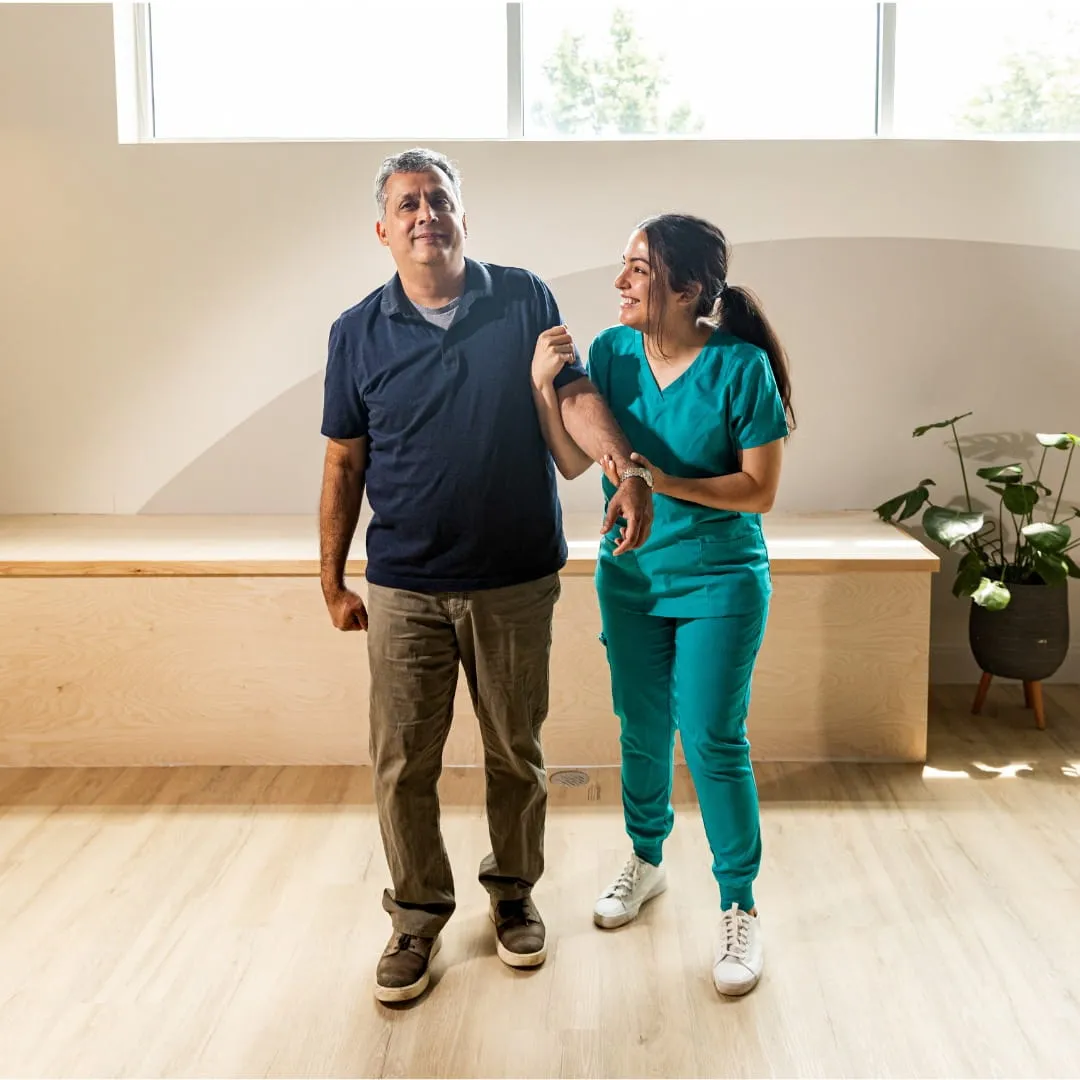
Where we deliver post-stroke rehabilitation.
Stroke rehabilitation often requires flexibility about care setting. Many patients need home-based care initially with transition to clinic visits as mobility improves.
Clinic-Based Care at JVC
For patients with sufficient mobility to attend clinic visits. Our JVC clinic — walking distance from Circle Mall — has accessibility features for limited-mobility patients including ramps, accessible bathrooms, adjustable plinths, and specialised equipment.
WHEN THIS SETTING IS RIGHT
- —Patient has sufficient mobility to attend appointments
- —Family can support clinic visits (transportation, accompaniment)
- —Recovery phase where specialised equipment matters
- —Patient benefits from change of environment from home
WHAT WE DELIVER
- —Body weight support gait training, parallel bars, advanced rehab equipment
- —Constraint-induced movement therapy programmes
- —Mirror therapy with appropriate setups
- —FES with various devices
- —High-intensity gait training
Home Physiotherapy Across Dubai
For patients who cannot easily attend clinic — common in early post-stroke phase, for patients with significant mobility limitations, or where home environment training is therapeutically essential.
WHEN THIS SETTING IS RIGHT
- —Early post-hospital discharge (first 2-4 weeks typically)
- —Significant mobility limitations preventing safe travel
- —Recovery phase where home environment training matters
- —Patient fatigue precludes travel
WHAT WE DELIVER
- —Comprehensive neurological assessment
- —Treatment with portable equipment
- —Training in actual home environment (real stairs, real bathroom, real bed)
- —Family caregiver education in their actual setting
- —Coordination with hospital discharge teams
Combined Care Approach
For many stroke patients, the optimal approach combines home and clinic care, evolving over the recovery timeline. Most patients move through several phases of care setting during recovery.
WHEN THIS SETTING IS RIGHT
- —Most stroke patients benefit from this approach
- —Transition from home to clinic as mobility improves
- —Specific clinic visits for equipment-dependent training
- —Continued home visits for environmental work
WHAT WE DELIVER
- —Coordinated transitions between settings
- —Same therapist team across settings (continuity)
- —Adapted programming for each setting
- —Flexible scheduling responsive to recovery progression
- —Combined pricing structures available
Most stroke patients move through several phases of care setting during recovery — typically starting with intensive home physiotherapy after hospital discharge, transitioning to combined home and clinic care as mobility improves, eventually moving to clinic-based care for advanced rehabilitation.
Read more about our home physiotherapy service →Real recoveries.
"My father had a stroke at 71 visiting us in Dubai. Hospital discharge after two weeks. Vedara started home physiotherapy within 48 hours of discharge — daily sessions at our home in Dubai Hills. Eight months of consistent rehabilitation through home care transitioning to clinic visits. He returned home walking independently with a cane, managing his own self-care, talking with mild residual aphasia. The team coordinated with his treating neurologist throughout. We are grateful beyond words."
Family member of post-stroke patient
Right Middle Cerebral Artery Stroke · 8-Month Home + Clinic Programme · Dubai Hills · February 2026
"Stroke at 58 — successful executive, suddenly unable to use my right side or speak properly. Six months of intensive rehabilitation at Vedara — speech therapy, occupational therapy, and the physiotherapy programme. Constraint-induced movement therapy for the arm was the breakthrough — finally regained meaningful use after three months of intensive programme. Returned to a modified work role at 9 months. The honest discussion about realistic expectations balanced against genuine commitment to maximum recovery was exactly what I needed."
Rajan M.
Left Hemisphere Ischaemic Stroke · 12-Month Programme · Sports City · January 2026
"My mother had a cerebellar stroke at 67. Severe balance problems initially. Specialist physiotherapy at Vedara over four months — balance training, coordination work, gait retraining. She returned to walking independently, returned to her painting hobby, and travels again. The cerebellar-specific approach made all the difference — generic stroke rehab would not have produced this outcome."
Family member of post-stroke patient
Cerebellar Stroke · 4-Month Programme · JVT · March 2026
4.9
stars on Google
180+
stroke patients treated
Specialised stroke rehabilitation physiotherapists at our JVC clinic.
Stroke rehabilitation is one of the most demanding physiotherapy specialisations — requiring substantial neurological training, patience for long recovery courses, and family-centred care skills.

Dr. Sarah Al-Mansoori, DPT
7 years specialising in post-stroke rehabilitation. MSc Neurorehabilitation, University of Birmingham.

Dr. Priya Nair, DPT
5 years in neurorehabilitation, specific training in cerebellar and brainstem stroke recovery.

Dr. Omar Hassan, DPT
6 years post-stroke rehabilitation experience, certified FES clinician. Bobath approach trained.

Dr. Meera Krishnan, DPT
4 years specialising in home-based stroke rehabilitation and motor relearning programmes.
Coordination with your broader medical team.
Stroke rehabilitation works best when integrated with the broader medical team. We routinely coordinate with the specialists involved in your care.
Effective stroke rehabilitation requires coordination beyond physiotherapy alone. Several other specialists may be involved in your care, and we work collaboratively with all of them.
Your Treating Neurologist
Your neurologist manages the medical aspects of stroke care — medication for stroke prevention, management of vascular risk factors, assessment for stroke complications, decisions about spasticity injections, and evaluation for cognitive impairment. We coordinate regularly: sharing observations from rehabilitation, receiving guidance on medical issues affecting therapy, coordinating spasticity management.
Occupational Therapists (OTs)
Occupational therapy focuses on functional activities of daily living — dressing, bathing, meal preparation, return to work, driving, home environment modifications. Stroke OT and stroke physiotherapy work closely together. We coordinate goals and avoid duplication. If you have an existing OT team, we work with them.
Speech and Language Therapists
For patients with aphasia, dysarthria, or dysphagia, speech and language therapy is essential. We coordinate with speech therapists on shared goals — particularly for swallowing safety affecting feeding and pneumonia prevention.
Cardiologists
For patients whose stroke had cardiac contributions (atrial fibrillation, heart failure, valve disease), cardiology management is essential. Cardiovascular fitness training is part of stroke rehabilitation — we coordinate intensity with your cardiologist particularly for patients with significant cardiac considerations.
Psychiatrists and Psychologists
Post-stroke depression affects 30–40% of stroke patients and substantially affects rehabilitation engagement and outcomes. We screen for depression during rehabilitation and recommend psychiatric or psychological assessment when indicated. Cognitive impairment screening and management also coordinated with appropriate specialists.
GPs and Family Physicians
Your GP often coordinates overall care, particularly for patients without a stroke-specific neurologist. We coordinate with your GP on shared care plans, medication management, and ongoing follow-up arrangements.
Our coordination protocols
For every stroke patient:
- ✓Review of hospital discharge documentation
- ✓Communication with treating teams during discharge
- ✓Regular updates to referring physicians
- ✓Coordination meetings with OT, speech therapy when active
- ✓Family meetings as needed
- ✓Shared care plans documented
We work with whichever providers are part of your care team — your treating neurologist, specialist discharge planners, occupational therapist, speech therapist, and any other specialists involved.
What post-stroke rehabilitation costs.
Insurance direct-billing with seven major insurers. Stroke rehabilitation is typically covered substantially by Dubai insurance plans given the documented need. Established programmes often require pre-authorisation — we handle this on your behalf and have experience with stroke rehabilitation insurance coverage. WhatsApp us for specific coverage discussion.
What stroke patients and families ask before booking.
For broader neurological physiotherapy questions, see our neurological page.
Ask a Question
Where post-stroke rehabilitation happens at Vedara Care JVC.
Jumeraih Village Circle (JVC) Dubai
Nearby Landmarks
Our JVC clinic has dedicated neurorehabilitation treatment rooms, accessibility features for limited-mobility patients (ramps, accessible bathrooms, adjustable plinths), specialised equipment for stroke rehabilitation including body weight support equipment and FES devices, parallel bars for gait training, and a quiet environment supporting concentration. For patients with mobility limitations, home physiotherapy is available throughout Dubai.
Book Stroke Rehabilitation AssessmentREADY TO START STROKE REHABILITATION?
Most recovery happens in the first 6 months. Let us help maximize it.
Whether your family member is being discharged from hospital this week, you are months post-stroke and seeking better intervention, or you are searching from abroad to plan care for a Dubai-based relative — the first step is a comprehensive stroke rehabilitation assessment. We provide thorough evaluation, evidence-based treatment plan, realistic timeline discussion, and coordination with your broader medical team. Home physiotherapy available throughout Dubai for patients who cannot easily travel. Same-week appointments standard; same-day available for hospital discharge transitions.
Initial assessment from AED [X] · JVC clinic + home across Dubai · DPT-qualified neurorehabilitation specialists · Hospital discharge coordination · Insurance direct-billing · Cultural and language sensitivity
EXPLORE FURTHER
Related services and resources
Neurological Physiotherapy
Broader neurological physiotherapy covering Parkinson's, MS, TBI, MND, and other neurological conditions. Same neurorehabilitation team and approach across the broader specialty.
Learn moreHome Physiotherapy Across Dubai
Detailed home physiotherapy service information — critical for many stroke patients in early recovery and those with mobility limitations.
Learn morePhysiotherapy in JVC
Our complete physiotherapy department — all specialisations and conditions treated at our Jumeirah Village Circle clinic.
Learn morePost-Surgery Rehabilitation
For stroke patients with subsequent surgical needs — orthopaedic procedures and more. Same physiotherapy team coordinates surgical recovery.
Learn more